William
ChowringheeWilliam is a Hotel Shahjahan employee whose first appearance makes a strong impression on the narrator: his striking looks, carefully assembled clothes, and dry humor stand out even in a workplace governed by shifts, suites, and expected payments. The contrast between his polished public presentation and his frank awareness that skin color shapes opportunity gives his brief scenes a particular force. He is not merely a handsome figure arriving to take over a shift; he is someone who understands how the hotel’s transactions distribute advantage, and who can name the unfairness without pretending to be outside it.
Identity and Introduction
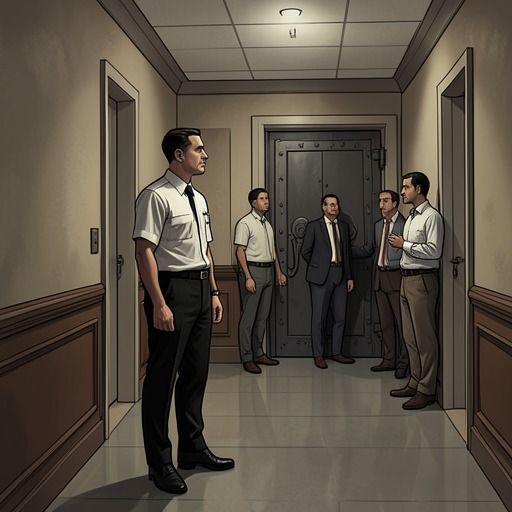
Satyasundar Bose introduces William to the narrator as a particularly interesting man who lives on Madan Dutta Lane in Bowbazar rather than at the hotel. The introduction comes as Bose’s shift is nearly over: he tells the narrator that William will relieve him in five minutes. William is therefore introduced through the hotel’s practical rhythms, as the next employee due at his post, but also as someone with a life beyond its premises.
His entrance interrupts a conversation about old drawings in the hotel lobby and the building’s survival in the same place through decades of change. William arrives late and explains that the trams have not been running properly that day, adding that, after all, they are in Calcutta. The excuse is light, but it places him within the city’s everyday disruptions and gives his arrival an ease that contrasts with the narrator’s intense attention to his appearance.
Appearance and Public Persona
The narrator describes William as exceptionally dark-skinned and exceptionally attractive, imagining that traditional Indian dress would have made him look like a god. That description belongs to the narrator’s response to him: William himself enters in Western clothes, with a black bow tie, a white shirt, and pale-blue trousers and jacket. The shirt pocket shows through the jacket’s open buttons, while a colorful silk monogram, an S for the Shahjahan, marks his connection to the hotel. His neat moustache appears almost clipped into harmony with the bow tie.
The passage dwells on the difference between an appearance that might be mistaken for makeup from a distance and what becomes clear at close range: William’s coloring is natural. The narrator compares his dark eyes with those of Putu-di, whom he knew in childhood, while distinguishing William’s natural appearance from her heavy makeup. The detail makes the scene an unusually close study of how looks are read, embellished, and judged. William’s own later joke about wishing for a lighter complexion reveals that this attention is not merely the narrator’s aesthetic response; complexion also has material consequences in the hotel’s economy.
Work and Awareness of Hotel Business
At the handover, Bose tells William that he is fortunate to be in charge on a promising night. William does not ask what Bose means, apparently understanding the implication. He immediately checks whether the first suite has been booked and whether the expected woman has arrived. Bose explains that Mrs. Pakrashi reserved the room by telephone that day and has not yet appeared; her husband must have travelled unexpectedly. William then asks whether Thomson has arrived. His questions show him tracking the night’s guests and room arrangements as soon as he takes over.
Bose confirms Thomson’s arrival and tells William that he can be sure of receiving two ten-rupee notes. William answers that this is his misfortune: with a fairer complexion, he says, he could earn more than two such notes. The exchange connects the hotel’s apparently routine business to the unequal value attached to appearance. William recognizes the payment and its limits, and his humor makes the recognition sharper rather than softer. The scene does not spell out every circumstance behind the money, but it plainly ties the night’s expected reward to the arrival Bose and William have just discussed.
Character and Narrative Significance
William’s first scene sets his beauty beside his wit and professional attentiveness. He can arrive late because of a city transport problem, take over the shift without needing Bose to explain the night’s prospects, and move straight to questions about the suite and its expected occupants. At the same time, the joke about his complexion registers a hierarchy that his elegant clothes and striking features cannot erase. His polished presentation belongs to the public face of hotel work; his comment lets the economic calculation beneath that face be heard.
The narrator’s response to William also matters. The extended visual description turns a brief handover into a moment of scrutiny, while William’s own remark redirects attention from how he looks to what his looks may earn. Across these details, he emerges as both a figure of display and an astute reader of the arrangements around him. The evidence presents no wider personal history or final resolution for him; his significance lies in the vivid conjunction of city life, hotel routine, appearance, and unequal reward.