Elizabeth
ChowringheeElizabeth, known in the narrative as Lisa, is a singer whose limited opportunity to perform gives way to a consequential role in Marco Polo and Susan Munro’s attempt to obtain a divorce. Her own experience of divorce makes her a practical ally in their plan, but not an unconditionally available one: she agrees to be named in the case, asks to see the man with whom she is supposed to have had an affair, and later sets a price for her participation. Through her, the story links precarious work with the private bargains required to navigate marriage and law.
Identity and Introduction
Elizabeth enters the story through the insecurity of a singer’s position. She is absent from the conversation in which Susan explains that Elizabeth has broken a leg and is convalescing; while Elizabeth is unable to sing, Susan has been allowed to take her place. Susan expects that this opportunity will end as soon as the doctor removes Elizabeth’s cast. The detail establishes that Susan’s livelihood depends on another woman’s injury and recovery, and that her own place onstage is provisional rather than secure.
The account does not develop Elizabeth’s background or describe her recovery. Instead, her injured leg is the circumstance that brings Susan into the performance space and, indirectly, into Marco Polo’s life. The contrast is telling: Elizabeth is initially important because she cannot work, yet later becomes important through her ability to act where the law and social convention have left Marco Polo and Susan with few acceptable options.
Experience of Divorce and the Plan
When Marco Polo grows desperate to find a woman willing to be named in a fabricated adultery case, Susan proposes asking Elizabeth. Susan’s reasoning is that Elizabeth has no reputation to lose and that Susan has previously done her a couple of favors. The proposal presents their connection as an existing exchange of assistance, not as a newly formed intimacy. It also shows how the plan depends on a woman whom the couple consider less exposed to reputational damage than Susan herself.
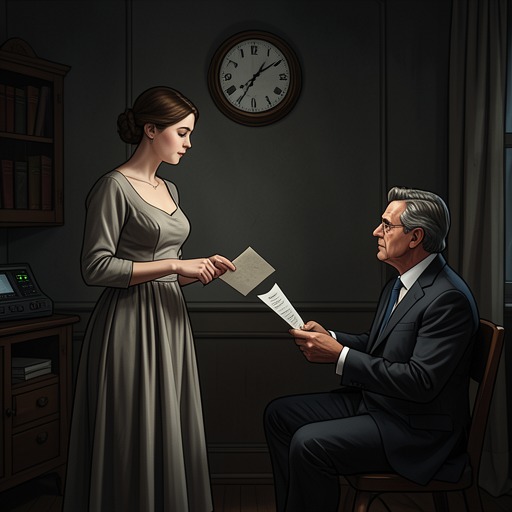
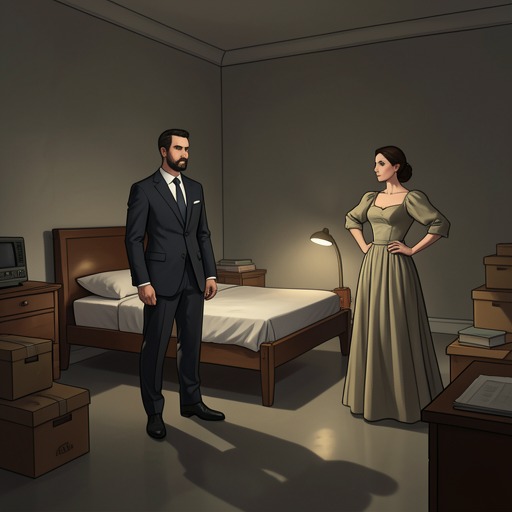
Susan later reports that Elizabeth is willing to consider the arrangement, but first wants to see the person with whom she is supposedly having an affair. Early one morning, Marco Polo accompanies Susan to Elizabeth’s home. Elizabeth has been awake all night and has only recently gone to bed; the visitors wake her. On seeing the couple, she laughs at the incongruity of their appearance as a respectable wife and an adulterous husband. The scene gives her the first response to the proposed fiction: she recognizes its absurdity before Marco Polo explains its practical purpose.
Marco Polo then explains the plan. Elizabeth stops him, saying that no explanation is necessary because she has already gone through the same kind of experience; her own divorce proceedings took place in the same court. That disclosure makes her more than a convenient name for the allegation. She understands the procedure from personal experience, and her past supplies the knowledge that lets her assess the request without needing the couple to instruct her in what divorce entails.
Terms and Consequences
Elizabeth’s willingness does not amount to a blank cheque. When Marco Polo asks how much she wants, Susan answers that Elizabeth is asking for two thousand. The amount turns the proposed favor into an explicit financial arrangement. Its place in the episode matters: Marco Polo has been troubled by what the law requires him to do, but the obstacle is not resolved simply by finding a willing participant. He must also meet Elizabeth’s terms.
Later, Marco Polo writes her a couple of hesitant letters while at a restaurant, disturbed by the steps he believes he must take to comply with the law. That evening he goes to Elizabeth’s house and knocks. She greets him warmly and says she will be ready in a minute. The visit follows the earlier agreement, but the account does not establish what happens after she is ready. The distinction matters: Elizabeth’s participation in the scheme is reported, while the scene leaves the specific outcome of this visit unstated.
Narrative Role and Significance
Elizabeth’s appearances are brief, but they make visible several different forms of vulnerability and leverage. Her broken leg temporarily removes her from singing; Susan’s replacement performance lasts only until Elizabeth recovers. In the divorce plot, the direction of dependence changes: Marco Polo and Susan need Elizabeth’s cooperation, and her prior court experience and stated fee give her a measure of control over the terms.
The story also makes reputation part of the transaction. Susan proposes Elizabeth partly because she supposedly has less to lose, while Elizabeth’s laughter exposes the artificial roles the couple are preparing to perform before the court. Her personal history prevents the arrangement from being presented as an abstract legal trick: she recognizes the process because she has undergone it herself. Yet the account does not supply the details of her marriage, her earlier divorce, or the circumstances of her work beyond her singing. Elizabeth remains defined by what the narrative shows—an injured performer, a woman familiar with divorce, and a participant whose consent is negotiated rather than presumed.