Sujata Mitra
ChowringheeSujata Mitra is a flight attendant whose brief, unannounced stays at the Hotel Shahjahan become a lasting presence in the lives of Satyasundar Bose and Shankar. Her kindness and emotional steadiness emerge through small encounters—a smile at a weary night clerk, an easy presence on the hotel roof—and, after her sudden death, through Bose’s account of the commitment she had already made to him. Her story gives the hotel’s passing encounters an intimate afterlife: Sujata is gone, but her regard for Bose and Shankar continues to shape what they understand about themselves.
Identity and First Arrival
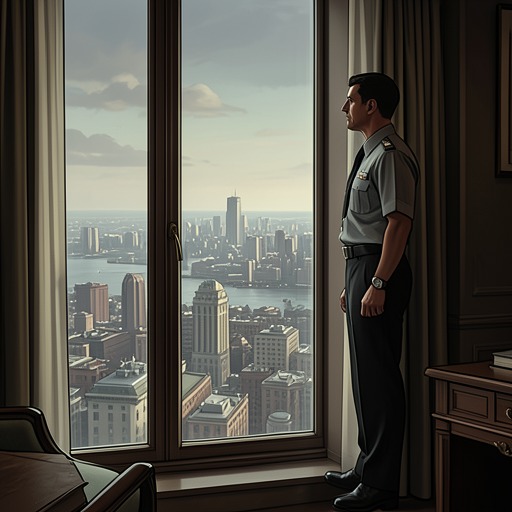
Sujata first enters the hotel’s story as a young woman carrying a suitcase and wearing a blue silk sari. The narrator, heavy with sleep, sees Bose take her luggage and guide her inside. She protests that he should not carry it, a small gesture that establishes her independence even as circumstances leave her reliant on the hotel’s help.
Bose later explains why she has arrived without the usual arrangements. Sujata is an airline flight attendant, and a technical problem with her plane has brought her and another exhausted member of the crew to the hotel. The Hotel Shahjahan normally has special arrangements for airline staff, but that night every room is occupied. Sujata offers to rest on a sofa in the lobby; Bose will not allow it. Rather than wake anyone else, he wakes Shankar, explains the situation, and improvises a place for her to stay until rooms are available the next morning. He points out that the bathroom door’s lock sticks and that the clean towel is hers to use. The episode presents Sujata not as a planned guest but as someone whose immediate need prompts Bose to bend the hotel’s ordinary arrangements.
Encounters with Shankar and Bose
The hotel’s night work brings Sujata and Shankar together again. On another late shift, after a call from Dum Dum Airport warns that incoming guests will be delayed, Shankar struggles to stay awake behind the reception counter. When the guests finally arrive, he jolts awake at the sound of a suitcase being dropped and sees Sujata in a sky-blue sari, perhaps the uniform of her airline. She smiles at him and expresses pity for the exhausted clerk. Her greeting is brief, but it gives their acquaintance a warmth distinct from the hotel’s formal business.
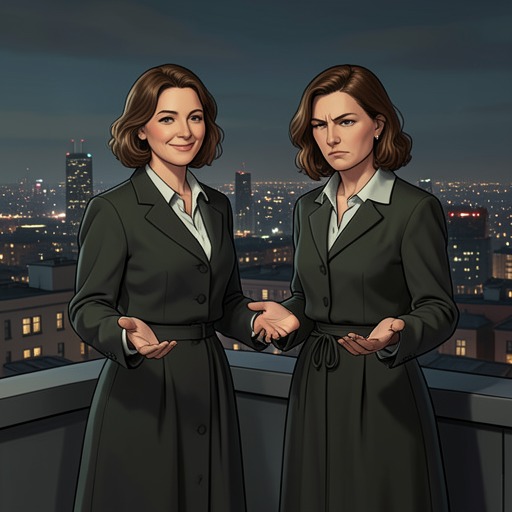
Sujata also joins Bose and Shankar on the roof. She asks to come in, and Bose welcomes her to a space not reserved exclusively for hotel staff. Shankar rises and offers her his seat, preparing to leave them alone, but the exchange continues as shared conversation rather than a private meeting. Sujata remarks on how life has turned out differently from what people intended: a nurse instead of a doctor, a flight attendant instead of a pilot. Bose replies with a dry parallel about an uncle who wanted to become a police superintendent and instead became the superintendent of an office. Their humor draws attention to the gap between aspiration and circumstance without diminishing the seriousness of Sujata’s observation.
In a later rooftop conversation, Sujata is about to leave on a night flight. She worries that her arrival may have unsettled the established lives of the men around her. Shankar tells her that he will get used to it. The exchange makes her aware of the bonds and routines she has entered, while also showing that she is preparing to depart again. Her life as a flight attendant repeatedly places her at the threshold between arrival and departure; the hotel can accommodate her for a night, but cannot make her movements permanent.
A Future Imagined at the Counter
As Bose reaches a turning point in his life, the narrative imagines the airline employees’ bus arriving and Sujata appearing at the reception desk in her light-blue sari, with a leather bag on her shoulder. In this anticipated scene, she smiles and asks after things at the hotel; Bose would ask how she has been. The passage presents a hoped-for recurrence, not a confirmed later visit. Its forward-looking, conditional form matters: the familiar arrival is imagined at the very moment when Bose’s future is uncertain, and the reader is invited to feel the pull of a reunion that the narrative does not establish as having occurred.
The later rooftop conversation makes the uncertainty more immediate. While Bose goes to see Marco Polo, Shankar remains with Sujata, who is about to take a night flight. She asks whether he feels that she has disturbed their settled lives. The question registers her sensitivity to the way her presence affects the men, but Shankar’s reassurance offers no promise about what will happen next. Their closeness develops through these brief intervals of conversation, shaped as much by her departures as by her returns.
Death and Bose’s Letter
Sujata’s fate reaches Shankar through a letter from Bose. A late-night telephone call has informed Bose that she died in a car accident while travelling to Delhi Airport. On the form she had completed for her airline, Bose was listed as her closest person. The airline authorities, acting in accordance with her last wish, arrange for her body to be sent to him by plane. Bose has just returned from scattering her ashes in the Arabian Sea when he writes to Shankar. The sequence turns the recurring movements of air travel into an irrevocable final journey: a woman who had repeatedly arrived and departed is brought back to Bose only after her death.
Bose’s letter makes explicit what their earlier scenes left unresolved. He says that he postponed marriage while thinking of himself and his career, whereas Sujata never hesitated to acknowledge him as her man. In his account, she accepted the nearness of life and death more readily than he did and did not put her own interests ahead of other people’s. He believes the airline has arranged for her compensation to be paid to him, but the money cannot repair the loss. He describes himself as a prince returned to the washerman’s son and says he cannot survive alone. Although he would like to return to the Hotel Shahjahan, that option is unavailable, so he decides to work at Marco Polo’s hotel on Costa Dorada in Africa.
Regard and Narrative Afterlife
The letter carries a second revelation: Sujata had held Shankar in high esteem and had described him to Bose as an exceptional person. Shankar reacts not with straightforward acceptance but with embarrassed disbelief. In the hotel, the rooftop rooms, bricks, tables, chairs, stairs, and even the reception counter seem to laugh at the praise. The building’s imagined response turns a private compliment into a scene of comic exposure, while also showing how deeply the hotel has entered the narrator’s sense of himself. Sujata is absent, yet her judgment reverberates through the place where she met him.
Her character is drawn through action and recollection rather than an extended account of her past. She is an airline employee displaced by a technical mishap, a considerate guest who offers to sleep in the lobby, a companion able to joke about unrealized ambitions, and the person who recognizes Bose as her partner before he is ready to marry. The letter binds these separate aspects together without resolving their painful imbalance: Bose delayed, Sujata did not, and the chance to answer her commitment in life has passed. Her final significance lies both in that loss and in what survives it—the evidence that she chose Bose as her closest person and saw in Shankar a quality he cannot easily believe in himself.