Samantha Reed
AfterburnSamantha Reed, a former congresswoman from California and Secretary of Defense, occupies the political center of the book’s debates over American power, United Nations authority, and the crisis surrounding Ukraine and Crimea. Her position is neither simple withdrawal nor open-ended intervention: she argues that international responsibility cannot be left to the United States alone, but also resists deepening military involvement when the immediate choices carry grave risks. That tension makes her a consequential civilian decision-maker in a story where military events repeatedly test the boundaries of political authority.
Identity and Political Position
Before joining the administration, Reed served in the House of Representatives and was a member of the House Armed Services Committee. Her political influence is described as extending beyond her former committee work: she is a powerful friend of the feminist left. Tall and dignified, she has the practiced charm and ready smile of an experienced politician. Yet her confirmation as Secretary of Defense was close, a detail that places her authority within a divided political climate rather than presenting it as uncontested.
The novel’s account of Reed emphasizes both her public fluency and the institutional weight of her office. She participates in discussions where military consequences, national sovereignty, and international legitimacy are debated by senior officials, and she speaks not as an outside critic but as the civilian leader responsible for defense policy. The contrast between her political manner and the increasingly urgent subject matter gives her scenes a double register: deliberation continues even as the decisions under discussion concern aircraft losses, armed conflict, and people held hostage.
The United Nations and the Limits of American Power
A key test of Reed’s leadership follows the shooting down of a United States Navy jet by a United States Army helicopter flying a United Nations mission. Two days after the incident, she brings the matter before officials, noting that the news is already widely known. The episode makes the question of international command concrete: the issue is no longer only whether the United Nations should have greater authority, but how responsibility and control operate when American forces are involved in a mission under its auspices.
Admiral Scott objects to granting the United Nations more power, calling such a step a surrender of American sovereignty. The dispute is part of a wider argument over whether the United States should continue acting as the world’s policeman. Reed accepts the force of the criticism that America cannot keep carrying that role alone, but argues that the world still needs a collective means of maintaining peace. Her support for international responsibility therefore does not amount simply to transferring power without qualification; it reflects her effort to reconcile a reduced American burden with the need for an effective response to disorder.
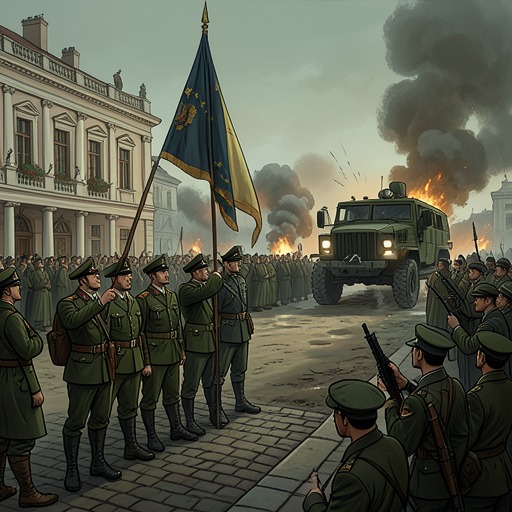
That debate is set against a region already destabilized by Russia’s civil war and the prospect of renewed conflict over Crimea. Ukraine had long been uncomfortable with its position as one of the Union’s largest and most productive republics, while ethnic Ukrainians were not Russians despite outsiders’ tendency to treat them as such. Crimea’s geographical and political position further complicates the crisis: the peninsula had been considered part of Ukraine, while the Russian Federation bordered it to the east. Reed’s argument for intervention thus takes place amid competing claims of identity, territory, and security, rather than in a conflict with a single uncontested account of ownership.
From Peacekeeping Argument to Hostage Crisis
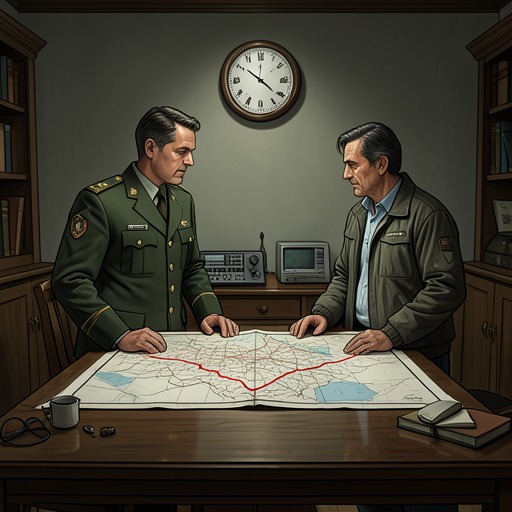
As the crisis worsens, Reed’s policy deliberations shift from the general case for international action to a stark proposal involving Dmitriev’s demands. Her colleagues listen repeatedly to a recording concerning Russian citizens in eastern Ukraine and a possible invasion of Crimea. Reed stops the tape after its third playing, by which time the officials have begun to know much of it by heart. The repeated playback gives the discussion a pressure-cooker quality: the evidence is familiar, but its implications remain unresolved.
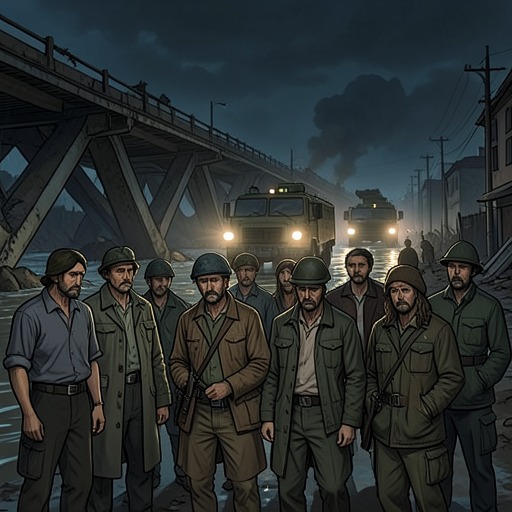
When Herb Waring calls the speaker insane and doubts that the President would accept the proposal, Reed answers that the offer should at least be considered and discussed because it may be the only viable option. Admiral Scott reacts sharply, insisting that the government cannot make deals with terrorists while thousands of Americans are hostages. Reed rejects the claim that governments never make such arrangements, observing that negotiations and settlements can conceal the reality of bargaining. Her response does not establish that she has accepted Dmitriev’s terms; rather, it shows her resisting the comfort of a categorical rule when the lives of American personnel are at stake.
Scott later calls Dmitriev’s demands extortion and argues that the United States cannot give in. Reed presses him on the alternative, pointing to the danger of acting militarily and the risks of trying to force a solution. The exchange exposes the practical limits of the choices before her: refusing a demand does not itself free those being held, while an operation to recover them could widen the conflict. Her willingness to consider negotiation is therefore presented as a contested political judgment, not as a settled bargain or a simple reversal of her earlier position.
Intervention, Restraint, and Civilian Authority
Reed’s stance changes in emphasis as the crisis develops. Earlier, she argues that intervention can help maintain peace and that the United Nations should embody a responsibility shared by the world rather than assigned to one country. Later, when officials consider a larger military operation, she says she cannot in good conscience recommend any act that would deepen American involvement in the region. She explicitly refuses to send in the Marines and risk further escalation. The distinction is important: support for international action does not oblige her to endorse every military measure proposed in its name.
Her refusal is voiced within the constitutional and political tradition that places policy-making in civilian hands. The narrative makes that tradition explicit even as Admiral Scott and other military voices express their objections to the direction of policy. Reed’s authority is not portrayed as freedom from challenge; it is the responsibility to choose among dangerous alternatives and to make those choices binding on the armed forces. Her decisions thus bring the debate over national sovereignty and United Nations power back to the domestic question of who has the right to determine military policy.
Narrative Role
Reed links the book’s battlefield crises to the arguments in the rooms where intervention is authorized, limited, or rejected. Her speeches and decisions repeatedly force the distinction between wanting peace and possessing a safe means to secure it. She supports a collective international role when unilateral American power appears unsustainable, considers negotiation when Americans are held hostage, and then opposes sending Marines when deeper involvement seems likely to increase the danger. The resulting portrait is not of a leader with an uncomplicated doctrine, but of a civilian official whose governing problem is how to act without treating either sovereignty or intervention as an automatic answer.