Madhab Pakrashi's wife
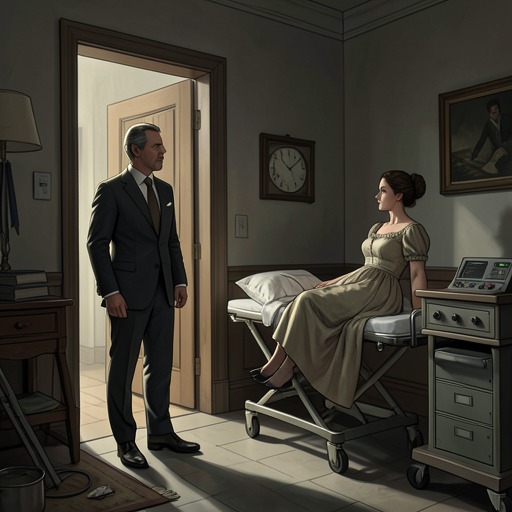
ChowringheeMadhab Pakrashi's wife moves between two sharply divided worlds: public social work and private encounters at the Hotel Shahjahan. Her husband possesses cars, companies, houses, and money, yet, as Sata Bose observes, wealth has not secured him a genuine marriage. Her discreet visits to the hotel make her a figure through whom the novel examines marital estrangement, secrecy, and the unequal judgments attached to women's sexuality.
Public Standing and Private Life
By day, Madhab Pakrashi's wife performs social work, gives speeches, and expresses concern for the country. Bose describes her as thoroughly Bengali in that public role, while at the hotel she becomes, in his words as reported by the narrator, international in her choice of company: he has never seen her with an Indian. The contrast is not simply between two places, but between a respectable public identity and a private life carefully kept out of view.
Her husband's wealth sharpens that divide. Bose says that she has been removed from the accounts of Madhab Pakrashi's bank, and that although he has accumulated many material possessions, what he has gained has not given him what he has lost. His bleak formulation is that he has her without really having her. The marriage thus appears intact in name and circumstance but emptied of mutual possession or intimacy.
The Hotel's Quiet Surveillance
Bose describes a recurring pattern rather than a single visit. The male guest has an office in Calcutta, lives as a paying guest with an Englishman in Ballygunge, and comes to the Hotel Shahjahan alone, hiring a double room at least four or five times a month. Madhab Pakrashi's wife arrives at night in dark glasses, taking a taxi despite her husband's ownership of seven or eight cars. Bose treats such details as clues: in his experience, the husband of a woman arriving this way is away on business.
The hotel's reporting rules also shape the apparent discretion of her arrangements. The staff must report guests who are not citizens of the Commonwealth to the police, and Bose suggests that this may explain why her last regular visitor to suite number one was a thirty-three-year-old Frenchman, whereas another visitor was English. The room, nationality, and manner of arrival become practical parts of an affair conducted under observation, but not necessarily exposed by it.
Bose does not present Madhab Pakrashi as a proven adulterer. He says he has seen him at the hotel around lunchtime, where he does not even order a beer, and that Byron followed him to Bombay twice at his wife's request without finding anything. Bose's impression is that Madhab Pakrashi is decent; he also allows that his wife may suspect him without having caught him in a transgression. The account therefore leaves the marriage morally unresolved: suspicion runs in both directions, while the hotel supplies opportunities and fragments of evidence rather than certainty.
A Reserved Suite and an Uncertain Appointment
On one night, William Ghosh asks whether suite number one has been rented and whether Madhab Pakrashi's wife has arrived. She has not. She reserved the room herself by telephone earlier that day, and Ghosh surmises that she may not yet know of a sudden business trip by her husband. He also asks whether Thomson has arrived. The exchange links her private arrangements to the hotel's routine of reservations, arrivals, and staff knowledge, while withholding a definitive account of what takes place that night.
Reputation, Class, and Rosie's Accusation
Rosie's confrontation with Bose shows the human cost of the sexual secrecy surrounding married men. Rosie says that Banerjee told her he was unmarried, and she accuses Bose of damaging her reputation by discussing the relationship and misrepresenting where she had gone. She explains that she had considered marrying Banerjee and leaving, and had asked Jimmy to give her hotel job to her sister. Her family, she says, depends on her earnings: her mother, a paralysed father, and two unmarried sisters live in poverty, while her work gives her access to good food and the possibility of supporting them.
The novel places that precariousness beside the scandal of a wife's hotel visits without suggesting that the situations are identical. Elsewhere, Robbie says he lost his job because marrying a woman who had served drinks to strangers was considered damaging to his employer's prestige and business. Rosie also speaks of being called black and rejected by Calcutta society. Against those explicit penalties for a barmaid's marriage and racialized identity, Madhab Pakrashi's wife's wealth and social position offer a different kind of cover. Her story contributes to the novel's portrait of respectability as a social privilege: the hotel can shelter private conduct, but the consequences of sexual reputation fall unevenly on the women caught within it.