marlin's skeleton
The marlin's skeleton is the stark, final image of Santiago's ordeal, a stripped-down monument to his battle and its ambiguous outcome. After the sharks have devoured nearly all of the great fish's flesh, what remains is a long white spine with a huge tail, lashed to the side of the skiff. This skeletal remnant is all that Santiago brings back to the harbor, transforming his triumph into a visible symbol of defeat and endurance.
Appearance and Condition
The skeleton is described as being eighteen feet from nose to tail, a measurement taken by a fisherman who wades into the water with his trousers rolled up, using a length of line. When Santiago first sees it in the reflection of a streetlight after his return, he observes "the white naked line of his backbone and the dark mass of the head with the projecting bill and all the nakedness between." The fish's original purple and silver coloring is gone, replaced by the color of "the silver backing of a mirror," though its stripes still show. The great tail, a pale lavender above the dark blue water when the fish was alive, now stands up well behind the skiff's stern, lifted and swung by the tide.
The Journey Home
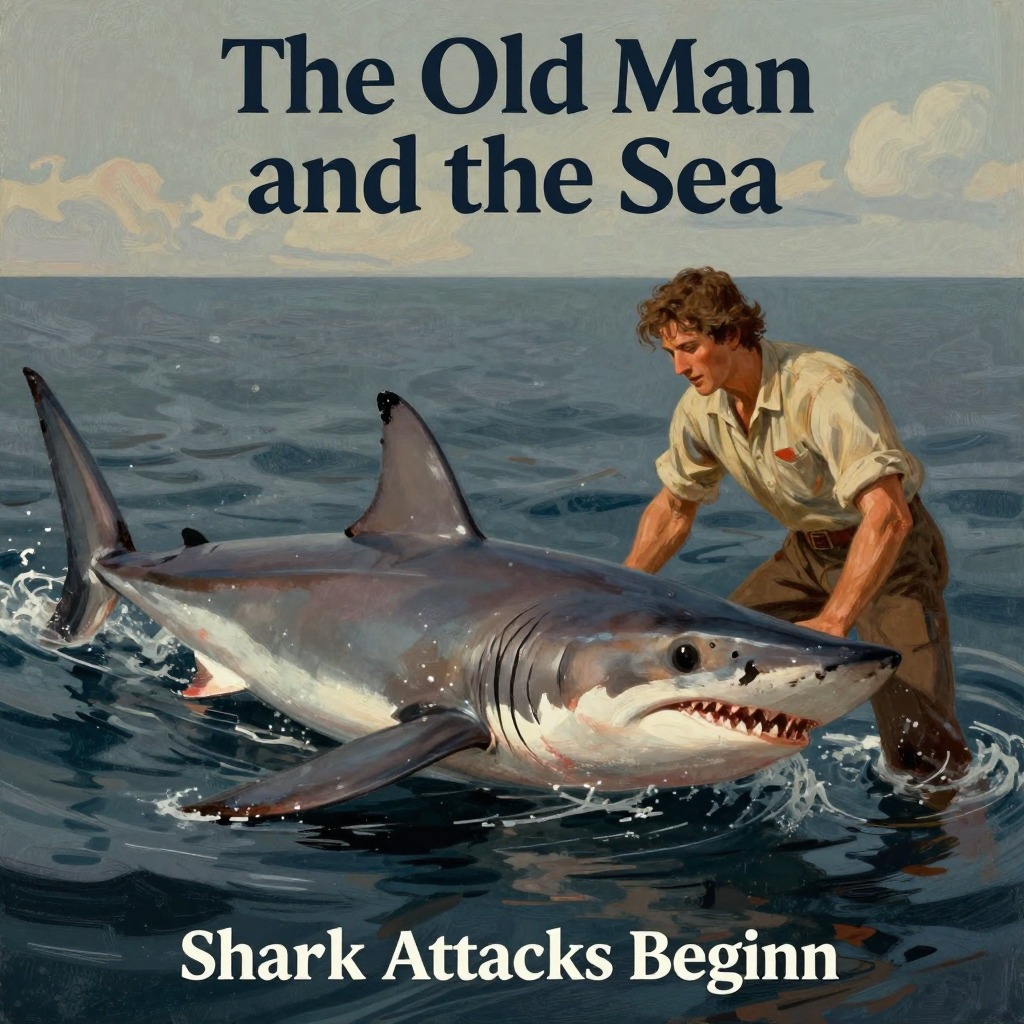
Santiago had anticipated the skeleton's fate even before the sharks arrived. After killing the marlin, he estimated its weight at over fifteen hundred pounds and calculated its potential market value at thirty cents a pound, but the sharks' relentless attacks reduced the fish to a fraction of its former self. As he sailed home, he noted that the skiff moved "lightly" without the great weight beside her, and he felt the loss of the fish's meat as a personal violation. He spoke to the ruined carcass, calling it "Half fish" and apologizing for going out too far, saying, "I ruined us both." The skeleton, drained of blood and awash, became a trail for all sharks "as wide as a highway through the sea."
Reception in the Harbor
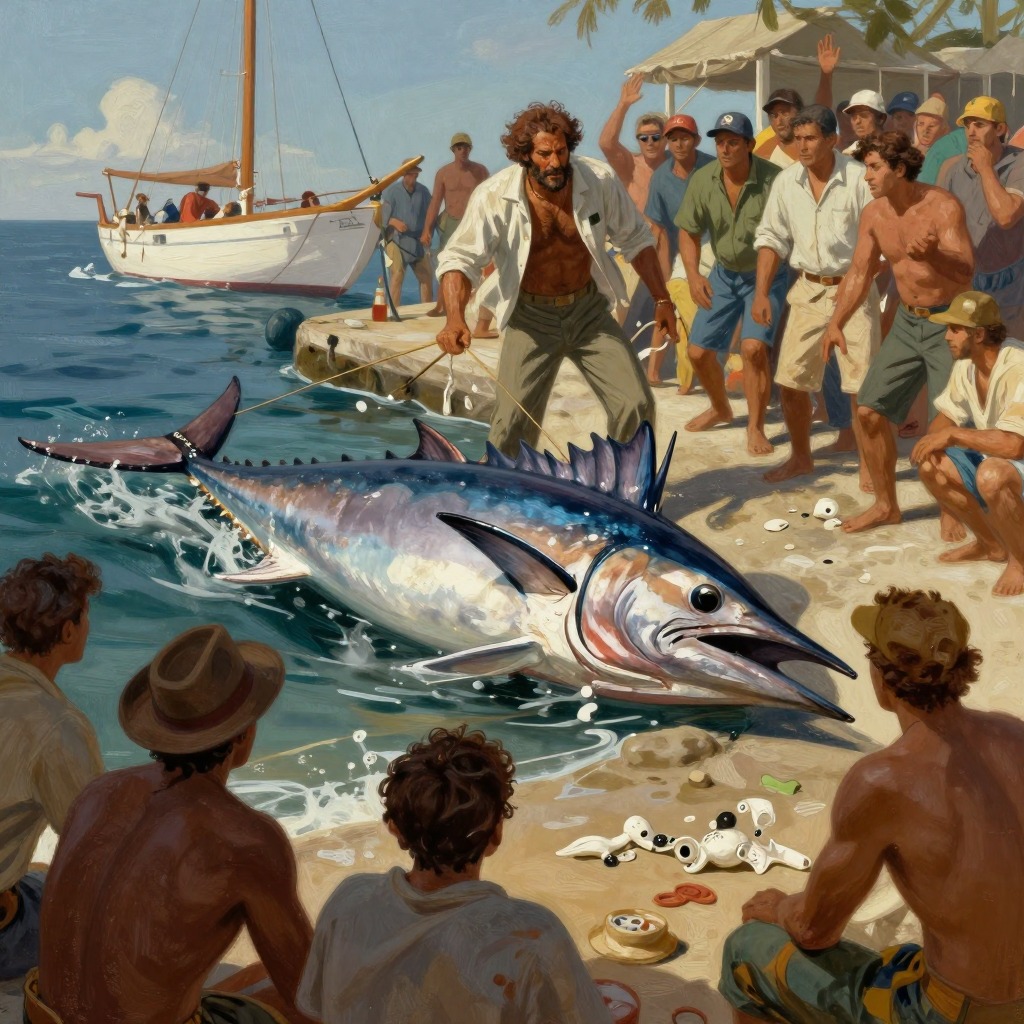
The skeleton draws immediate attention from the fishing community. When the boy, Manolin, sees the old man's hands and the skeleton, he starts to cry. The fishermen gather around the skiff, and one measures the skeleton, announcing its length. The proprietor of the Terrace declares, "There has never been such a fish." The boy, however, is grief-stricken, telling the proprietor, "Damn my fish," and crying again. He instructs everyone not to disturb Santiago, who is sleeping in his shack.
Misinterpretation by Tourists
The skeleton's final appearance in the story is as an object of casual, ignorant observation. That afternoon, a party of tourists at the Terrace looks down into the water among the empty beer cans and dead barracudas. A woman sees the great long white spine with its huge tail and asks a waiter what it is. The waiter, meaning to explain what had happened, says, "Tiburon"—shark. The woman, misunderstanding, remarks that she did not know sharks had such handsome, beautifully formed tails, and her male companion agrees. The skeleton, which represented Santiago's greatest triumph and his most devastating loss, is thus reduced to a curious sight for outsiders who cannot grasp its significance.
Thematic Significance
The marlin's skeleton embodies the story's central paradox: Santiago has achieved something extraordinary—catching the largest fish he has ever seen—yet he returns with only its bones. The skeleton is a physical manifestation of the idea that a man can be destroyed but not defeated. It is also a symbol of the cycle of life and death in the sea, where the great fish is consumed by sharks and ultimately becomes "just garbage waiting to go out with the tide." The skeleton's misinterpretation by the tourists underscores the isolation of Santiago's experience and the inability of those outside his world to understand the depth of his struggle and his relationship with the fish, which he called his brother.