Philosophical Cognition
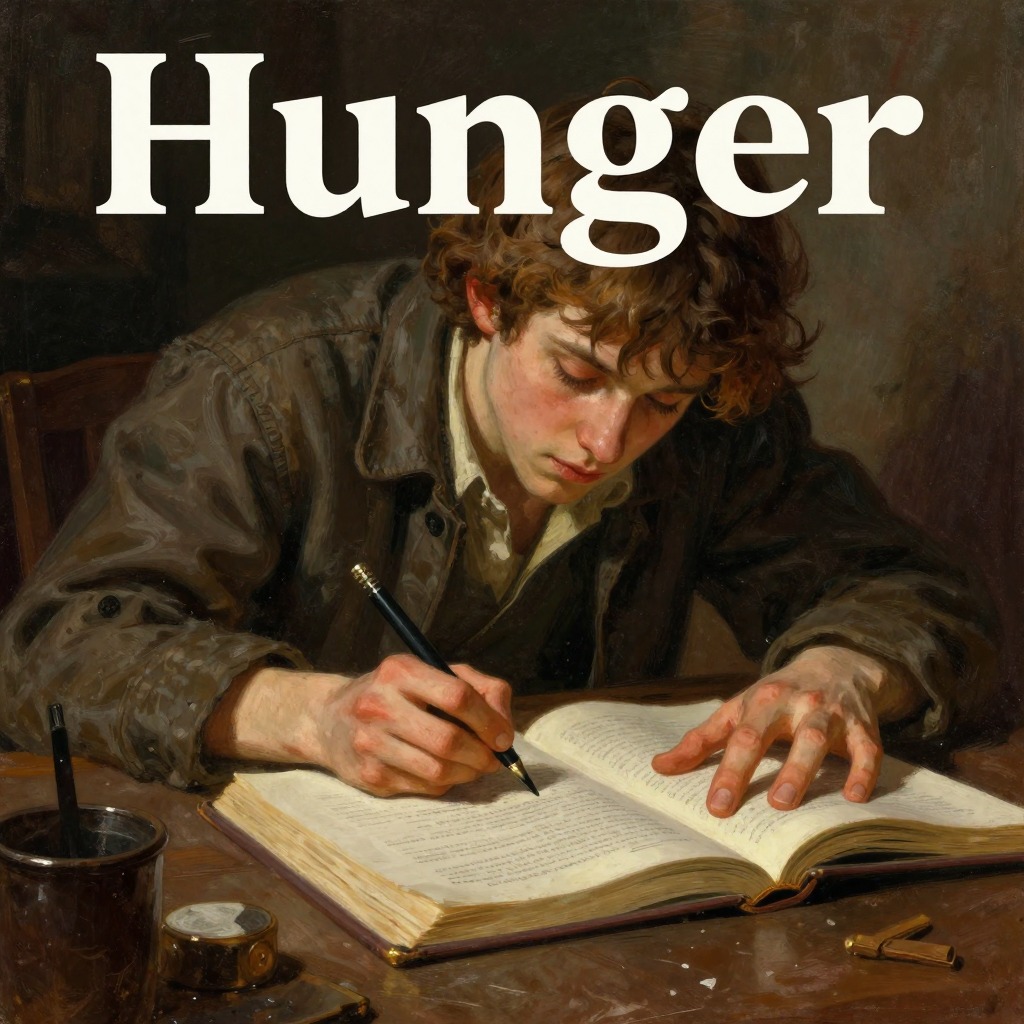
Philosophical Cognition is a three-volume dissertation that the protagonist of Hunger conceives during a moment of grand ambition, only to have its creation thwarted by the loss of his pencil, symbolizing the gap between his intellectual aspirations and the brutal reality of starvation.
Conception and Ambition
After eating a piece of cheese and a French roll in the park, the protagonist feels a surge of courage and decides he can no longer be satisfied with writing an article about something as simple as the "Crimes of Futurity." He feels capable of a much greater effort and resolves to write a treatise in three sections on "Philosophical Cognition." This work, he believes, will give him an opportunity to crush pitiably some of Kant's sophistries. He imagines the treatise might be of the greatest possible help to many young people, and he plans to avoid laying violent hands on Kant, making only an almost imperceptible gliding over when he comes to query Time and Space, though he will not answer for Renan.
Thwarted by a Lost Pencil
The protagonist's grand plan is immediately derailed when he discovers he no longer owns a pencil; he had forgotten it in the pocket of his waistcoat, which he had just pawned. He becomes thoroughly embittered, pacing up and down before his seat like a maniac, and reflects on how strangely awry things seem to go. He considers returning to the pawnbroker to get his pencil back, thinking he could still get a good piece finished before the parks fill with people. He leaves the park hurriedly to fetch his pencil, but on the way, he encounters a lady he names Ylajali, and his attention is diverted, leading to a series of events that prevent him from ever beginning the work.
The Pencil as a Symbol of Lost Potential
When the protagonist finally recovers his pencil from the pawnbroker, he invents an elaborate story about its significance, claiming it was with this pencil that he wrote his dissertation on "Philosophical Cognition" in three volumes. He tells the pawnbroker that this stump of pencil had simply made him what he was in the world, placing him in life. This lie reveals how the protagonist clings to the identity of a serious intellectual, even as his circumstances make such an identity impossible. The treatise itself is never written, existing only as a phantom ambition that highlights the protagonist's deteriorating mental state and his inability to sustain the concentration required for sustained intellectual work. The work remains a symbol of what he could have been, a ghost of his former self that haunts his starving days. Later, when he tries to write an article, he mechanically writes the date 1848 in each corner, a date that appears on his failed application for a bookkeeping job, further linking his intellectual failures to his physical decline. The treatise on Philosophical Cognition stands as the most ambitious of his many unrealized projects, a monument to the creative energy that hunger systematically destroys.