St. Olav's Place
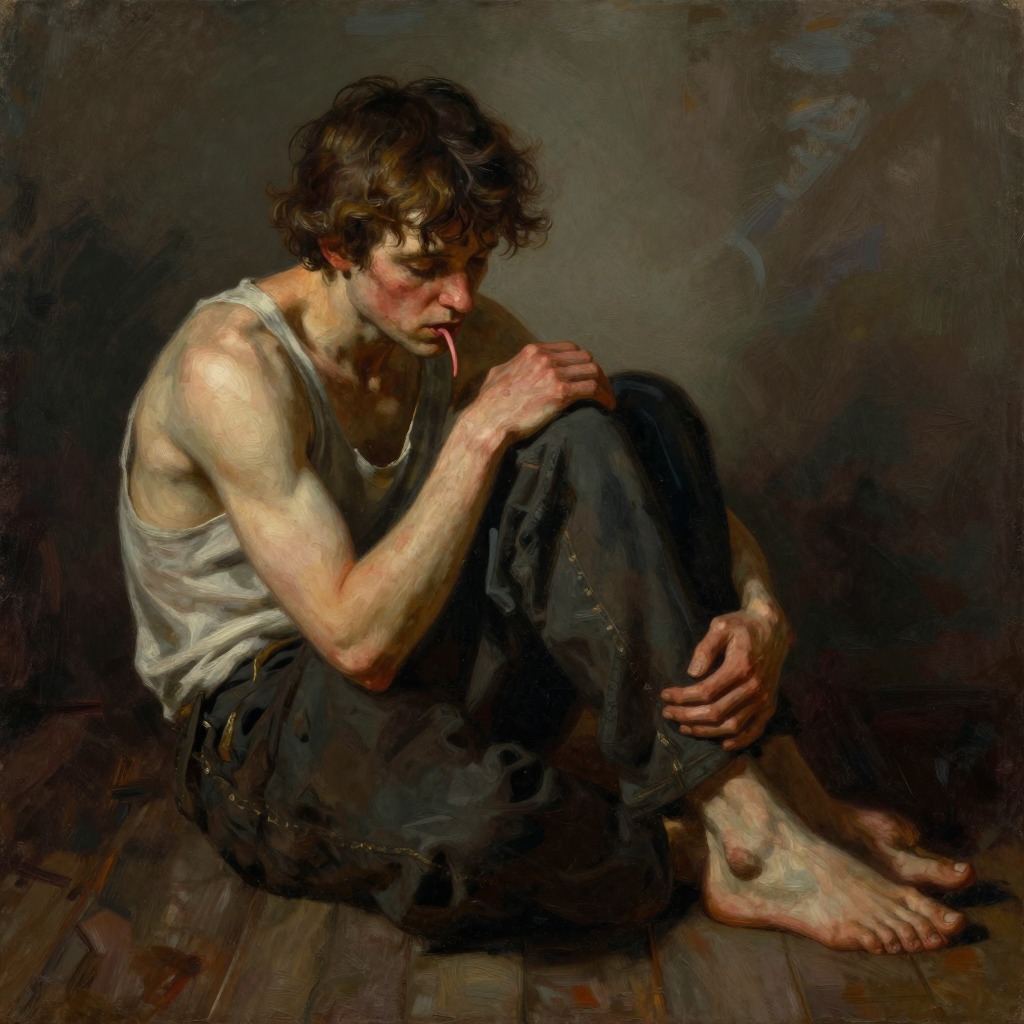
St. Olav's Place is a residential square in Christiania, the city where the narrator wanders and starves. It is defined by a fountain, lamp-posts, and a few trees, and is dominated by a large four-storeyed house at No. 2. This location becomes the focal point of the narrator's obsessive pursuit of a young woman he names Ylajali, and it is the setting for the most intimate and painful moments of his romantic entanglement.
Identity and Setting
St. Olav's Place is a quiet, respectable square in Christiania, characterized by its fountain and the imposing No. 2, a four-storeyed building. The narrator first glimpses Ylajali entering this house after following her through the city, and he later lies to an old man in the park, claiming he lives there himself, giving the false name "Happolati" as his landlord. The square is also where the narrator, after a night in the guard-house, observes the morning bustle of Young's Market, a contrast to the private, charged space of Ylajali's home.
The Site of Romantic Encounter
St. Olav's Place is the stage for the narrator's most significant encounters with Ylajali. After their first meeting, she stands under a lamp-post opposite his door, and later, she reveals she lives at No. 2. The narrator waits for her at the fountain in the square, and they walk together through the streets before she invites him up to her apartment. The square is the threshold between the public world of his poverty and the private, tantalizing space of her home, where he experiences both ecstasy and humiliation.
The Location of Rejection and Loss
The square also becomes the site of the narrator's deepest shame and rejection. After their evening together, Ylajali sends him half-a-sovereign via a commissionaire, an act he perceives as alms. In a fit of rage and pride, he crumples the coin and throws it in his landlady's face, severing his last connection to the place. Later, he sees Ylajali walking with "The Duke" on Carl Johann Street, and he bitterly resolves to pass her by, acknowledging that the promise of St. Olav's Place has been broken. The square, once a symbol of hope, becomes a reminder of his degradation.
Narrative Significance
St. Olav's Place functions as a spatial anchor for the narrator's emotional trajectory. It is the location of his most intense romantic fantasy and his most crushing defeat. The contrast between the respectable, solid house at No. 2 and the narrator's own transient, squalid lodgings underscores the social chasm between them. The square is not merely a backdrop but an active element in the story, representing the unattainable domesticity and stability that the narrator desperately craves but cannot reach.