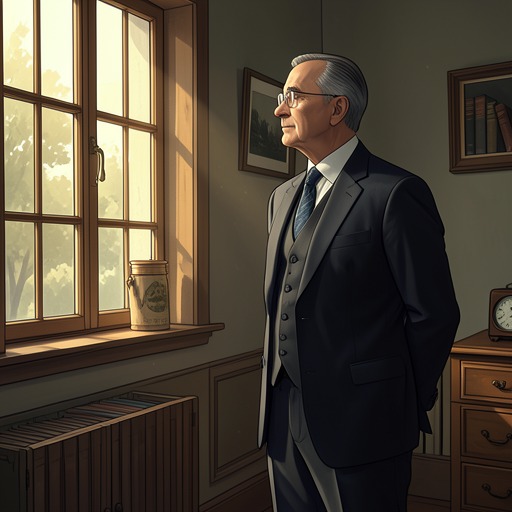
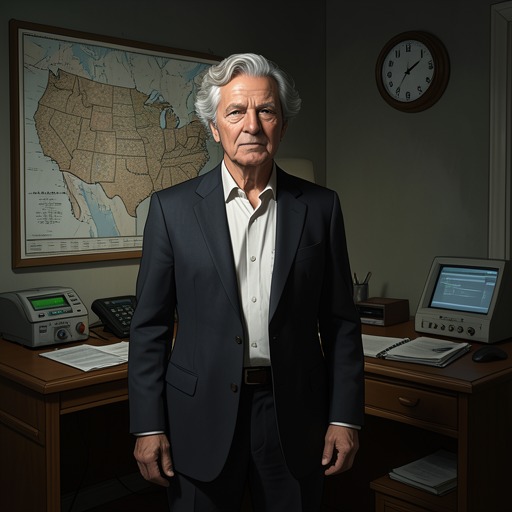
Ike
TrumanIke is presented as a celebrated general and a potential presidential successor, but also as a military adviser willing to voice doubts about major strategic choices. His appearances with Harry S. Truman reveal both the easy personal regard between the two men and the limits of Ike’s influence: Truman listened to military counsel, but the evidence does not show him adopting Ike’s views on either the atomic bomb or the disposition of American forces in Europe.
Public Standing and Truman’s Regard
After Ike made a triumphal return to the capital, he addressed a joint session of Congress. Truman hosted a stag dinner for him at the White House, which those present considered a success. In a letter to Bess Truman, Truman described Ike as a good man who had done an excellent job. With talk circulating about a possible Ike presidential campaign, Truman said the prospect was entirely acceptable to him; he even expressed a willingness to hand over the office immediately if he could.
That welcome was personal as well as political. The dinner and Truman’s praise suggest that Ike’s prominence did not make him a rival in Truman’s eyes. The President could regard him as a national figure with the stature to attract presidential speculation while still speaking of him with uncomplicated warmth. That combination would become especially visible in their later conversation about the 1948 election.
Counsel on the Atomic Bomb
At a White House lunch with Truman and Five-star General Omar Bradley, the discussion turned to strategy in the Pacific and the possible use of the atomic bomb. Truman had not asked either general for an opinion, but Ike volunteered that he opposed using the weapon. He believed Japan was already defeated and had earlier expressed to Henry L. Stimson the hope that the United States would not be the first to use a weapon so terrible.
The account distinguishes Ike’s initial reaction from a considered analysis. He would later concede that his opposition had been personal and not based on an examination of the issue. That qualification does not erase the dissent, but it does define its limits: the evidence presents him as raising a moral and intuitive objection, not as offering a developed alternative plan. Five-star General Omar Bradley, who had only just met Truman, came away thinking the President had already made up his mind. The scene therefore shows both Ike’s willingness to disagree and the uncertain reach of his advice.
Ike also cautioned Truman against urging the Soviet Union to enter the war against Japan. At the same time, he acknowledged the hard strategic constraint behind the question: no power could keep the Soviet Red Army out of the conflict unless Japan was defeated before it arrived. Truman later recalled that the Americans had wanted Soviet participation, while adding that knowledge of what the bomb would do would have changed that calculation. Ike’s warning thus belongs to a moment when the timing of victory, Soviet involvement, and the new weapon were still entangled in uncertainty.
Europe and the Question of Commitments
Ike’s judgment also entered the debate over American troops in Europe. As Truman considered whether to withdraw forces from the Soviet zone in accordance with agreements made at Yalta, he was told that Ike regarded it as unwise to keep American troops there. The warning stood alongside a competing concern: delaying withdrawal, Truman’s advisers argued, would be misunderstood by the Russians. Truman chose to honor the agreement and ordered the pullback, believing that American good faith might encourage the Soviet Union to meet its own obligations in return.
The episode places Ike among the senior military voices consulted during a consequential diplomatic choice, but it does not establish that he directed the policy or that Truman followed his view. Instead, it illustrates the competing considerations around the decision. Ike’s reported advice favored avoiding a prolonged American presence in the Soviet zone; Truman’s choice was shaped by his commitment to the wartime agreement and by his hope that keeping it would sustain cooperation. Their difference appears as a difference of judgment within a wider policy problem, not as a personal rupture.
The Presidency and Their Relationship
The warmth between the men surfaced most plainly after a ceremony in Berlin. On the ride back, Truman unexpectedly told Ike that he would try to help him obtain whatever he wanted, specifically including the presidency in 1948. The offer was striking because it treated Ike not simply as a decorated commander but as a plausible future President—and because Truman presented that possibility as something he would support.
Ike looked astonished and answered that he did not know who Truman’s opponent would be, but that he would not be that opponent. His response stopped short of accepting the offer or declaring a political ambition; it was a direct reassurance that he would not challenge Truman. Five-star General Omar Bradley remembered trying to keep a straight face as the exchange unfolded, underscoring its surprise even to someone present. The moment gives their relationship a distinctive balance: Truman was generous enough to imagine surrendering the office to Ike, while Ike’s immediate answer was to remove himself from the contest.
Across these episodes, Ike’s narrative role is neither that of a policy-maker who determines Truman’s choices nor merely that of a celebrated figure used to decorate the President’s public life. He appears as a trusted general whose advice mattered enough to enter discussions of Europe and the Pacific, though not always to prevail; as a public figure whose presidential potential was openly acknowledged; and as a man whose response to Truman’s extraordinary offer affirmed their personal regard without turning it into a political challenge.