Bess Wallace Truman
TrumanBess Wallace Truman was Harry S. Truman’s wife and, behind a deliberate reserve, one of his most important private advisers. Their relationship began with a secret engagement, endured his departure for war and a long separation, and developed into a marriage lived for years within an extended family household. As President, Harry relied on Bess’s judgment even as the presidency sometimes left her feeling excluded from decisions that changed their lives.
Courtship and the decision to wait
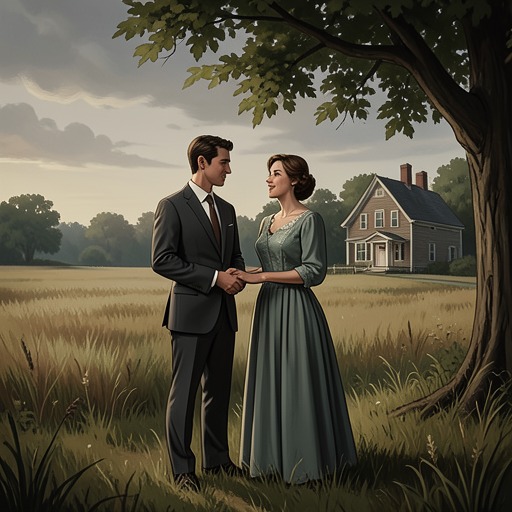
By November 1913, after a long courtship, Bess told Harry that if she ever married, she would marry him. She confirmed the promise in a letter, and they agreed to become secretly engaged. Harry was exhilarated, describing himself as “all puffed up and hilarious and happy.” The exchange also shows the ease of their teasing intimacy: Bess called him an enigma, and he welcomed the description, especially from her.
Their engagement was tested when the United States entered the First World War. Although Harry had reasons to remain at home, he chose to go, leaving his mother and sister, Mary Jane Truman, with the burdens of the farm and household. Bess responded by proposing that they marry at once. Harry refused: he would not bind her to a man who might return crippled or not return at all. They would wait until he came home whole. The decision made their commitment inseparable from uncertainty, and their separation became a period of steady correspondence rather than a withdrawal from one another.
Harry carried three photographs in the chest pockets of his uniform. Images of his mother and Mary Jane were in one pocket; in the other, over his heart, was a portrait of Bess that he especially cherished. On its back she had written, “Dear Harry, May this photograph bring you safely home again from France.” The photograph served as a personal token amid military duty, while her message expressed the hope on which their postponed marriage depended.
Marriage and the extended household
Harry and Bess married on June 28, 1919, at Trinity Episcopal Church in Independence. The crowded church became so hot that the flowers wilted. Bess wore a white georgette-crepe dress and a white picture hat, carrying roses; Harry wore a gray three-piece suit made on credit by his best man, Ted Marks. Ethel Noland remembered the radiant happiness on Harry’s face as Bess came down the aisle. They were thirty-five and thirty-four, respectively, and had waited nearly nine years since the beginning of their courtship.
Their honeymoon included stays in Chicago and Port Huron. At Port Huron, beside Lake Huron, Harry found the days so happy that the place’s name would remain for him a lasting shorthand for contentment. The trip was cut short because Bess worried about her mother’s health. The couple returned to Independence and moved into 219 North Delaware Street, the Wallace family home, as Bess’s mother wished. Bess considered the arrangement temporary, but the household was shared with her mother and other relatives. Harry arrived with his clothes, a few books, and a trunk of Army belongings; the new marriage began not in a separate home but within the close supervision and routines of a larger family.
The private strain of family life also included miscarriages. Bess had suffered one in the spring of 1920 and a second by the time Harry campaigned for county judge in 1922. She took no part in that campaign. The couple wanted children, but Harry left friends with the impression that any difficulty might be his. In a joking letter to a cousin who had recently become a father, he wished for some of the cousin’s old trousers in the hope they might bring him luck. The humor did not erase the disappointment, which the couple largely kept from public view.
A private partnership through public life
Bess remained closely attached to Harry during his growing political responsibilities. When he spent two weeks on active duty at Fort Leavenworth in 1923, their letters revealed both the intimacy of their separation and their affectionate private language. She called him her “Old Sweetness” and wrote of missing him. Her life at home, however, was less visible than his public work: she did not campaign alongside him, and the family’s modest social life remained quiet and private.
During the Second World War, Bess moved to Washington and enjoyed its faster pace. Harry placed her on his Senate office payroll at a salary of $2,400, a practice not uncommon in the period but one he had criticized in a political opponent. He worried about the publicity if the arrangement became known. Staff members differed over how much work Bess performed; Harry privately advised her to make occasional visits and sign letters. She also worked one day a week at the USO and took pleasure in the excitement surrounding his rise on Capitol Hill. The arrangement brought her income and a place, however contested, within the machinery of his office.
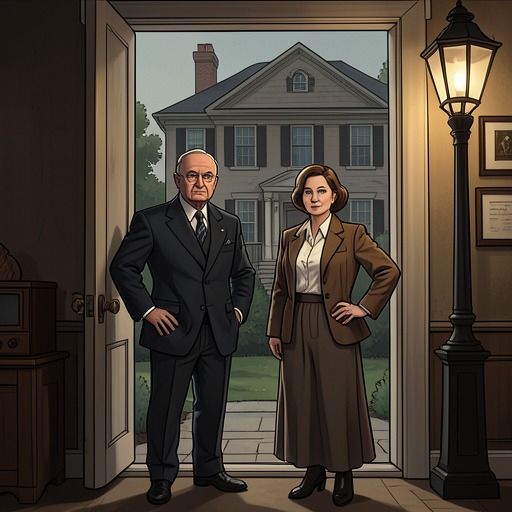
Bess’s influence was not confined to formal duties. J. B. West, who observed her in the White House, said that she guarded her privacy while playing a larger role than most people suspected: she advised Harry on decisions, and he listened. Their evening routine could be domestic and unceremonious. Before dinner they relaxed over cocktails in the sitting hall, while the household staff gradually learned that Bess and the President disliked overly sweet old-fashioneds and did not want fruit punch. Such small negotiations show the private life continuing inside the ceremonial residence.
The White House: influence and distance
Bess’s relationship to the presidency was complicated by the fact that she had opposed Harry’s becoming President. In the early months of his administration, their daughter, Margaret Truman Daniel, later recalled, Bess felt increasingly shut out and superfluous. Most painful was Harry’s failure to discuss his decision on the atomic bomb with her. Her sense of exclusion, combined with her earlier opposition to his presidency, contributed to a serious emotional distance and may have helped explain her long absences from Washington.
Yet exclusion did not mean that Bess lacked influence. Margaret also described Harry as constantly discussing matters with his wife and as deeply conscious of her views; he needed her approval. At public gatherings, Margaret observed, he would try to catch Bess’s glance to see whether she approved of what he was saying or doing. The accounts preserve a tension rather than a simple portrait of a political spouse: Bess could be left out of a momentous decision and still remain an essential confidante whose judgment shaped the President’s confidence.
Bess also lived with the practical limits of the presidential household. The family had no fortune to supplement Harry’s salary, and expenses and taxes left little for savings. In a Washington dress shop, she told a sales clerk there was no point in trying on clothes because she could not afford the prices. Her guarded privacy, economy, and selective public presence contrasted with the attention surrounding the presidency. The evidence portrays her not as a public performer but as a partner whose influence was strongest in private, where affection, advice, family obligations, and occasional distance all had room to coexist.