Bess Wallace
TrumanBess Wallace was the schoolmate whom Harry S. Truman admired from childhood, long before he found the courage to speak to her. Her popularity, athletic confidence, and ease in the world stood in striking contrast to his shyness and self-deprecation. The account follows his attachment from their first meeting at Sunday school through years of quiet observation, a memorable visit to her family’s home, and a proposal she turned down.
First Meeting and Longstanding Admiration
When the Truman family moved to Independence, Harry’s mother sent him to Sunday school at the new First Presbyterian Church on Lexington Street. There he met a blond-haired, blue-eyed girl named Elizabeth Wallace and was immediately captivated. His shyness was so severe that five years passed before he dared to say a word to her. The episode establishes an asymmetry that recurs in the account: Bess became central to his imagination well before he became a familiar presence in hers.
The two were classmates from the time Harry transferred to Columbian School in fourth grade. An alphabetical seating arrangement placed Bess’s desk directly behind his, year after year, bringing her close to him in the ordinary routines of school without making conversation any easier. His cousins Ethel Noland and Nellie Noland knew how much he still cared for her. For Harry, even a small approach counted as progress: he later measured his success by whether he had managed to carry Bess’s books to and from school.
A Distinctive Presence in Independence
Bess was popular and conspicuous in class, and she dressed in the latest styles. She was also an accomplished athlete. She played baseball well enough to make the long throw from third base to first, ran faster than her brothers, and beat them at tennis. Harry watched her play at Woodland College for Women and saw her race across the college pond on skates in winter. She could also dance and whistle through her teeth. The list of things she could do, including activities he had never learned, conveys both her range of abilities and the distance he felt between her confidence and his own.
Her home helped define the social landscape around her. Bess lived at 608 North Delaware Street, two and a half blocks from the Trumans, in a tall frame house shaded by a bur oak. North Delaware was regarded as Independence’s finest street, with broad houses and hexagonal flagstone sidewalks. Her wealthy grandfather, George Porterfield Gates, lived nearby in a residence considered one of the town’s showplaces. Bess’s Christmas gifts came wrapped in fancy paper, and she wore silk dresses to formal parties and dances to which Harry was not invited. These details place her among the town’s privileged social circles, while his attention to her remained largely private.
Visits and the Courage to Approach
In the summer of 1910, a cake plate that needed returning to Mrs. Wallace gave Harry an opportunity to visit. When it was mentioned, he volunteered with unusual speed. He crossed the street, went up the walk and the four porch steps, rang the bell at the tall double-leafed door, and waited for Bess to answer. Ethel Noland, watching from her own porch, recalled that seeing Bess again and talking with her was an extraordinary occasion for him. Harry stayed for two hours.
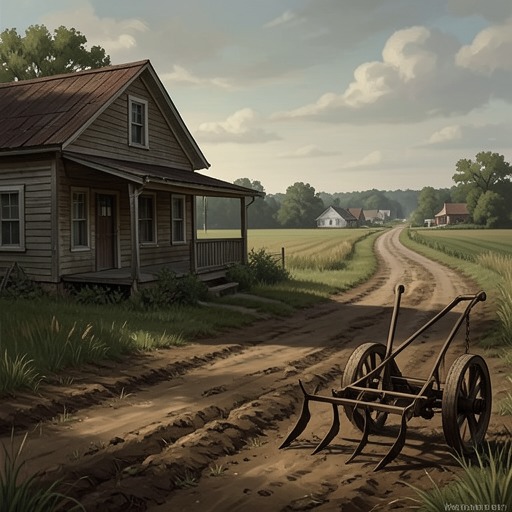
Reaching Independence from the family farm was itself an undertaking. The sixteen-mile trip by horse and buggy took at least four hours round trip. By rail, Harry had to walk into Grandview, take the Frisco to Kansas City, and change trains for Independence; few trains stopped at Grandview, and the connections could involve long delays. Another option required a buggy ride to Dodson on the Blue River, then an interurban car to Kansas City and a second streetcar to Independence. He made the journey whenever he could, sometimes staying overnight on a couch at the Nolands’. The difficulty of the trip gives concrete measure to his persistence, even though visits also brought him into the company of other old friends and relatives.
Proposal and Rejection
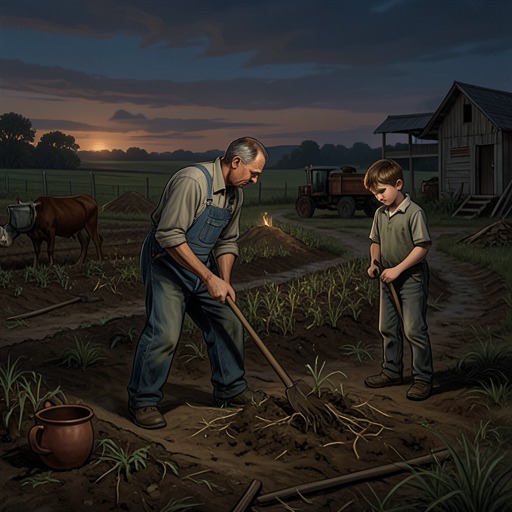
In June, Harry proposed to Bess by mail. The letter joined an avowal of longstanding affection to an anxious appraisal of his own prospects. He described himself as an ordinary American farmer rather than a poet, doubted that he would amount to much, and acknowledged his family’s weakness as financiers. Against those doubts, he told her that he had considered her exceptional and had been in love with her since their Sunday-school days. He also worried that she might find the proposal amusing, explaining that it was his first experience of this kind and that his feelings were real.
Three weeks passed without an answer. Harry, distressed by the silence, wrote to ask whether he had offended her. Bess turned him down, apparently over the telephone, and he wrote again that same day. The account marks the rejection as a clear reversal in the courtship episode, but the surviving passage does not disclose the contents of that final letter or what Bess said afterward. It therefore leaves the early romance at the point where years of admiration and a hard-won declaration meet her refusal, without supplying an outcome beyond that moment.