Solomon Young
TrumanSolomon Young rose from an unsettled start to become a prominent Jackson County farmer, stockman, and trans-prairie freighter. His land, business ventures, and reputation for self-reliance made him a striking presence in his family’s history; after his death, his grandson Harry S. Truman remembered him as a model of what one determined person could make of himself.
Background and Character
Born near Simpsonville, Kentucky, in 1815, Solomon Young was the son of Jacob Young, a Revolutionary War veteran from North Carolina, and Rachael Goodnight Young, who died when Solomon was twelve. After his father remarried and moved away, Solomon had to support himself, first earning a living weighing hogs and trading livestock. By adulthood he was tall and powerful, energetic, self-reliant, and exceptionally talkative. Speech came easily to him, unlike to his quieter wife, Harriet Louisa Young.
Young was of German descent, and the family name had once been spelled Jung in North Carolina. He was a nominal Methodist, but skeptical of preachers and of conspicuous displays of religious devotion. Politics held little interest for him. This combination of practical independence and distrust of posturing accompanied him from farm life into his business dealings.
Building a Farm and a Fortune
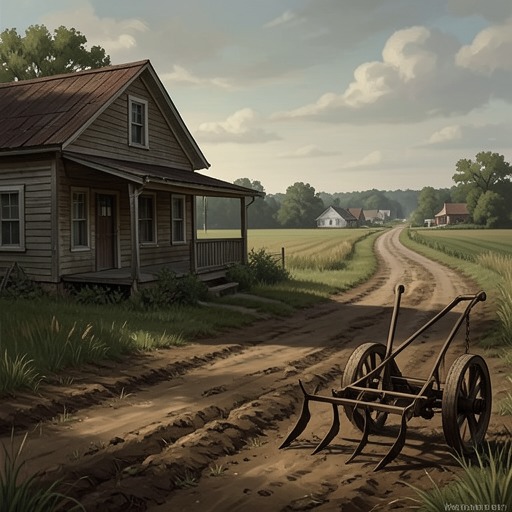
Young and Harriet Louisa began on a farm known as the Parrish place, near the Missouri River and within the projected outlines of Kansas City. Shortly afterward, in 1844, possibly in response to severe flooding, they claimed public land on higher ground near Hickman's Mills, on Blue Ridge, about sixteen miles south of Independence. The 80-acre parcel was the minimum purchase under the Land Act, and Young paid the minimum price of $1.25 an acre. To secure title, he had to occupy the land. Family stories recalled that the couple arrived with a gun, an axe, two small children, and a blanket. While Young rode seventy miles to the land office at Clinton, Missouri, Harriet Louisa stayed with the children in a shelter made of fence rails and brush.
The first claim became the beginning of a much larger homeplace. Six more children joined the family as Young acquired additional land; a house and barn were built, and Blue Ridge became the family’s base. Financial setbacks came repeatedly, but Young persisted and prospered. He developed a reputation as one of the county’s best farmers and stockmen, with a keen eye for land, horses, and mules. He bought and sold livestock when opportunities arose and eventually established a trans-prairie freighting enterprise. His holdings grew into what was described as a small land empire in Jackson County.
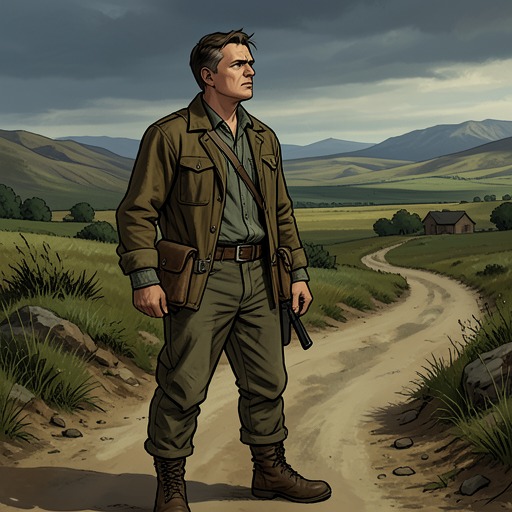
Young’s overland ventures extended that local success across the continent. Freighting trains could comprise forty to eighty canvas-covered wagons, each drawn by teams of oxen or mules and driven by two men; a train might stretch for miles across the prairie. Young carried Solomon Young’s brass telescope to keep his bearings. The goods could be worth $30,000 or more. His recorded wealth rose from $5,000 in 1850 to nearly $50,000 in 1860, and he was said to have owned as much as 5,000 acres, fine horses, and a household where the table was set with real silver.
The Santa Fe Trail passed within a few miles of the Young farm, and Young would set out in spring. One expedition took him toward California with 1,500 cattle. The journey lasted a year, and he lost 500 animals on the way; at Sacramento, California, he traded the surviving herd for a 40,000-acre ranch. According to the family account, he later had to sell the ranch to pay a partner’s debts. The story presents this loss alongside a defining personal principle: he honored his obligations and stood by his friends. He returned to his family with a wealth of experiences that could be passed down through generations.
A Grandfather in Harry S. Truman’s Childhood
Young’s standing within the family was not only a matter of land and business. Harry S. Truman later described his childhood with profound affection and recalled the time spent with his maternal grandfather. Young took the boy riding through the countryside in a high-wheeled cart behind a strawberry roan trotting horse. For a week in one summer, the two drove six miles each day to the Belton Fair, where they watched races from the judges’ stand and ate striped candy. Harry S. Truman remembered these outings as among the best experiences of childhood and Young as a large, strong man with a flowing white beard.
Their closeness also appears in a mischievous episode involving Harry’s younger brother Vivian, then still wearing curls. Young and the boy conspired to give Vivian a haircut while he sat in a highchair on the south porch. Harry’s mother was furious when she discovered what had happened, but said nothing. The story conveys the unusual authority Young held in the household, as well as the affection and complicity that bound grandfather and grandson.
The family home gave the children room to roam and play. From the porch they looked out over a bluegrass pasture and creek, where Harry and his brothers explored with a dog called Tandy and a cat named Bob. A swing beneath an old elm, another indoors for rainy days, and a long north porch used as a track for a red express wagon formed part of the remembered domestic world. Young’s presence belonged to this landscape as much as to the stories of travel and trade.
Death and Legacy
Young died in 1892, aged seventy-seven. Less than a year later, a fire accidentally ignited while a servant was trying to light a coal-oil lamp destroyed the family house, and practically nothing was saved. A small temporary house was built on the site for Harriet Louisa, and Young’s son Harrison returned to help manage affairs, but the old homeplace was gone. The one personal possession of Young’s known to have survived was the brass telescope from his overland journeys, which he had given to Harry’s mother, Matt, some time earlier.
Harry S. Truman’s feelings as a nine-year-old at the time of his grandfather’s death were not recorded. In later years, however, he spoke often of the formidable man in his background: someone who had made his way through nerve and will, seen the West while it was still wild, and always returned to Missouri. The telescope gave that remembered life a surviving object, while the family stories preserved its scale and motion. For Harry S. Truman, Young’s example made a life of independence and achievement imaginable; he could hardly think of himself as a nobody with such a grandfather behind him.