Walton Walker
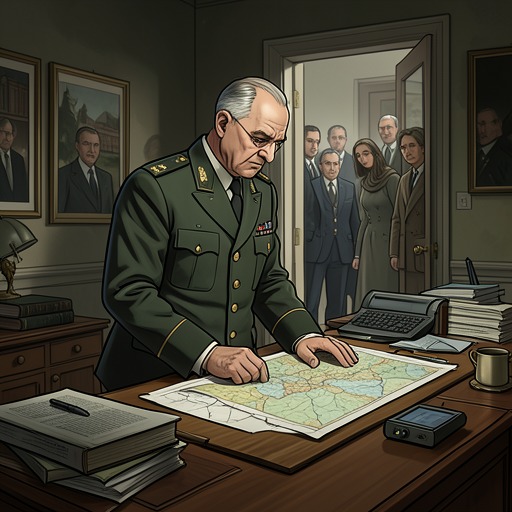
TrumanWalton Walker was the Eighth Army commander whose July 29, 1950, order drew a final line against retreat during the defense of South Korea. His command faced a rapid withdrawal under severe pressure; Walker insisted that the army hold until reinforcements arrived. He was killed in a road collision two days before Christmas, and Matthew Ridgway succeeded him.
Command and the retreat
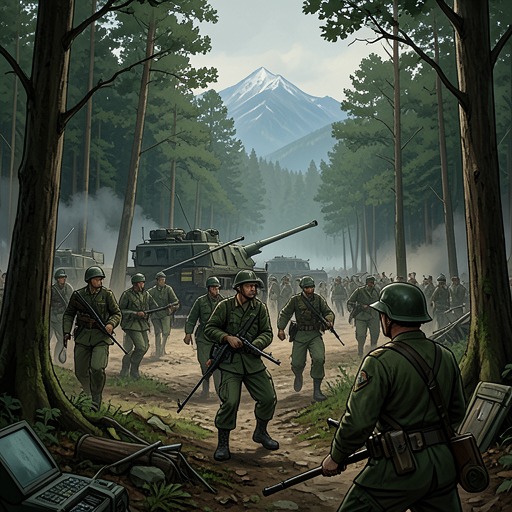
During seventeen days of fighting, American and Republic of Korea forces retreated seventy miles through the steep Sobaek Mountains to high ground behind the Nakdong River. The retreat was part of a broader effort to buy time for men and supplies to reach the port of Busan. The forces’ withdrawal was costly, but they prevented the North Korean advance from overrunning South Korea at once. Harry S. Truman later described their resistance as one of the most heroic rearguard actions on record.
On July 29, as the tactical United Nations commander in the field, Walker issued an order that there would be no further retreat: Busan must not fall, and the troops were to hold until help arrived, even if the fighting demanded their lives. The order framed the defense as an absolute stand. Its comparisons to earlier Allied disasters struck some soldiers as unnecessary; one private told a correspondent that he had never liked running. The episode shows both the severity of the position and the distance between the commander’s stark public warning and the troops’ own view of their resolve.
Death and succession
Two days before Christmas, on an icy highway north of Seoul, Walker’s jeep collided head-on with a Republic of Korea Army truck, killing him. His death came amid the crisis that followed the Chinese offensive of November 28. The Eighth Army had fallen back nearly 300 miles to a point just below the 38th parallel, and the retreat continued for a time.
MacArthur requested Matthew Ridgway as Walker’s replacement, and Truman approved the appointment immediately. Ridgway left Washington at once and arrived in Tokyo on Christmas Day. The next morning, MacArthur gave him discretion to use his own judgment at the front. Walker’s death thus marked an abrupt change in command at a moment when the Eighth Army’s fortunes were at their lowest.
Place in the campaign
Walker’s recorded role is defined by two contrasting moments: the July order to hold and the December loss of the commander himself. In the first, he sought to stop a retreat long enough for help to arrive; in the second, his death required the rapid transfer of responsibility to Ridgway. The account places his command within a larger story of forces trading ground for time, while keeping the consequences of that strategy visible in the army’s continued withdrawal and urgent change of leadership.