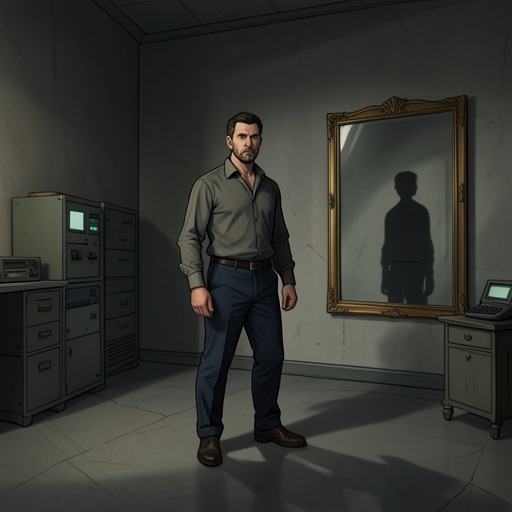
Alexandre D’Anjou
SatanAlexandre D’Anjou is the elderly uncle whose account reveals that Loïc had a stillborn twin sister. More than a witness to a family secret, he is the person who finally gives it a voice: his recollection joins an otherwise unexplained discovery in the graveyard to the doctor’s earlier, unspoken knowledge of the second baby. The disclosure changes what Loïc knows about his birth and makes the family’s long silence part of the revelation.
Identity and Place in the Family
At the time of the conversation, Alexandre is more than eighty years old. He has witnessed the grave’s reopening decades earlier and carries a memory so painful that recounting it interrupts his speech. His testimony is not detached: when he reaches the discovery of the baby, he pauses, overcome by the recollection. The scene presents him as both a keeper of evidence and someone still emotionally burdened by what he saw.
Alexandre is not initially part of the conversation between Loïc and the doctor. Having noticed them talking, he approaches quietly and catches the last part of the doctor’s explanation. When asked whether the unborn baby’s sex was known, he answers that it was a girl. The two men turn toward him in surprise; he repeats the answer, making clear that he is speaking from personal knowledge rather than speculation.
The Discovery in the Grave
Alexandre explains that the cemetery was being permanently reorganized in 1947 and that several graves were opened, including the grave of Loïc’s mother. He was there with Guillaume. Alcide could not remain for long. When the men noticed an unusual swelling in the lower part of the dead woman’s abdomen, they examined it and found a shriveled baby, almost skeletal, still attached by a dried umbilical cord.
The condition and position of the body made the discovery especially disturbing: the baby had remained with its mother in the grave, joined to her by the cord. Alexandre and Guillaume wept. They could establish that the baby was a girl, but could not understand how she had been there or why the doctor had not told them about a second baby. Alexandre’s account thus supplies both the crucial fact of the twin’s sex and the circumstances in which the family first learned of her existence.
Testimony and Family Silence
The doctor explains that he had discovered the second baby while trying to stop the mother’s hemorrhage. By then, the blood had brought the baby down, but she was already dead; he says he was able to examine her enough to be certain. He had withheld the information because he did not want to add to the family’s distress, and later regretted not disclosing it. Alexandre’s memory and the doctor’s confession converge, though they belong to different moments: the doctor knew at the birth, while Alexandre learned when the grave was opened.
When Loïc asks why he had not been told, Alexandre answers that the family could not tell him while he was too young to absorb the shock. Guillaume had waited for him to become an adult, though Alexandre thinks Guillaume could not bring himself to speak of it. The explanation does not erase the years of silence; it locates that silence in the adults’ difficulty confronting a discovery that was already painful to remember.
Narrative Significance
Alexandre’s entrance changes the conversation from medical explanation into testimony. His brief answer identifies the baby as a girl, but the account that follows gives the fact its full, unsettling context: the reopened grave, the preserved body of Loïc’s mother, and the dried cord joining mother and child. The disclosure makes the sister more than an abstract possibility in Loïc’s history; it gives her a physical presence in the family’s memory.
The revelation also arrives through recollection rather than through a planned explanation. Alexandre had witnessed the discovery with Guillaume, yet the knowledge remained unspoken until Loïc was an adult and the doctor’s account reopened the subject. His tears and hesitation mark the cost of bringing it into speech. For Loïc, the image of his sister in the grave becomes the immediate focus of the moment, while Alexandre’s testimony supplies the link between that image and the family’s long-delayed knowledge.