Charles de Castelmont
SatanCharles de Castelmont is the modern heir to an aristocratic family whose history is bound to a pair of cameos separated during the French Revolution. A wealthy winegrower in the Bordeaux region, he sets out to recover the missing stone when he learns that it may be in the possession of the D’Anjou family in Quebec. The search becomes a covert campaign involving intermediaries, deception, and a theft, while the possibility that the D’Anjous are his relatives threatens the inherited story he wants to preserve. His eventual possession of the genuine cameo does not settle the family mystery: it sharpens it, and Charles dies before its implications can be resolved for him.
Identity and inheritance
In his youth, Charles de Castelmont was a highly privileged idler, sustained by the assurance that family wealth and status would catch him if he failed. He pursued scattered studies at well-known universities in England and the United States, eventually obtaining an imprecise degree in political science. After his father died, Charles returned to take charge of the family inheritance alongside his mother. As the eldest child and only son among three sisters, he received the estate under the family’s inheritance arrangements. His secure position is therefore both personal circumstance and inherited structure: he is accustomed to treating lineage and property as protections that will outlast any individual setback.
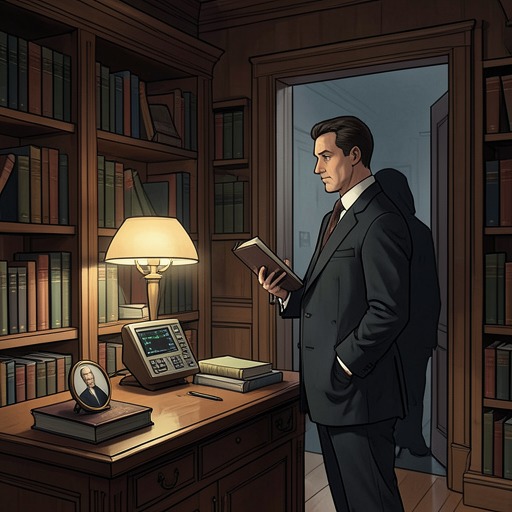
By his early forties, Charles is an unmarried, conspicuously mannered figure, a more or less closeted homosexual who is vain and self-regarding. His affectations are described as a caricatured imitation of an aristocratic style whose social world has largely passed. He spends the warm season at Château de Barzac and the colder months in Paris. He also owns a major vineyard in the Bordeaux region, known for its Pomerol. The contrast between an old noble inheritance and a contemporary commercial estate marks his position: Charles has both the family name and the material resources to act on its behalf.
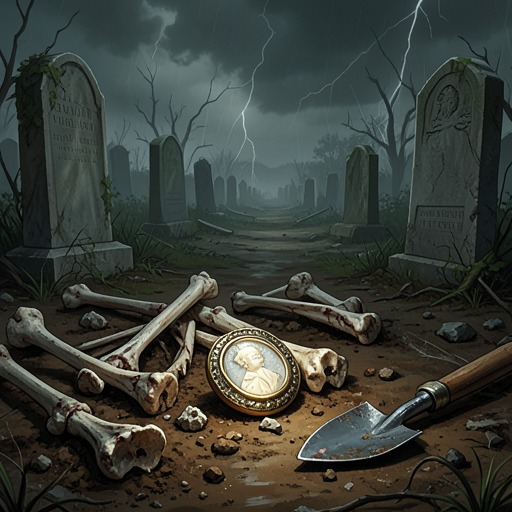
The cameos make that inheritance tangible. Charles understands the missing stone not simply as a valuable object but as the absent half of an ancestral pair, separated from his family for roughly two centuries. He wants it back, but he is also increasingly concerned about what the stone might disclose. To him, the issue is not only who owns the cameo, but whether the D’Anjous have traced its history back to the Castelmonts—and whether their possession of it could give them grounds to claim a connection to his lineage.
The cameo and the conspiracy
In 1996, Victor Bourdieu met Régis D’Anjou in Paris and became interested in the cameo Régis had been investigating. Bourdieu did not tell him that he knew Charles de Castelmont, the owner of the matching Pollux cameo, or that he intended to alert him. The two men belonged to an exclusive circle that met near the Arc de Triomphe, and they had long acted in concert in business matters of uncertain respectability. Bourdieu’s silence allows Charles to learn of the missing Castor without exposing the source of his information to Régis.
Charles reacts decisively when he receives a photograph of the D’Anjou cameo. If genuine, it would complete the pair that his family had not reunited since the Revolution. He is willing to spend a fortune to recover it, but prefers to consider a stratagem to a straightforward purchase. He also worries that the D’Anjous may already know the cameos’ history, or be close to identifying his family. In his view, a public disclosure of the old secrets could be dangerous, so he presses for swift action.
Charles’s network extends beyond Bourdieu. Pierre de Mirbeau, his childhood friend and business associate, is a close accomplice in Paris. Mirbeau’s activities include clandestine trafficking in young people from poor countries for sexual exploitation. He introduces Charles to a wealthy American known as Jeff, whose influence and connections in political and financial circles are presented as useful. Charles attends some of the gatherings with Mirbeau, bringing his Pomerol as a social offering, and later remembers Jeff’s offer to help with a difficult matter. The novel places Charles’s pursuit of a family relic inside this world of money, influence, and concealed dealings; his aristocratic name is one resource among several.
Charles’s effort to retrieve the stone is tied to Régis’s investigation and to the betrayal of Roger Bolduc. The chain of events later reconstructed by Loïc D’Anjou begins after Régis’s Paris visit and culminates in the cameo’s disappearance on September 11, 2001. Loïc infers that Charles had been working to recover the stone from the time he learned it might be in Canada, and that Roger’s betrayal helped bring the scheme to fruition. Charles is not simply reacting to a lost heirloom: he is working to prevent the D’Anjous from learning what the object could mean for both families.
An inherited feud and a disputed descent
The family history Charles seeks to protect reaches back to twin brothers separated by the French Revolution. Their mother, the Countess of Castelmont, was guillotined after her arrest. The boys escaped in different directions: Louis fled to England and then crossed to America, while Charles joined the émigrés in Germany. Louis eventually settled in Missouri, near Carthage, and became a prosperous farmer. His twin returned to France during the Bourbon Restoration and recovered the family’s property while Louis was presumed to have disappeared or died.
When Louis returned to claim his title and share of the inheritance, his claim was supported by male primogeniture: he had been born a few minutes before his twin. But Charles had established political support and refused to recognize him, treating him as an impostor. He repeatedly tried to have Louis killed; Louis escaped through physical strength and skill with weapons. He continued to pursue his inheritance through legal and political appeals, including approaches to the United States government, the French ambassador, Charles V, and the writer Chateaubriand. The efforts failed against his brother’s powerful connections, including Charles’s ties to the royalist secret society known as the Knights of the Faith.
The later Charles knows that his nineteenth-century ancestor tried to eliminate his brother, but he does not know that the ancestor commissioned the 1842 massacre at the Missouri ranch. That distinction matters: the historical crime is part of the hidden family record, while Charles’s present-day actions are driven by his fear that the record will be uncovered. Loïc’s research eventually links the Founder's origins to the same history. A Jesuit account describes a living infant found beside a woman who had died in the snow near Saint-Louis, with a cameo attached to the baby’s swaddling clothes. Loïc connects the child, later adopted by a French-Canadian couple and known as Élie D’Anjou, to the Castelmont family. The proposed descent is supported by a chain of archival clues and by the cameo, but Charles’s response shows how threatening he finds the possibility before it is conclusively tested.
The false stones and Charles’s pursuit of certainty
In 2003, Charles has the cameo that came to him from New York and believes it is a forgery. He takes satisfaction in the thought that the Quebec family has mistaken a counterfeit for a treasured link to a distinguished French lineage. That belief provides temporary reassurance: if the D’Anjou stone is false, then their claim to descent from a possible American branch of his family seems to lose its most striking support. He also recognizes that Loïc, now married into the Albignac family, may have pursued Régis’s investigation further than Charles realized. Though tempted to arrange a meeting and extract information, Charles hesitates, unsure how much Loïc knows about the twins, the inheritance dispute, or the history his own family has concealed.
His confidence is built on a mistaken interpretation of what happened in New York. In 2016, Charles receives a registered letter from Mathieu D’Anjou proposing a comparative DNA test, at Mathieu’s expense, to examine the families’ possible relationship. The letter lays out the evidence for Élie’s Castelmont origins and includes the Jesuit account, a baptismal record, and photographs of the cameo said to have been recovered from the World Trade Center wreckage. Charles is shaken by the photographs, but initially suspects they have been altered or misrepresented. He had assumed the matter was over, and resents its return just as his vineyard has produced an exceptional vintage.
As he considers the implications, Charles realizes that New York authorities must have sent out two cameos—both counterfeits—to the two people who claimed the recovered object. He concludes that a genuine stone must nevertheless have been found and stolen, with false copies substituted for the competing claimants. This deduction revives the possibility that the D’Anjous possess evidence of a real connection to his family. Charles’s response is to consider using his connections, including Bourdieu, Mirbeau, and the networks available through Freemasonry, to locate the genuine Castor. He also contemplates dismissing the D’Anjous’ claim as a fabrication, but cannot entirely bury the doubt that they may be his relatives.
Recovery and ending
Charles turns again to Jeff, whom Mirbeau had presented as a man with powerful political and financial contacts. Less than two weeks after contacting him, Charles meets Jeff privately in New York, explains the cameo affair, and shows him photographs. Jeff says he thinks he has seen a similar jewel. The contact eventually leads to the operation in April 2019: while Jeff and Maggie keep watch nearby, John Robbart disables the alarm and enters the building, using concealed electronic devices to ensure that nobody is inside. He steals the cameo and substitutes a counterfeit supplied by Charles.
When Jeff tells Charles that he has obtained the jewel and the stone is delivered to him at the Ritz, Charles recognizes it as the authentic Castor he has pursued for more than twenty years. He plans a celebration at Château de Barzac to reunite the pair. The party takes place on July 7, on his fifty-ninth birthday, with carefully selected guests, outdoor tables, and servers dressed in eighteenth-century costume. Charles presents Jeff to business and political acquaintances, displaying the recovered cameo and the apparent restoration of his family’s lost inheritance.
The celebration ends in catastrophe. The following news reports that Château de Barzac has been devastated by fire and that a Pomerol producer and seven other people have died. Charles is among those whose remains are burned almost beyond recognition. A photograph of him triumphantly displaying both cameos accompanies the report. Loïc sees it and wonders how Charles obtained the Castor, especially after Mathieu had told him that Charles had categorically described the earlier stone as counterfeit. The image confirms that Charles finally possessed the genuine pair, but it does not resolve the competing family histories or reveal what Charles would have done with the proof of a possible D’Anjou connection.
Narrative role
Charles’s plotline turns inheritance into an active conflict over evidence: a family object can function at once as treasure, proof of descent, and a threat to the secrecy that protects the powerful. His ancestor’s fight with Louis repeats in altered form as Charles tries to control the meaning and ownership of the cameo, while the D’Anjous’ archival discoveries undermine the boundary he wants to maintain between the two lineages. Yet Charles is not presented with complete knowledge. He knows of the old inheritance struggle but not the full violence of the Missouri events, and he misreads the New York counterfeits before gradually recognizing what their duplication implies.
That gap between what Charles believes and what the reader can assemble gives his pursuit its tension. His wealth and connections allow him to act, but they cannot make the family history conform to his preferred account. He recovers the object, not certainty: the true cameo returns to his hands, while the question of kinship—and the concealed violence that may lie behind it—remains unresolved when his life ends.