Brigitte
SatanBrigitte is the Catalan-born poet and publishing-world acquaintance whose relationship with Loïc becomes one of the most consuming and destructive attachments of his adult life. Their meeting begins amid literary conversation and mutual fascination, but the couple’s need to see themselves reflected favorably in one another grows into a coercive bond marked by violent quarrels, erotic intensity, and a pregnancy they choose not to continue. Brigitte is presented chiefly through Loïc’s retrospective account: vivid in her charm and interests, but also seen through his attempts to understand the violence and projection that overtook their life together.
Identity and First Meeting
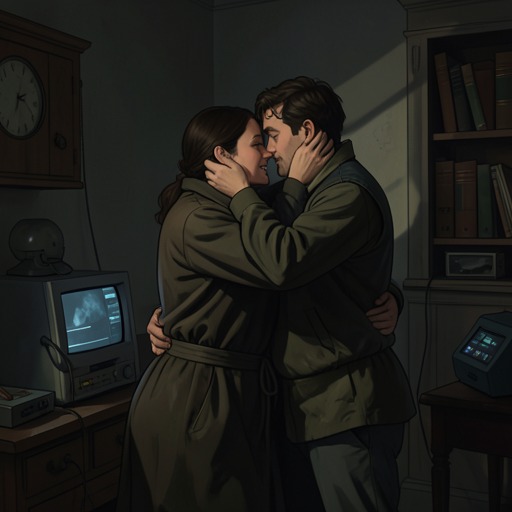
Brigitte first appears at a literary cocktail held on the margins of the Montreal Book Fair. Loïc notices her leaning against the bar, her dark hair catching reddish light and her open face turned toward him. She recognizes him from a photograph accompanying a profile in Le Devoir: he has just been appointed literary director of a prestigious publishing house, though he will learn only afterward that the firm is close to bankruptcy. Their first exchange establishes her confident, teasing manner. She tells him that she already knows who he is and compares him to the actor Jean Marais, a compliment that embarrasses him even as it flatters him.
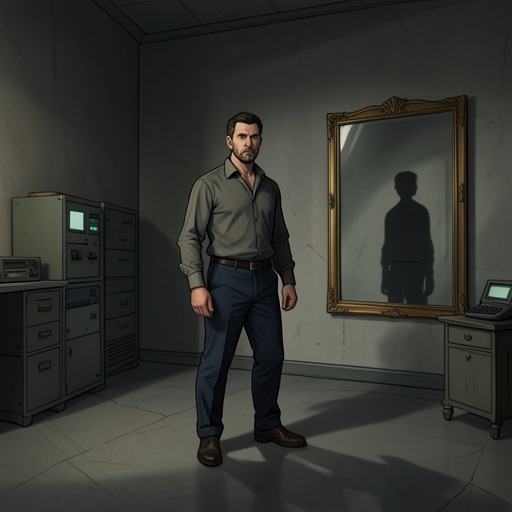
She is of Catalan origin and grew up in Perpignan. Loïc registers her southern French accent, her quick changes of expression, the dimple in her left cheek, and her dark, mobile eyes. The account makes the encounter feel at once ordinary and fateful: two people happen to meet at a literary event, yet Loïc later remembers the darkened windows reflecting them together as an image that anticipated the couple they would become. The glass offers a shared likeness, but also foreshadows a relationship in which each will depend on the other for an affirming image of the self.
Literary and Esoteric Interests
Brigitte speaks readily about books and especially poetry. She describes two poets she has known and loved. One, of Lebanese origin, was her partner for two years; she calls the relationship difficult and says she has not entirely emerged from it. The other published under the name Leroy and, she explains, descended from old Russian nobility. She carries his poetry with her as a kind of daily companion, reading it on the bus, in the subway, and in restaurants. Her enthusiasm, and her physical closeness as the conversation intensifies, draw Loïc into the atmosphere of her fascination with poetry and exoticized lives.
Her interests extend beyond poetry to science fiction, fantasy, occultism, parapsychology, and extrasensory phenomena. Loïc gives her the nickname Brigitte des esprits. She also brings him into New Age practices associated with the era, including tai chi, yoga, aikido, macrobiotic eating, and a weekend organization devoted to personality development. At its sessions, participants practice rebirthing through hyperventilation, among other methods. Loïc does not remain committed to the organization, but his brief participation shows how Brigitte’s interests shape their shared life as well as their conversation.
Attraction and Violence
Loïc remembers the early attraction as a powerful, almost hypnotic pull. The narrative later describes the couple as a mirror for one another, each relying on the other to sustain a favorable self-image. That dependence becomes increasingly demanding rather than reassuring. The physical and emotional intensity that initially seems to unite them does not protect the relationship from conflict; in the retrospective account, the same irrational force appears to turn from desire into aggression.
Their daily life comes to include escalating arguments. Brigitte may slap Loïc or throw whatever is close at hand, including plates, glasses, and utensils. Their quarrels grow more frequent and more intense, and violent confrontations are sometimes followed by equally violent sex. Loïc recalls the disturbing confusion of tenderness, pain, rage, and desire in those encounters. The account does not present this as a simple reconciliation: it emphasizes how intimacy and aggression become entangled, leaving the couple caught in a pattern that is both compelling and destructive.
The Past Replayed in Their Conflicts
Loïc understands Brigitte’s history as an important part of the gulf between them. During quarrels, particularly when alcohol has inflamed them, she seems to see not Loïc but the hated father of her childhood. That father was a domestic tyrant who beat Brigitte’s mother and subjected Brigitte to mortal fear. The narrator says that Brigitte had left her native country without returning in order to finish her university education in Quebec. In Loïc’s interpretation, she projects the image of the violent, drunken man onto him and draws him into a reenactment of her private torment.
This explanation is explicitly filtered through Loïc’s perception: he reads her dilated, distraught eyes as evidence that she is addressing someone from her past rather than seeing him clearly. He also describes himself as becoming caught up in the violence despite telling himself he must break free. Her appearance, formerly a source of enchantment, takes on a monstrous aspect in his memory, while his simultaneous attraction and repulsion lead him to wonder whether the curse associated with his family’s cameo has followed him into this relationship. The supernatural comparison conveys the strength of his sense of entrapment; it does not resolve the relationship into a literal explanation.
Pregnancy, Abortion, and Aftermath
During their relationship, Brigitte becomes unexpectedly pregnant after a double ovulation defeats the Ogino method. The decision is quickly made that they will not have a baby, and the pregnancy ends in an abortion. Loïc later remembers walking through a freezing winter morning, the dark rows of trees seeming to accompany him toward the nonexistent grave of an unknown child. His recollection turns the abortion into a lasting image of grief and guilt, even though the decision itself is described as decisive and rapid.
Only afterward does Loïc notice a coincidence in his journal: conception occurred on the same day, almost the same hour, that Laurette was rushed to hospital. Brigitte had not gone to work at the publishing house that day. After a morning at the dentist, she spent much of the afternoon reclining on the living-room sofa, leafing through magazines and listening to Vivaldi; around sunset she came to Loïc’s desk while he was finishing an article, and their encounter led to the pregnancy. Loïc later recognizes that he cannot recall this sexual encounter as more distinctly than others. The contrast between the obscure, unremarkable memory of conception and the powerful grief attached to the lost pregnancy deepens his later effort to understand how consequential events can begin without seeming momentous.
Brigitte’s decisive significance in Loïc’s story lies in this combination of attraction, projection, and damage. He eventually describes himself as having escaped the passion with body and soul intact, but only after years consumed by it. His retrospective account does not reduce Brigitte to either the enchanting stranger at the bar or the terrifying figure of their quarrels. Instead, the mirrored image of their first meeting becomes a way to understand how mutual fascination hardened into dependence, and how a relationship that promised self-recognition could become difficult to distinguish from a trap.