Régis D’Anjou
SatanRégis D’Anjou is at once a celebrated member of the D’Anjou family, a forceful public intellectual, and the mentor whose political convictions become a private test of loyalty for Loïc. His life links the family’s concealed origins and the ominous cameo to the divisions of modern Quebec: an investigator of inherited secrets, he becomes a second father to Loïc, even as their opposing visions of Quebec’s future threaten to separate them.
Family Standing and the Buried Secret
As a young Dominican, Régis occupies a place of unusual prestige in the family. At a gathering about the patriarch’s newly exposed cameo, he appears among the sons of Jean, a prosperous Quebec lawyer: Georges is studying law at Laval University, while Régis has come from Toronto, where he is pursuing studies with the French philosopher Étienne Gilson. Tall and imposing in a white Dominican habit with a black hood, he is already regarded as a man destined for high clerical office. The family gives his learning and judgment exceptional weight.
The cameo is not merely an heirloom to him. His aunt Marthe, whom family members regard as the Founder’s favorite daughter, had told him of a precious stone Élie D’Anjou kept hidden. Before Marthe left for a mission in China in 1920, Élie disclosed that he had been adopted, had been born in the United States, and knew nothing of his birth family. He did not say whether the stone explained his origins. He feared the object as malevolent, sewed it into his scapular, and arranged to be buried with it. When the cameo later reappears, Régis recognizes that it could unsettle the family’s accepted account of its founder: adoption raised questions about biological legitimacy and the possibility that Élie had been born outside marriage. The polished family legend of a heroic pioneer is suddenly exposed to an unresolved history of secrecy and shame.
The family meeting also has a quieter history of rupture behind it. Régis’s aunt Mathilde had rebelled after her mother died in childbirth in 1889, when Élie refused a Caesarean section because the Church forbade it. Élie repudiated and cursed Mathilde; she fled, and Marthe later received secret news that her ostracized sister had lived in Cuba. Marthe’s memory of Mathilde’s disappearance helped send her toward religious life and a distant mission. Such family silences form the world in which Régis’s inquiry takes shape: kinship carries both belonging and the power to expel.
From Religious Office to Public Life
Régis leaves the religious orders in the late 1940s. He had been a close adviser to the Archbishop of Montreal, Mgr. Charbonneau, and had sided with striking miners at Asbestos alongside the lawyer Pierre Trudeau. That political commitment brought him into conflict with church authorities. Rather than submit to ecclesiastical punishment and the risk of being sent far away, as Charbonneau had been, Régis chose to leave the clergy.
He hopes to build an academic career, but finds the doors of Quebec’s intellectual institutions closed to him. Journalism becomes his available route into public life. Despite hearing loss following an acute ear infection, he becomes a prolific contributor to Cité Libre, the journal founded by Trudeau as a center of resistance to Maurice Duplessis’s repressive paternalism. His influential essays establish him as one of his generation’s leading intellectuals, though a younger, revolutionary and neo-nationalist generation later rejects him. In the late 1960s he moves into government as a speechwriter for the prime minister and eventually ends his career as a senator. The path is not a simple ascent: each shift carries him from religious authority into political argument, and from public prominence toward a later, intensely personal search for family origins.
Loïc’s Mentor and Political Opponent
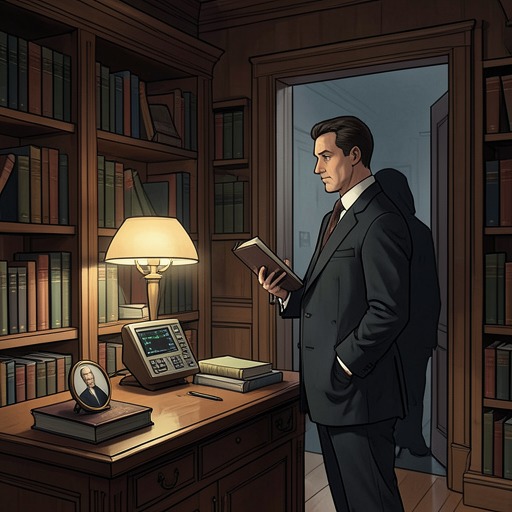
When Loïc joins the prime minister’s cabinet, the cousins’ relationship deepens beyond family acquaintance. Régis becomes his privileged confidant, sharing stories and observations between urgent assignments and joint revisions of speeches. Loïc sees a learned humanist who combines country sense with cultivated complexity, and whose boisterous humor and appetite for life animate his formidable public persona. Their shared work binds them with the intimacy of people who have faced danger together. Régis also becomes a father figure to Loïc, in an intellectual and moral sense, as Guillaume D’Anjou had been his adoptive father in everyday life.
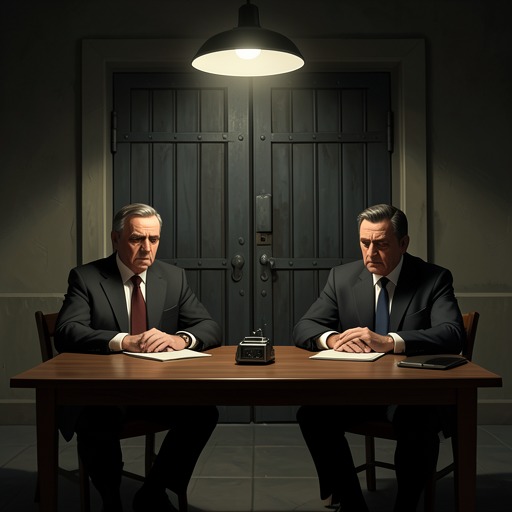
That closeness makes their political difference harder, not easier, to bear. On November 15, 1976, as Quebec awaits the result of an election that may determine Canada’s future, Loïc sits in the Langevin Building, torn between his Quebec identity and his loyalty to Régis. A poll has put the sovereignists near half the vote. Régis has spent the weekend preparing statements for Pierre Elliott Trudeau, and, after consulting with the prime minister’s advisers, returns angry at those he considers too conciliatory toward the Parti québécois of René Lévesque. Trudeau asks Régis and Loïc to draft a cable that will acknowledge a legitimate sovereignist victory without congratulations or pointed rebuke. For Régis, even that restrained recognition feels like accepting the triumph of evil; he cannot bring himself to grant the sovereignists’ cause legitimacy.
Loïc, by contrast, sees the election as the expression of Quebecers’ will and can no longer remain balanced between the two camps. He fears that frankness will wound a cousin whose convictions he knows to be uncompromising. Régis eventually confronts him about the strain he sees, and Loïc cautiously explains that his generation cannot share Régis’s rigid understanding of Canadian federalism. He is trying to remain faithful to their friendship without denying his own political judgment. The disagreement reactivates an older pattern in Loïc’s life: once again he feels caught between two father figures and forced to conceal one attachment from the other.
Separation, Papers, and Legacy
The political conflict takes a physical toll. Loïc sleeps badly and writes resignation letters at night, tearing them up at dawn as he struggles between loyalty to Régis and fidelity to himself. After open-cœur surgery, Régis spends more than three months recovering at home; that is also roughly the time Loïc needs to prepare his departure from Trudeau’s cabinet. Their divergence is not reduced to a passing argument: it determines the end of their shared work and exposes the personal cost of Régis’s paternal influence.
In retirement, Régis returns to the family-origin investigation. Loïc, who has taken early retirement, receives four large boxes of Régis’s papers under instructions to send whatever merits preservation to the national archives. They contain thousands of pages: mostly handwritten notes, reading records, observations, and drafts, arranged in ring binders and school notebooks, alongside a box of documentation. The papers are not a conventional diary, and some pages have been torn out. Their fragmentary form preserves the labor of an unfinished inquiry rather than a neat final account. Loïc is moved by the inheritance of family memory and by the correspondence that recalls their shared work in Ottawa.
Régis’s research had been interrupted in 1968, when he answered his friend’s call to serve the new prime minister, and the cameo mystery lay dormant for more than twenty years. A handwritten entry dated July 5, 1999, shows how urgently it had returned to him: he fears that the stone has brought generations of misfortune and may bring more, and believes it should have remained buried with his grandfather. Régis dies suddenly, for unexplained reasons, in an apartment in Old Québec not long afterward. Loïc reads the papers in autumn 2001, soon after receiving them and shortly before the September 11 attacks intensify his thoughts about the missing cameo. Régis’s death therefore does not close the investigation. His papers, his warnings, and his unresolved questions make Loïc the inheritor of both a family archive and a dangerous, unfinished history.