Roger Bolduc
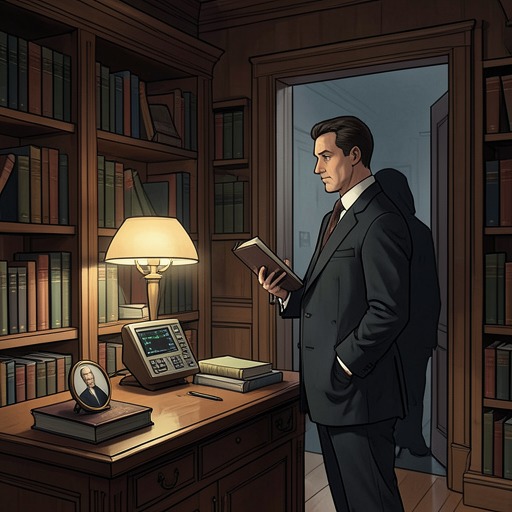
SatanRoger Bolduc’s disappearance turns a private family theft into a mystery that stretches from Touladi to New York. A businessman and the youngest son of Romuald Bolduc, he is also Isabelle D’Anjou’s husband and Loïc’s cousin. His clandestine journey to New York on September 11, 2001, his suspected role in taking the D’Anjou family cameo, and the discovery of his remains in the World Trade Center debris make him central to the novel even when he is absent from its scenes. Yet his fate does not resolve the mystery: the jewel later resurfaces, apparently intact, while the circumstances of Roger Bolduc’s final hours remain obscure.
Family and Background
Roger Bolduc belongs to both sides of Loïc’s extended family. He is the last child of Romuald Bolduc, Loïc’s uncle, making him Loïc’s cousin through the Bolducs. Roger’s wife, Isabelle D’Anjou, is also Loïc’s cousin on his mother’s side. Their marriage thus joins two family networks already burdened by a longstanding political rancor between the D’Anjou and Bolduc families. The D’Anjous resent Isabelle for marrying a Bolduc, as they had resented Loïc’s parents’ marriage before her.
That hostility has a history in Touladi. Romuald Bolduc, remembered as a rapacious businessman and the D’Anjous’ most formidable local opponent, embodies the economic and political antagonism that preceded Roger. When Roger later disappears and the family cameo goes missing, relatives do not approach the case as a neutral puzzle: inherited distrust makes suspicion fall readily on him and, by extension, on the Bolducs. Roger’s marriage to Isabelle places her directly between those rival families.
The novel also links Roger’s birth to an earlier, unresolved episode. He was born in September 1959, only days before the fire in which Grébiche died. On the day of the fire, Romuald had argued with Grébiche after she rebuked him following the death of Maurice Duplessis, whose government contracts had helped build Romuald’s wealth and power in Touladi. The village later circulated the theory that Romuald had Grébiche killed and her house burned, and that her curse on his family had particular force because his youngest son had just been born. The story does not establish that Roger’s birth or his later disappearance has a supernatural cause; instead, Loïc’s 2001 recollection gives the old curse a foreboding resonance.
The New York Journey and Disappearance
In the days before the September 11 attacks, Roger was forty-two. Loïc, troubled by a nightmare and newly worried about his cousin, eventually called Isabelle in Québec City. She said Roger was away and that she could not reach him on his mobile phone. At first, she understood that he was travelling to Toronto. Later, Georges D’Anjou told Loïc that Roger had changed course in Montreal and taken an overnight bus to New York City. No one knew why he had gone there, or whether he was at the World Trade Center complex on the morning of the attacks.
The clandestine detour quickly became incriminating in the eyes of the D’Anjous. When Georges told the family that the cameo had been transferred to a new bank box the previous spring, their attention turned to Isabelle: her lowered eyes and pale, fixed face seemed to make her husband’s secret journey more suspicious. Roger had disappeared on the day of the attacks, and relatives wondered whether he had brought the jewel to New York, what he intended to do there, and whether he was dead. Georges said Isabelle had told him what she knew, but that Roger had concealed many of his affairs and schemes from her as well as from the family.
Georges attempted to manage the public story before rumours became uncontrolled news. He arranged for Le Soleil to report that Roger, a well-known businessman from Québec City, had been in New York on the day of the attacks but was not on the victim list; the family had notified police, and there was no proof that he had died. The carefully limited account did little to settle opinion within either family. As the months passed without confirmation, the D’Anjous increasingly imagined that Roger had sold the jewel to an anonymous collector and used the catastrophe to escape abroad. The Bolduc relatives, in turn, pressed Isabelle for answers, while she became increasingly isolated and eventually cut off their calls.
The Cameo and Isabelle’s Complicity
The suspicions were not baseless. Roger had persuaded Isabelle that the cameo could make them rich, and she helped him take it. By exploiting her mother’s intoxication, Isabelle obtained the combination to Georges’s safe, allowing Roger to get hold of the jewel. This was not an act by Roger alone, but a concealed scheme between husband and wife—one that Isabelle later remembered with mounting bitterness and guilt.
Two days before Roger’s New York trip, the couple celebrated his forty-second birthday with champagne on the terrace of the inn La Goéliche, on Île d’Orléans. They were excited by the prospect of the money they expected to make, already imagining cruises and stays on tropical islands. That memory sharpens the contrast between their shared anticipation and Isabelle’s later uncertainty: she came to wonder whether Roger had taken the money and fled to enjoy the imagined paradise without her. She could neither confess her own part in the theft nor tell her parents how she had obtained the safe combination. Her mother believed Isabelle had not disclosed it; revealing the truth risked losing both parents’ trust.
The discovery of Roger’s hidden finances further damaged his standing. He had represented the 2000 collapse of the technology-stock bubble as nearly ruining him, but he had kept only modest bank accounts in Québec, apparently to deceive tax authorities and perhaps Isabelle, while placing most of his money outside Canada. To Isabelle, this was a painful revelation; to the family, it reinforced the theory that Roger had planned a new life elsewhere. Some even speculated that the World Trade Center appointment had been invented to mislead them and that the attacks had offered him cover. These remain suspicions, not established facts. The disappearance of the cameo, however, kept Roger at the centre of the case.
Evidence, Death, and Continuing Uncertainty
In June 2002, Isabelle received a letter from the Office of the Chief Medical Examiner in New York. Fragments of Roger’s bones had been recovered from the World Trade Center wreckage, and DNA analysis identified them as his. The confirmation ended the hope that he might have escaped and started over, but it did not account for the cameo: the letter mentioned no jewel. Nine months after the attacks, the vast Ground Zero cleanup was still in its early stages, and the D’Anjous continued to hope that the missing object would be found.
The cameo did reappear, in an unsettling reversal. In 2003, Isabelle called Loïc to say that it had been found in New York and delivered to her in Québec. It appeared intact despite the explosions, fire, and collapse of the towers. Loïc could not understand how this was possible and wondered whether there were two cameos, one genuine and one counterfeit, or whether American police had recovered the stolen jewel that had spent time in Cuba. The recovery was reported to him, but it did not establish how the object had survived or what had happened to it during Roger’s journey.
Later, Charles de Castelmont’s conjectures reopen the question of where the jewel was found in relation to the human remains. He wonders whether it was discovered near the remains of Roger Bolduc or those of Aubry, and whether Roger had time to meet Aubry and pass him the cameo. Charles’s reasoning is speculative and proceeds from incomplete information; it does not overturn the DNA identification of Roger’s remains. Rather, it shows how the apparent recovery of the jewel generates new uncertainties about the theft and its participants.
Narrative Role and Aftermath
Roger’s story is assembled through other people’s reports, memories, deductions, and accusations rather than through a sustained account from Roger himself. The withheld explanation for his trip makes each new detail—his route through Montreal, the concealed money, Isabelle’s access to the safe, the cameo’s return—seem like a possible key, without producing a complete account of his plans. Loïc’s later investigation connects the missing jewel to the wider scheme involving Charles de Castelmont and Roger’s betrayal, but the circumstances of Roger’s involvement remain partly reconstructed rather than directly witnessed.
The public scandal surrounding Georges D’Anjou’s later case revives Roger’s disappearance as one more charge hanging over the family. The press links his absence during the New York attacks to the broader allegations, expanding the affair far beyond what the known facts can establish. By Georges’s 2011 funeral, Loïc is relieved that, after Georges’s exoneration, the case of Roger Bolduc’s death has not been reopened. Roger is therefore both a confirmed casualty of the World Trade Center collapse and a continuing narrative absence: his remains are identified, but his motives, the exact path of the cameo, and the full extent of his conspiracy remain entangled in family suspicion and unresolved evidence.