Charles de C...
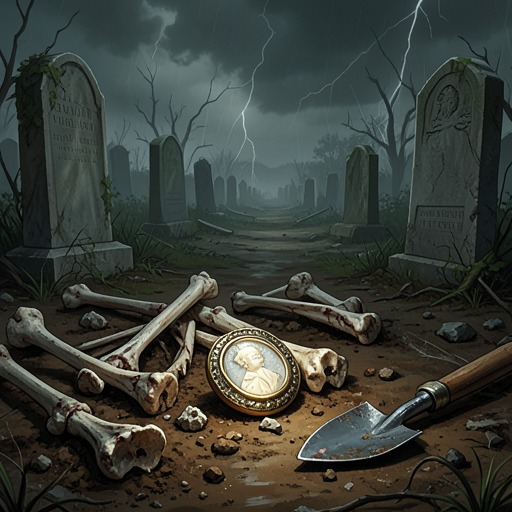
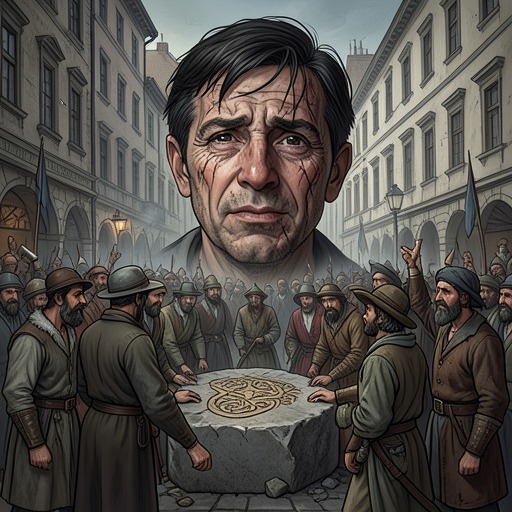
SatanCharles de C... is a French château owner and wine producer whose five-year effort to recover a family cameo is upended by the September 11 attacks. The catastrophe first appears to erase his carefully arranged plan, along with any prospect of finding the jewel. Yet even amid the destruction, Charles’s attention shifts from presumed loss to the possibility of recovery: he uses the aftermath to make a formal claim for the object and to get ahead of Roger Bolduc’s family.
Identity and Setting
In September 2001, Charles is a man in his early forties living at his ancestral château in Barzac. The narrative marks him as tall, like the D’Anjou family, and rosy-complexioned. From his office window he can see the hill covered by his vines, which produce one of France’s best pomerols. The vineyard gives his private crisis a measured backdrop: harvest is approaching, the grapes are promising, and he expects the 2001 vintage might rival the previous year’s.
The estate is not merely a setting for Charles’s thoughts. His view of the vineyard and his concern for the coming harvest place the planned recovery of the cameo alongside the management of inherited property and family interests. On September 11, the promise of a good vintage and the prospect of finally regaining the jewel seem to converge in a day he initially regards as auspicious.
The Cameo and the New York Plan
Charles has spent five years scheming to regain a cameo he considers invaluable to himself and his family. The plan depends on an arranged meeting in New York between Roger Bolduc and Franck Aubry, Charles’s agent, who works there under the name Patrice Desbois. Aubry and an assistant are waiting for Bolduc in an office in the World Trade Center, a venue Charles chose specifically to impress the Quebecer. Charles has invested heavily in the operation and is eager to see it succeed.
Ten minutes before the news of the attacks reaches him, Charles has heard from his friend Pierre de Mirbeau in Paris. Mirbeau reports that matters are proceeding as planned. Reassured, Charles checks his watch: the meeting should take place soon. The arrangement’s precision—its intermediaries, its chosen venue, and its timing—makes the looming disaster more than an interruption to a business deal. It threatens to sever Charles from an object whose recovery has occupied years of planning.
The Attacks and the Loss He Fears
After going out onto the terrace to enjoy the September air, Charles is called back to his office by the telephone at about three o’clock. Mirbeau tells him that terrible events are unfolding in New York and that an aircraft has struck the World Trade Center. Charles immediately asks after Aubry. In his agitation, the inflection in his voice that he usually tries to soften becomes more pronounced.
He tries to work out where the meeting was supposed to occur—he thinks it was on the ninety-ninth floor—and how that location relates to the impact on the North Tower. The question exposes the limits of what he knows: the plan’s key participants are in danger, but he cannot establish whether the meeting has taken place or what has become of them. As reports speak of thousands of people in the towers and of further hijacked aircraft, his concern is initially ranked in a striking order. The cameo occupies his thoughts before the fate of Aubry or Aubry’s assistant, and before Bolduc’s life.
As the crisis grows, Charles eventually forgets the jewel in the face of the broader emergency. When the World Trade Center towers collapse one after the other, he understands that the cameo he has pursued for years may be lost among the rubble. He calls Mirbeau repeatedly, although he knows there is nothing they can do in the moment. His lament for the jewel registers the scale of his attachment, but the scene also shows that the immediate shock has carried him beyond his earlier, narrowly possessive concern.
A New Claim on the Ruins
Charles’s response changes after he hears a recording connected with the bargain made with Bolduc. He first removes the disc from the player, intending to destroy it and discard the evidence of their transaction. Then he imagines that the cameo might be found in the wreckage. The possibility gives him a reason to preserve his claim, though uncertainty remains: he does not know whether Bolduc ever had the chance to meet Aubry, and therefore cannot know who might be found with the jewel or near it.
It takes Charles four days to decide to act. He then instructs Mirbeau to make a formal approach to the New York authorities, supplying a precise description of the cameo and a photograph so that Charles can recover it if it is found at Ground Zero. Speed matters because he wants to forestall a similar claim by Bolduc’s family. The proposed recovery thus becomes a contest over recognition and possession, conducted through the official identification of an object among the debris.
The claim has to pass through Aubry’s family because Aubry is working in New York under another name. Charles’s plan assumes that Aubry, a widower without children, has a cooperative brother who can be persuaded with a small reward to sign an official request to the New York port authorities. Once this route is in place, Charles can postpone deleting the computer files relating to the cameo and his dealings with Bolduc. The decision to retain those records accompanies his renewed effort to retrieve the jewel.
Character and Narrative Role
Charles’s conduct combines elaborate foresight with opportunistic adaptation. Before the attacks, he has spent years arranging a costly plan and carefully selected an impressive setting for the meeting. After the towers fall, that preparation cannot protect the people involved or guarantee the cameo’s survival. His first impulse is to destroy the record of the deal; his next is to recognize that the catastrophe may create a different route to the object. He moves from anticipated success, through apparent irretrievable loss, to a formal claim built on the chance that the jewel will be identified in the ruins.
The contrast between the vineyard and Ground Zero sharpens this reversal. At Barzac, ripe grapes promise a potentially exceptional vintage; in New York, the object Charles values risks becoming one small stone amid an immense field of material and human wreckage. His renewed pursuit does not undo the loss or resolve the fate of Aubry, the assistant, or Bolduc. Instead, it defines Charles through what he does when the original plan collapses: he converts uncertainty into another strategy, keeping the family jewel at the center of his calculations.