Grébiche
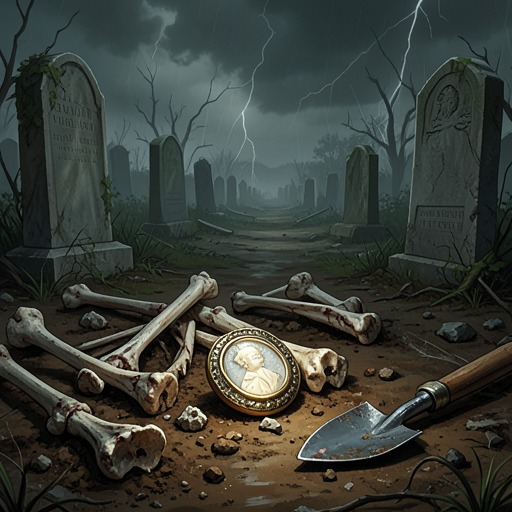
SatanGrébiche is Touladi’s feared outsider and self-appointed guardian of its buried secrets. When Guillaume D’Anjou takes a mysterious cameo from a grave, she follows him home, insisting that disturbing the dead will bring disaster. Her authority rests not on any confirmed supernatural power but on the village’s accumulated stories: she is at once a witness to its beginnings, a keeper of family secrets, and a figure around whom rumor makes the past feel dangerous and present.
Appearance and standing in Touladi
In the mid-1940s, Grébiche is a vigorous woman in her sixties, with black hair drawn into a bun and a sharp, lively gaze. Her enduring black felt hat, decorated with a crumpled feather, is as recognizable as her bitter expression. The conspicuous mourning clothes and angular profile give her the appearance of a bogeywoman or witch, an impression that reinforces rather than explains the fear she inspires.
She is not merely mocked: villagers take care not to confront her directly and move children out of her way. Her bluntness gives her a practical kind of authority; a few cutting sentences can silence or rebuke those who challenge her. Over time, she has become a kind of power in Touladi, exerting an occult-seeming influence without material resources or an official position. The village imagines that she possesses a special claim on its soul because she knows its origins and hidden histories better than anyone else.
The cameo and her warning
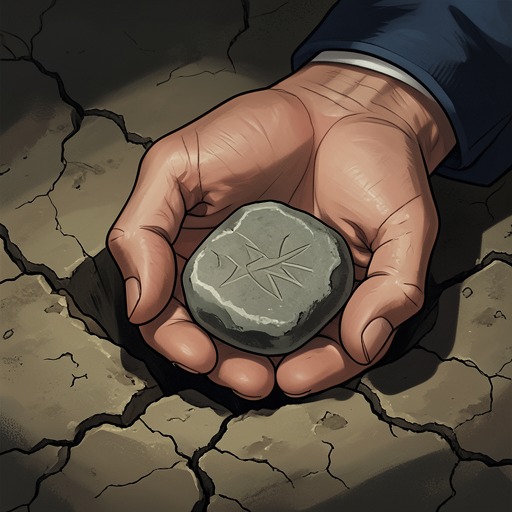
On November 18, 1944, while the D’Anjou family examines the mysterious object, Grébiche’s cries carry from outside their house. She demands that the stone be reburied and warns that its curse will bring misfortune upon the family and its descendants. Her language makes the discovery more than an unusual find: in her telling, the object is bound to the dead and to consequences extending beyond the present generation.
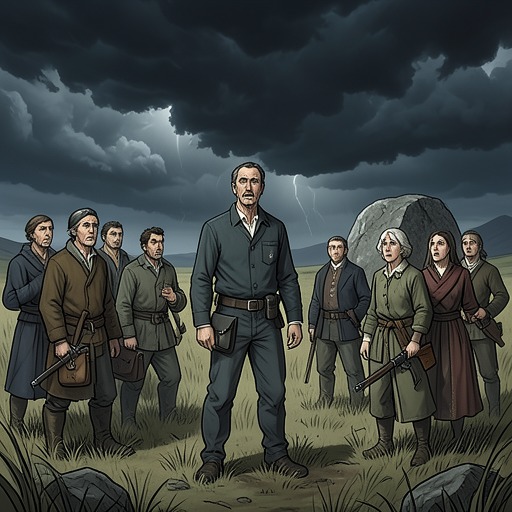
A related account follows Guillaume D’Anjou after he has slipped the cameo into his pocket. Grébiche calls after him to rebury it, insisting that robbing the dead brings bad luck. He frowns, hurries home, and keeps his head down as a crowd gathers and several people try to stop him along the way. Grébiche follows close behind and continues shouting outside his door. The scene gives her warning a public audience, but Guillaume does not return the stone. The contrast between his silence and her relentless pursuit leaves the village’s alarm unresolved.
The warning also attaches itself to Donat Côté. He had been among the first to discover strange traces and a massacred dog; later, people said that he began to lose his sanity from this day onward. On November 18, he repeats Grébiche’s words in a state of agitated echo. The account presents the change as village report, not as proof that the cameo caused his condition. What it does establish is how quickly the discovery, Grébiche’s prophecy, and Donat’s behavior become joined in local memory.
Lucie and the competing stories
Grébiche’s earlier identity as Lucie offers a less supernatural explanation for the scar that helps define her appearance. Noé Bolduc, who says he was present at the inn, disputes the popular story that she once danced with the devil. According to his account, the young Lucie was dancing a quadrille with a well-known American hunter when she struck an oil lamp. The flame burned her face, and she disappeared from the village for five or six years.
Her absence generated its own stories. Some said she had taken refuge with Indigenous people or associated with Roma; others connected her to Grey Owl when he camped at the head of Lake Touladi. When she returned, the burn had healed into a faint pink scar that rose toward her temple like a flame. It was difficult to make out beneath the red makeup she put on her cheeks. The scar thus retains a visible trace of the inn accident even as later retellings transform it into evidence of a more mysterious life.
Rumor, memory, and narrative role
The village’s accounts of Grébiche do not settle into a single biography. Moïse Dubois tells stories of her supposedly ensnaring Le Fondateur on his deathbed and extracting secrets from him; he also repeats the tale of her dance with the devil. Noé Bolduc contradicts him, while Grébiche’s reputed time with Le Fondateur’s family around the turn of the century supplies some basis for persistent speculation about her connection to its secrets. Stories about her years in the woods, her supposed esoteric knowledge, and her origins remain entangled with hearsay and remembered episodes.
The narration makes that entanglement part of her significance: each teller may enlarge or alter what is no longer remembered clearly. Grébiche knowingly maintains her enigmatic aura, while Touladi’s stories amplify it. She therefore occupies a double position—as a woman with a recoverable past and as a figure reshaped by communal memory. At the grave, that reputation becomes consequential: her warning cannot stop Guillaume from carrying away the cameo, but it gives the act an ominous meaning that the village continues to repeat.