Báli
RamayanaBáli is Sugríva’s elder brother, a monarch renowned for his might in battle. His conflict with Sugríva supplies the personal grievance behind Ráma’s intervention in the struggle for the kingship: Sugríva describes a wrong and a long-endured insult, warns that Báli is unmatched in combat, and receives Ráma’s promise of help. Báli’s death ends the contest abruptly; Ráma kills him with a single arrow and directs Sugríva to rule.
Identity and Position
The poem introduces Báli through two connected attributes: he is the eldest-born son of his father, and he has won a conqueror’s fame by might. The first marks his place within the family; the second establishes the force with which he commands attention. The account does not make those facts interchangeable. His seniority is a matter of birth, while his reputation has been made through action and strength.
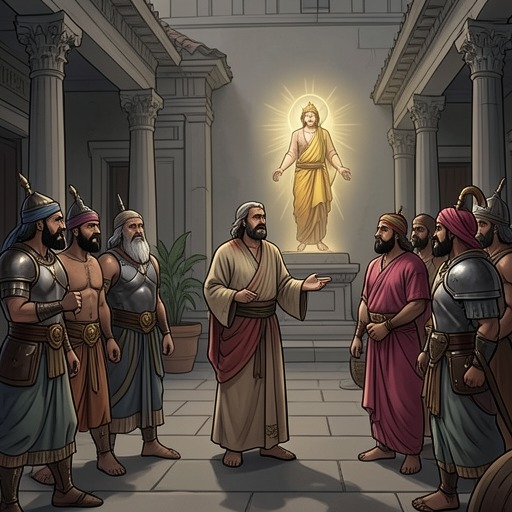
His royal position is also set against the earlier moment when the city was without a king. Sugríva recounts that the people made him lord for the city’s defense. That episode gives the brothers’ conflict a public consequence: it concerns not only their private history but who will protect and govern a community left without a ruler. The evidence does not settle every question of succession, but it places Báli’s family precedence beside Sugríva’s claim to have been entrusted with the city.
The Grievance and Sugríva’s Account
Báli’s story reaches the reader chiefly through Sugríva, who tells Ráma the cause of their strife. Sugríva identifies his resentment as a response to a wrong and an insult he had borne for a long time. The account thus establishes the feud as more than a sudden quarrel: its grievance has persisted, and it becomes the reason Sugríva seeks assistance from a new ally.
The narration gives Báli a voice in that history through a remembered act of furious reproach. When Sugríva says that he had humbly sued him, Báli reviled him in anger. The episode makes their rupture legible as an imbalance of power as well as a dispute between brothers: Sugríva’s appeal is described as humble, while Báli’s response is presented as contemptuous. The brief account does not supply grounds for reconstructing every stage of their dispute, so the wrong should be understood as Sugríva’s stated grievance rather than expanded into an unrecorded motive or incident.
Ráma listens to Sugríva’s story and promises to allay his fear. Sugríva, however, emphasizes the danger of that promise being tested: Báli is said to have no equal in the fight. This warning makes the alliance consequential before the brothers meet. Ráma is not being asked to settle a harmless disagreement; he is undertaking to assist a weaker-seeming claimant against a fighter whose reputation could make the intervention costly.
Combat and Death
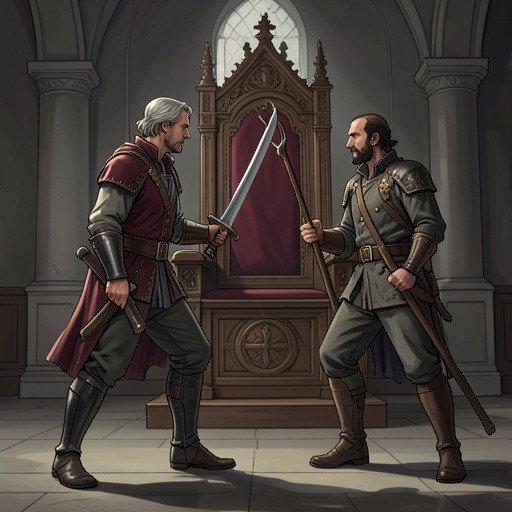
When the brothers meet in combat, the narrative shifts from Sugríva’s account to what Ráma sees. The two fighters come together amid cries and threats. Ráma notices Sugríva faltering, his strength wearing down, and his wistful glance turning toward him. The detail links Sugríva’s earlier warning to the immediate scene: Báli’s reputation is not merely reported but is reflected in the visible course of the fight.
Ráma then acts. The poem gives the decisive stroke in compressed, physical terms: one shaft from Ráma’s bow lays the monarch low in the dust. The suddenness of that single-arrow death contrasts with the long history of grievance that brought the brothers to the encounter. For Báli, the contest ends not through a narrated reversal in his fortunes or a prolonged exchange, but with Ráma’s intervention and the force of one shot.
The account also records Báli’s final encounter with Ráma and Lakshmaṇ. Wounded, he sees them draw near and addresses Ráma in keen words. This moment gives the defeated monarch a last opportunity to speak directly to the person whose action has brought him down. The passage establishes the force of his response without supplying its full content here; it does not warrant inventing the precise charge or argument he makes.
Consequences and Narrative Role
Báli’s death changes the political outcome immediately. Ráma tells Sugríva to reign, connecting the killing directly to the restoration of Sugríva’s claim to rule. The scene therefore closes two linked arcs at once: the brothers’ conflict and the city’s period without a king. Báli’s importance to the narrative lies not only in his prowess but in the consequences his defeat makes possible.
The way the episode is arranged leaves its central action open to scrutiny. First comes Sugríva’s account of injury and humiliation; then a warning about Báli’s exceptional strength; then Ráma’s observation of Sugríva’s weakening; finally, the arrow and the order to reign. The sequence explains why Ráma intervenes and what the intervention achieves, while the wounded Báli’s words ensure that the defeated figure is not reduced to a faceless obstacle. His elder-brother status, royal authority, martial fame, and remembered insult remain distinct parts of the story, brought together in a death that resolves the contest but also gives it moral weight.