Angad
RamayanaAngad is Báli’s only son, introduced through the tenderness and grief of his father’s last words. His place in the narrative changes sharply: the beloved child whom Báli fears to leave behind becomes a chief and guide among the Vánars, and later a warrior who holds his ground when others retreat. The surviving episodes emphasize that transition rather than supplying a complete account of his life or final fate.
Identity and Báli’s Farewell
Báli’s concern turns away from his own impending death. He says that he grieves not for himself, nor for Tárá or the friends he must leave, but for Angad, his dear and only son. He describes the boy as noble and as someone raised amid luxury and happiness. This account gives Angad a particular vulnerability at the moment of his introduction: Báli’s fear is not simply that his son will lose a father, but that a child accustomed to protection and comfort will be left to face a changed world.
Báli returns to Angad when he gives instructions to the king. He insists that his son is not foolish, calls attention to him lying prostrate on the ground, and asks the king to carry out a difficult task. The scene places the request beside the visible image of the grieving boy. Angad does not speak in these passages; his father speaks for him, judging his character and seeking a future for him as Báli himself prepares to depart the world.
The farewell also includes a concrete transfer. Báli’s brother obeys his words and takes the chain at his request; then Báli fixes his eyes on Angad, who stands nearby, as the dying hero prepares to part from life. The sequence binds the chain, the king’s duty, and the son’s presence into one final family scene. The text establishes the chain as part of Báli’s parting instructions, without making Angad its recipient in the quoted moment.
From Son to Commander
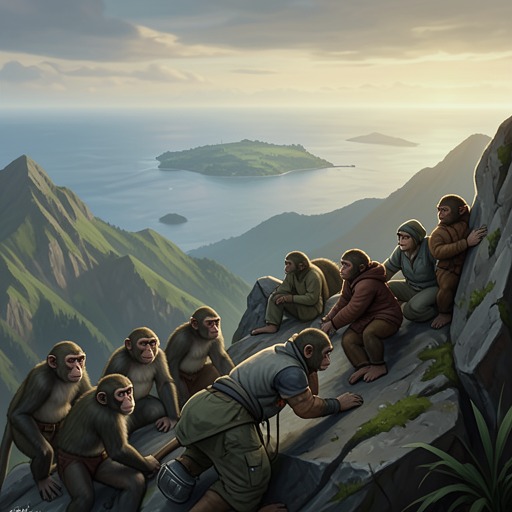
Later, Angad appears in a collective role rather than as a bereaved child. He is named alongside Jámbaván and Hanumán among the valiant leaders, with Angad specifically identified as chief and guide of the host. A command sends the company forth. The narrative thus places him at the head of an organized force and gives his leadership a practical expression: he is responsible for guiding the group, not merely counted among its fighters.
The shift is striking because the earlier scene dwells on Angad’s dependence and Báli’s anxiety about his upbringing, while the later one presents him entrusted with leading others. The text does not explain the stages by which he takes up this position. Instead, the two episodes create the contrast directly: the son once seen prostrate beside his dying father is now named as a leader among the Vánars.
Conduct in Battle
In a separate combat scene, Angad’s fury is rendered through his eyes and his action. His eyes red with anger, he waves a tree above his head and charges with a force that none can stop. The detail of the tree makes his attack immediate and physical; the episode presents his anger as an impetus to action rather than lingering description. It does not, in the supplied passage, identify the target by name, so the scene supports a portrait of his combativeness without a more specific account of the encounter.
Another battle moment tests that force against the fear spreading through the Vánars. When Angad sees them turn and run before an enemy whom even Yáma could not vanquish, he remains undaunted and holds his ground. His response is defined by contrast: the host’s retreat makes his steadfastness visible. The episode does not say that he defeats the enemy; its evidence for his character lies in refusing to flee when the danger has already overcome the others’ courage.
Characterization and Narrative Function
The passages give Angad two complementary kinds of distinction. Báli’s farewell establishes his value within a family, emphasizing his youth, noble character, and father’s fear for him. The later episodes establish his standing in the Vánar host through leadership and courage. His anger in one encounter and composure in another are not presented as the same response: one passage shows a forceful charge, while the other stresses his refusal to abandon his position.
These scenes make Angad a point of continuity between Báli’s death and the subsequent action of the Vánars. The father’s parting appeal looks toward the son’s future under a king’s responsibility; the later narrative shows Angad occupying a public role among warriors. The available episodes do not describe his eventual fate or resolve every consequence of Báli’s request. They do, however, preserve a clear movement from the vulnerable figure at the deathbed to a commander whose resolve is measured against the flight of his companions.