Ráma
RamayanaRáma stands at the meeting point of divine purpose and human suffering: born in the line of Ikshváku, he is destined to oppose a demon ruler, yet the epic gives his grief, promises, friendships, and kingship a weight of their own. His story moves from the expectations placed on a royal heir to the destruction of Rávaṇ and the restoration of rule in Lanka, then closes with Ráma’s consecration and reunion with Bharat.
Identity and Royal Promise
The poem introduces Ráma as a descendant of old Ikshváku, known by name throughout the world, with a subdued spirit joined to great might. That pairing establishes the terms of his heroism: strength is unmistakable, but it is held within self-command. Ráma is not represented simply as a powerful fighter; his authority depends on the restraint and virtue with which power is exercised.
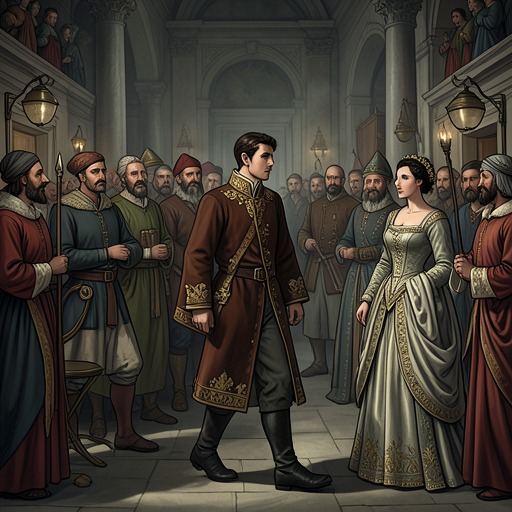
Daśaratha’s eldest son is singled out as deserving of the king’s confidence. His princely virtues are the reason Daśaratha wills to share authority with him, presenting succession as a recognition of character as well as birth. Elsewhere, the story calls a pivotal episode Ráma’s promise and places his response under threatened suffering: he remains calm and unmoved while his father’s anguish breaks out. The contrast gives the promise its dramatic force. Daśaratha feels the cost of what is happening; Ráma’s composure makes the keeping of his word a defining part of his public and private identity.
Ráma also belongs to a larger divine design. When the gods appeal for a mortal birth to strike down the demon, Vishṇu answers that appeal. The poem therefore gives Ráma two simultaneous identities: a prince whose actions are bound to family and royal obligations, and the human form through which a divine purpose is carried out. The epic’s emphasis on his grief and relationships does not erase that cosmic role; it makes the fulfillment of that role pass through a recognizably human life.
Separation and Grief
The loss of Sítá reveals the cost of Ráma’s attachment with unusual directness. At his hermitage, after Márícha’s magic has drawn the princely youths away, Ráma returns to the leafy dwelling and finds his wife gone. The narration marks the moment as a collapse of composure: his senses fail, and he weeps and wails in despair. The scene resists a portrait of the hero as untouched by catastrophe. His capacity to act is inseparable from the depth of what he has lost.
That grief shapes the way Ráma seeks help. Asking the Vánar king where the cruel fiend was seen to fly, he describes Sítá as his captured wife and as dearer to him than life. The appeal is practical—he needs to know her direction—but its language makes the personal stake unmistakable. The search for Sítá is not merely a royal or military undertaking. It is driven by a husband’s separation from the person whose absence has become the measure of his sorrow.
The poem also places that sorrow within a longer separation. Sítá’s lament recalls ten years, three years, and one more, a reckoning that makes the ordeal’s duration concrete. The time is not presented as an abstract interval: it is a burden borne within the relationship, and her anguished appeal gives the separation a voice alongside Ráma’s earlier breakdown. In this way the narrative distributes suffering between the separated pair rather than treating the rescue only as the hero’s adventure.
Friendship, Counsel, and Refuge
Ráma’s recovery of purpose depends on relationships as well as arms. He addresses Sugríva in the language of friendship and wise counsel, acknowledging the part a true friend should play. Their connection is presented as mutual counsel, not simply as a leader issuing orders to an ally. When Sugríva later speaks plaintively of his own sorrow, the exchange underscores that the bond has room for the ally’s grievance and for Ráma’s response.
Ráma’s treatment of a sufferer seeking protection offers another view of his authority. Vibhishaṇ asks him for deliverance from a dreadful hand; Ráma is described as just and brave, with a soul devoted to virtue, and answers with a smile of confident strength. The scene joins refuge to judgment: Ráma’s power is made meaningful by his willingness to receive an appeal for help. This aspect of his conduct becomes a counterpart to the violence of the campaign. He is not only the enemy of Rávaṇ but also a protector to someone who flees that enemy.
Hanumán’s offer to carry Ráma on his back places trust and service at the center of the battle. As the fighting continues, Hanumán calls on Ráma to mount him and invokes the image of Vishṇu borne on Garuḍa’s wing. The comparison returns the story to Ráma’s divine identity, but the scene itself is built on immediate loyalty: an ally offers his own body as the means by which the hero can continue the fight.
War and the Fall of Rávaṇ
The conflict culminates in the crossing of the narrow sea to Lanka. There Ráma’s hand strikes Rávaṇ down, turning the long effort to reach Sítá into the decisive defeat of her captor. The consequence extends beyond the battlefield: Vibhishaṇ is left to reign over his brother’s domain. Ráma’s victory thus ends Rávaṇ’s rule while establishing a new ruler in Lanka; the narrative describes not only the removal of an enemy but also the political settlement that follows.
The final fighting is rendered as sustained exertion rather than a single effortless stroke. Through night and day the conflict knows no pause. As Rávaṇ continues undaunted, Hanumán urges Ráma to ride on his back; later Ráma’s arrows shatter a mountain hurled against him, and he charges the foe with burning anger. These details hold together different dimensions of the hero: the warrior who can answer extraordinary force, the ally who accepts another’s help, and the man whose anger rises at the height of the struggle.
The episode titled Rávaṇ’s Death places Mátali beside Ráma at the turning point of the battle, calling on him to let other arms decide the day. The advice marks the encounter as a decisive trial, even after hours of unbroken combat. Ráma’s victory is therefore both physical and structural: it closes the struggle that began with Sítá’s abduction and enables Vibhishaṇ’s accession to the kingdom Rávaṇ had held.
Return and Narrative Significance
After the battle, Ráma and Sítá meet again. The meeting is given its own canto, a pause in which the narrative turns from combat to recognition and reunion. That placement matters: the defeat of Rávaṇ resolves the military conflict, but the return to the beloved is the emotional answer to the grief that had driven Ráma to seek her. The epic’s movement between these scenes allows heroism and tenderness to define one another.
The closing royal frame returns attention to Ráma’s family and kingship. In the canto of the consecration, Bharat addresses his brother with hands joined reverently. The gesture makes the restoration of rule a relationship as well as a ceremony: Ráma’s return is answered by a brother’s deference, and the poem’s final attention falls on the bonds that accompany royal authority.
Ráma’s portrayal gathers its force from contrast. He is descended from a royal line and connected to a divine mission, yet the disappearance of Sítá leaves him weeping and overwhelmed. He commands strength enough to defeat Rávaṇ, yet accepts help from Hanumán and makes room for the counsel and appeals of others. By carrying the narrative from promise and loss through alliance, war, refuge, and consecration, Ráma becomes both the agent of a cosmic defeat and the center of a human story about obligation, grief, loyalty, and restored rule.