Jaṭáyu
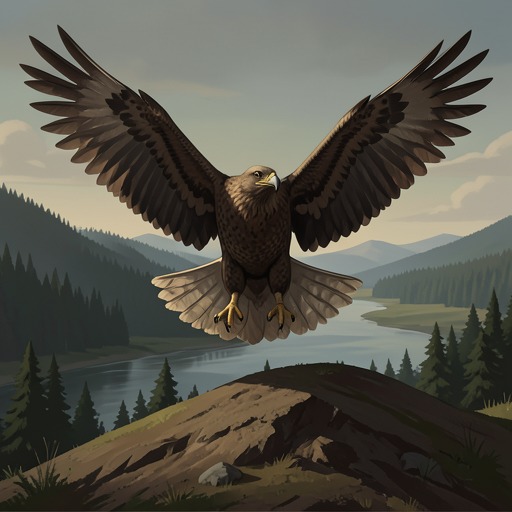
RamayanaJaṭáyu is a vulture-king whose brief but consequential role joins the abduction of Sítá to Ráma’s search for her. He is remembered not through an extended account of his life, but through the discovery of his slain body: a defender lost in the same encounter in which Sítá is carried away.
Identity and Introduction
The narrative identifies Jaṭáyu as a vulture and, in a later recollection, as the Vulture-king. These titles make his identity both specific and elevated: he is not merely one of the birds encountered in the forest, but a figure whose death belongs among the defining events of Ráma’s ordeal.
The Abduction and His Death
The account links Jaṭáyu’s death to Sítá’s abduction. Márícha’s magic separates the princely youths from her; while they are away, the abductor carries Ráma’s wife off as prey. When Ráma returns to the leafy dwelling, he finds Jaṭáyu slain upon the ground. The sequence presents the abduction and the vulture-king’s death as parts of one violent rupture, though the brief passage gives no further details of the confrontation.
Discovery and Narrative Significance
Jaṭáyu’s body turns absence into evidence. Ráma does not simply find Sítá gone: he encounters a dead defender at the dwelling, a sign that the loss has involved violence and that the search must reach beyond the immediate forest refuge. In a later recital of Ráma’s trials, Jaṭáyu’s death is again singled out alongside the abduction and the slaying of Kabandha. That return to the episode preserves the vulture-king’s place in the remembered chain of suffering and action, even though his own part in the story ends with his discovery.