Kumbhakarṇa
RamayanaKumbhakarṇa is a formidable warrior in the war between Rávaṇ and Ráma’s forces, introduced through a striking contradiction: he is feared even by the immortals, yet has lain asleep for months under Brahmá’s curse. When Rávaṇ calls him to rise, the giant enters the battle with overwhelming force, but Ráma ultimately kills him with a missile bearing the Wind-God’s name. His fall makes Kumbhakarṇa’s immense strength part of the tragedy of Rávaṇ’s doomed resistance, rather than a means of escaping it.
Identity and Place in the War
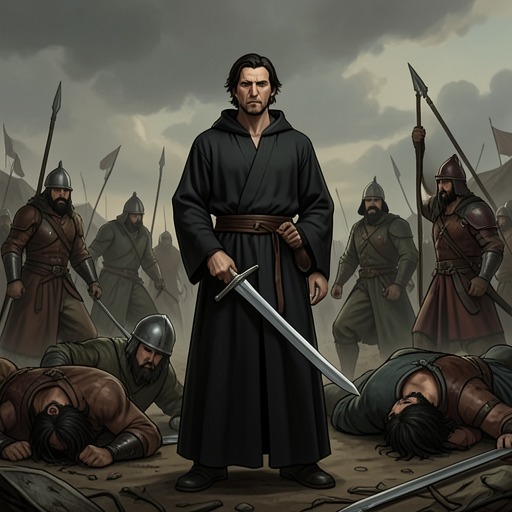
The account gives Kumbhakarṇa a fearsome reputation before showing him fight. Rávaṇ calls him a terror to immortal eyes and orders that he be roused, presenting his awakening as a major military decision rather than the arrival of an ordinary combatant. The detail that he has slept for months under Brahmá’s curse makes his inactivity supernatural and involuntary: at the moment when Rávaṇ needs him, Kumbhakarṇa is not already at the front but must first be summoned from a state imposed by divine power.
The broader conflict has reached a decisive stage. The treaty with Vibhíshaṇ has been made, and the plan for Rávaṇ’s defeat is laid; within that frame, Kumbhakarṇa’s appearance marks an escalation in the defense of Rávaṇ’s cause. The poem groups his fight and death with those of Meghanáda, placing both among the significant losses of the war without equating their individual roles or describing them as a single encounter.
The Summons and His Approach
Rávaṇ’s command turns Kumbhakarṇa’s enchanted sleep into an immediate question of military readiness. The scene’s contrast is sharp: the giant has been beyond action for months, but once he is called, he moves toward Rávaṇ with an eager stride that shakes the earth. That physical image gives the summons visible consequence. Kumbhakarṇa is not merely named as a reserve; his movement announces the arrival of a force whose scale alters the atmosphere of the battle.
The account also connects his awakening with a threat against the opposing leaders. Kumbhakarṇa declares that the princes’ blood will be his draught and that the chieftains’ blood will be for those addressed alongside him, then strides to Rávaṇ. The language turns the battle into anticipated bodily violence and underscores the confidence with which he enters it. His threat establishes the scale of his intended assault, while the later account of his death supplies its reversal.
Battle and Death
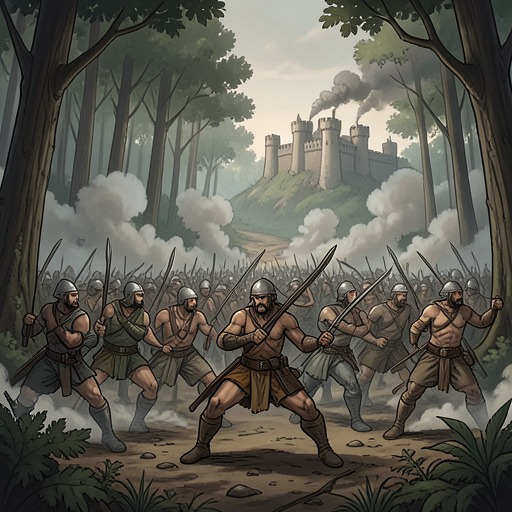
The Vánars initially flee, but they turn back and wait in obedience to their prince’s will. Their return changes the image of the battle from a rout into renewed resistance: the army’s fear is real, yet it does not settle the outcome. Kumbhakarṇa’s presence is thus measured not only by his own force but by the disorder he causes among those facing him and the effort required to make them stand again.
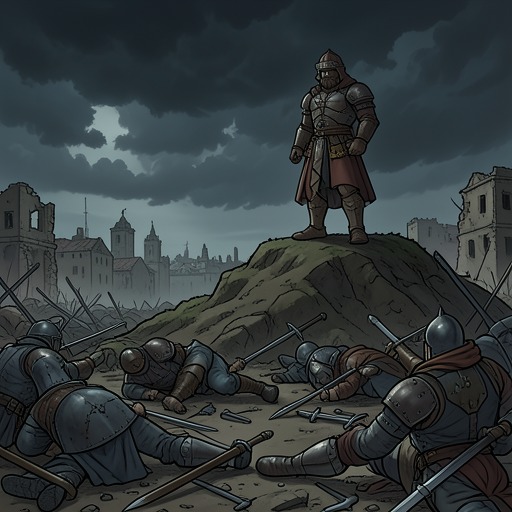
Ráma’s attack answers the giant’s apparent physical invulnerability with a specifically named weapon. The account says that Kumbhakarṇa’s mighty limbs feel no pain as the fighters strike them; Ráma then sends a dart bearing the Wind-God’s name, and the missile tears into the giant. The difference between the ineffective blows and Ráma’s decisive shot makes the climax legible through contrast: mass and resistance hold off ordinary attacks, but they do not protect Kumbhakarṇa from the weapon that brings him down. The poem records his death in the war alongside Meghanáda’s, confirming that the force summoned by Rávaṇ is ultimately lost.
Narrative Significance
Kumbhakarṇa’s brief arc is structured around interrupted power: a warrior feared by immortals lies asleep under a curse, is roused at Rávaṇ’s need, advances with earth-shaking force, and dies in battle. The sequence makes his strength vivid without allowing strength to become victory. His months of sleep also distinguish him from a continuously active defender; his entry comes as a belated reinforcement in a conflict whose outcome is already being planned against Rávaṇ.
His death contributes to the war’s accumulating losses and demonstrates the limits of Rávaṇ’s ability to resist defeat. The Vánars’ recovery from flight and Ráma’s effective missile form the immediate counterpoint to Kumbhakarṇa’s intimidating arrival. The account preserves both sides of the figure—his terror and his vulnerability—so that his fall registers not as the failure of an insignificant opponent, but as the removal of a warrior whose very awakening had been treated as consequential.