Hanumán
RamayanaHanumán is introduced as the Wind-God Váyu’s son, a brave ally whose friendship helps connect Ráma with Sugríva. His first defining role is one of trust and counsel; later, when charged with carrying tidings of Ráma’s wife, he acts on Sampati’s counsel and launches himself into a daunting journey.
Identity and Introduction
The poem identifies Hanumán by his divine parentage and presents him as a figure of courage. At Pampá, Ráma wins his steadfast friendship. The meeting establishes a bond that is immediately useful: counselled by Hanumán, Ráma tells Sugríva of his grief.
Alliance and Mission
Hanumán serves as an intermediary between Ráma and Sugríva, the Vánar chief. His counsel helps bring Ráma’s sorrow into the conversation with Sugríva, placing personal grief within the developing alliance. The passage gives Hanumán a practical part in the formation of that relationship, not merely the status of a companion.
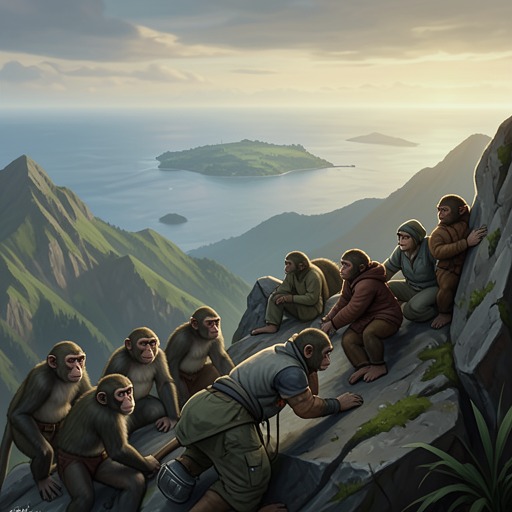
Later, a grateful king commands Hanumán to bring tidings of Ráma’s wife. With Sampati’s counsel to guide him, Hanumán accepts the dangerous task and makes a tremendous leap. The episode shifts his role from trusted adviser and friend to an active emissary, charged with carrying the search for news forward.
Narrative Role
The brief portrait links loyalty with action. Hanumán first earns Ráma’s confidence at Pampá and helps him approach Sugríva; when the mission demands courage, he answers it with a leap. His friendship and service thus form two connected stages in the narrative: he helps establish an alliance, then becomes the agent sent to seek news of the person whose loss has caused Ráma’s grief.