Sampati
RamayanaSampati is the king of the vultures whose arrival interrupts the Vánars’ despair and whose words provide aid in their search for Sita. Presented as both a grieving brother and a potential helper, he moves from the edge of the company’s crisis into a decisive role in it; after his account, he makes offerings for his brother, and new pinions grow from his side.
Identity and Background
The narrative introduces Sampati as the mighty king of the vultures. A note identifies him as the eldest son of Garuḍa, the king of birds, placing him within a larger mythic order of bird rulers. The account gives this identity briefly, through title and lineage, rather than developing a separate history of his rule.
Kinship becomes more immediate than rank when the text refers to Sampati’s brother and the offerings he makes for his shade. The contrast between his public stature as a king and his private act of mourning gives his appearance a personal dimension: he enters the scene not only as a figure able to assist the searchers, but as a brother whose grief has its own ritual expression.
Arrival Among the Vánars
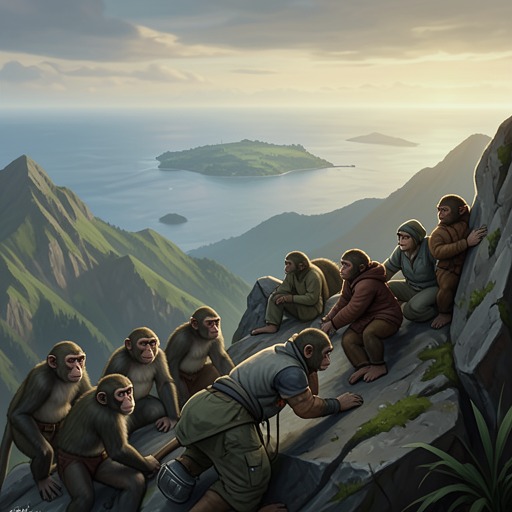
Sampati appears while the Vánars are sorrowing and Angad’s company has reached a point of despair. The group’s cry that they will die with Angad, followed by its resolution to fast to death because escape seems futile, establishes the extremity of the moment. Sampati’s arrival therefore interrupts not a confident search but a collective collapse of hope.
The canto sequence marks a change in what the company needs. The canto titled Tidings of Sita presents Sampati’s renewed speech, while Sampati’s Story gives his account a separate place in the narrative. The titles establish that his contribution is both news-bearing and personal, although the surviving details here do not specify the contents of every part of his report. His importance lies in the fact that the grieving searchers now have a speaker who can offer information and help.
Testimony and Assistance
Sampati’s speech is associated with tears: his eye is bedewed as he resumes speaking. The image keeps grief in the scene even as his words begin to offer a way forward. He does not appear as a detached messenger delivering information without feeling; the narration connects his testimony with visible sorrow.
He offers to aid the Vánars with what his will, words, and friendly skill can accomplish. That offer is carefully framed as assistance within his capacity, rather than as a claim that he can resolve the whole search alone. In the episode’s structure, speech itself becomes an action: the group’s despair has narrowed its prospects to fasting and death, while Sampati’s willingness to speak and help reopens the possibility of continuing.
Mourning and Renewal
After recounting his story, Sampati makes due offerings to his brother’s shade. The ritual places remembrance and obligation alongside the practical demands of the search. His aid to the living company does not displace his bond with the dead; the account gives space to both, moving from speech directed toward the Vánars to an observance for his brother.
The scene then turns from mourning to bodily change. Once Sampati has finished speaking, young pinions grow from his side, and boundless rapture fills him. The narration sets the growth immediately after his account and offerings, making it the episode’s striking consequence without explaining a mechanism beyond that sequence. His renewed wings give visible form to the reversal underway: the Vánars have heard a reason to hope, and Sampati himself undergoes a sudden renewal.
Narrative Role
Sampati’s episode is organized around a transition between two forms of helplessness. The Vánars sit sorrowing and contemplate death; Sampati arrives, speaks from grief of his own, and offers the limited but meaningful help of testimony and skill. The account then links his brother’s shade with the growth of his pinions, placing mourning, service, and renewal in a single progression.
The result is not simply the introduction of a powerful bird king. Sampati matters because he changes the direction of a stalled search at the moment its participants have given up, while his own transformation supplies a parallel reversal. His episode gives narrative weight to speech as assistance and to the possibility that, after grief has been acknowledged and an obligation to the dead fulfilled, movement can begin again.