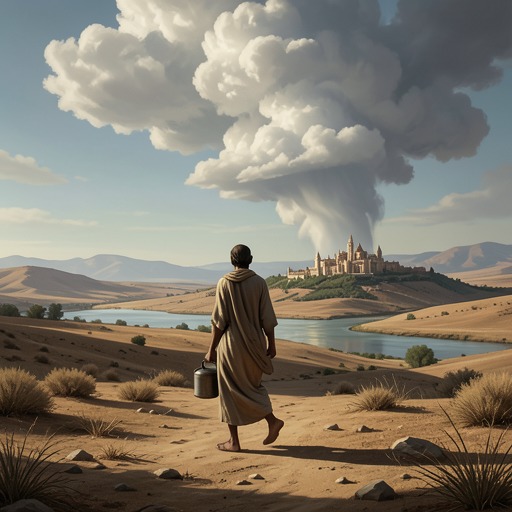
Rishyaśring
RamayanaRishyaśring is a hermit’s son whose life joins the solitude of the forest to the needs of kingship. Raised among deer and later married to a king’s daughter, he becomes a ritual authority at Daśaratha’s sacrifice; his response there gives the king hope for four sons and a continuing royal line.
Identity and Background
The seer identifies Rishyaśring as the son of Vibháṇdak, a holy man of Kashyapa’s line. His upbringing is described as taking place among the deer that roam around him, setting him apart from ordinary courtly life from the outset. The account presents his forest formation not as a brief retreat but as the defining circumstance of his early identity.
Marriage and Entry into Royal Life
Rishyaśring’s connection with the royal world comes through marriage: a king gives his own daughter to the Brahmin as his bride. The detail marks a consequential passage between two settings that had seemed distant—the hermitage and the court. His marriage brings him into a royal household while preserving the authority associated with his religious standing.
Role in Daśaratha’s Sacrifice
At Daśaratha’s sacrifice, the king addresses Rishyaśring after the Brahmins have been pleased by his largesse. The exchange gives the hermit a central place in the royal rite: Daśaratha speaks to him directly, and Rishyaśring tells the monarch that four sons will be born to uphold his royal line. The promise turns the sacrifice toward its dynastic purpose, linking ritual observance to the future of the kingdom.
Narrative Significance
Rishyaśring’s brief but consequential presence bridges forest asceticism and royal succession. His story moves from an upbringing among deer to marriage into a king’s family and then to a prophecy addressed to Daśaratha. The four sons promised in that exchange make his role part of the narrative’s account of how the royal line will be continued.