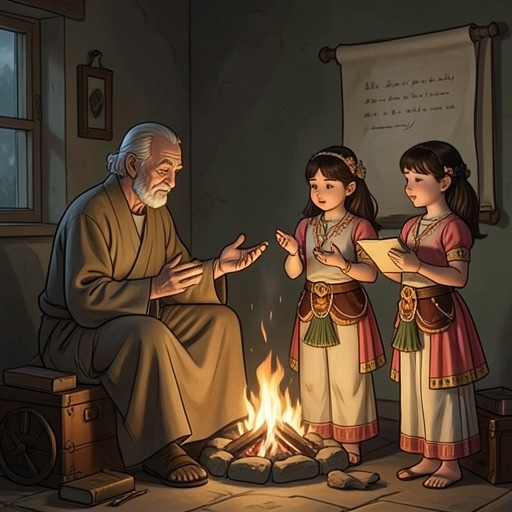
Kuśa
RamayanaKuśa is an ancient king in the genealogy narrated in Canto XXXIV, where his virtues and his four valiant sons establish a model of royal character passed from one generation to the next.
Identity and Lineage
The account introduces Kuśa as a king of Brahmá’s lineage who reigned in the distant past. His place in the genealogy gives the story an ancestral frame: the later family history begins with a ruler whose name and conduct are presented as worthy of remembrance.
Kingship and Character
Kuśa is described as just, faithful to his vows, and true. These qualities connect the exercise of kingship with personal integrity: justice marks his rule, while fidelity to vows makes keeping one’s word part of his royal example.
Sons and Inherited Example
The narrative next describes four valiant boys born to a woman and says they resembled their father. Each displayed glorious deeds and fulfilled the warrior’s role. Their courage and conduct extend Kuśa’s example into the next generation, presenting the family’s martial standing as inherited but also demonstrated through action.
Narrative Role
Kuśa’s brief appearance supplies the ancestral foundation for the episode’s account of his descendants. The narrative gives no further details of his reign or deeds; instead, it defines his significance through a compact set of traits—lineage, justice, fidelity, and the example reflected in his sons.