Daśaratha
RamayanaDaśaratha is the respected king whose longing for an heir and designation of his eldest son Ráma as successor shape the epic’s dynastic and divine plot. His rule is presented as capable and vigilant, yet his earlier promise to Kaikeyí turns the planned succession into an exile. Through him, royal duty and fatherly love meet not in easy harmony but in painful conflict.
Identity and Kingship
Daśaratha is introduced as a king revered and beloved by both country and town, described as good and wise. The account associates his reign with practical political knowledge as well as royal virtue: secret spies bring timely intelligence about what people are doing and what they may do, while the king is represented as skilled in the grounds of war and peace. The portrait suggests a ruler whose authority depends not only on ceremony but also on the gathering and use of information.
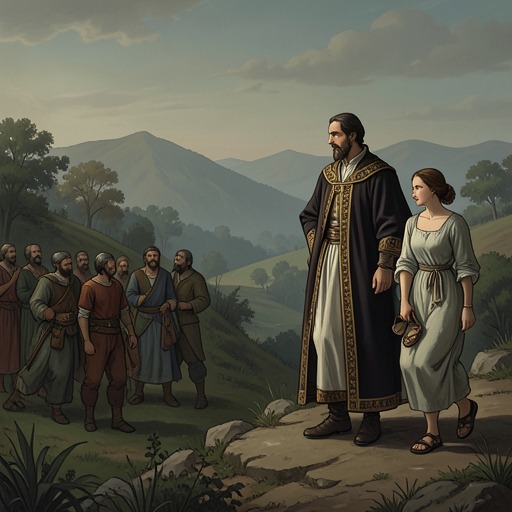
That public stature makes the threatened succession more than a private family dispute. Daśaratha intends to share his kingdom with Ráma as Regent Heir, and the choice is presented as earned: Ráma is his best and eldest son, distinguished by princely virtues. The preparations for the prince’s consecration give the intended transfer of authority a visible, formal shape. Daśaratha’s plan joins dynastic continuity to a judgment of Ráma’s fitness, setting up the sharp reversal that follows.
The Heir and the Broken Succession
Before the consecration can take place, Kaikeyí demands that Daśaratha grant two gifts he had promised long ago. One demand is that Ráma leave for the forest. The account identifies the old promise as the leverage behind the reversal, without recounting here the circumstances in which it was made. Daśaratha’s intention to raise his eldest son as heir therefore collides with an obligation he cannot simply disregard. The king’s own prior word becomes the means by which the future he had prepared is undone.
The narrative emphasizes the emotional cost of that collision. When the decision falls on Ráma, Daśaratha’s anguish breaks through: he is dismayed at the fate of the son he loves. Ráma, by contrast, is described as calm and unmoved by threatened suffering. The contrast does not make the king’s grief a mere weakness; it exposes the distance between the ruler caught in the consequences of a promise and the son who accepts the resulting hardship. Daśaratha’s public authority cannot shield him from the private pain of seeing his chosen heir sent away.
The Sacrifice and the Birth of Ráma
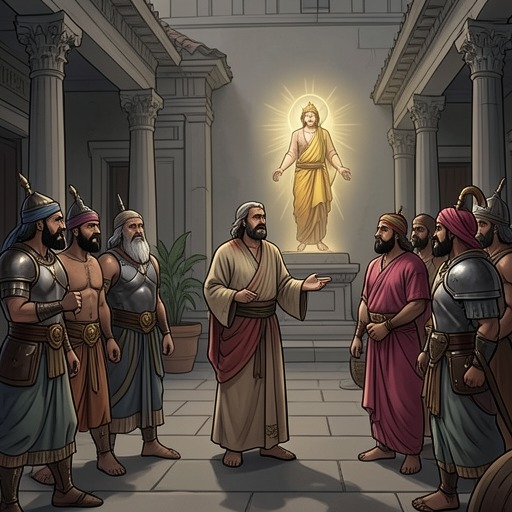
Daśaratha’s fatherhood begins as a matter of anxious hope as well as royal succession. The account describes him as childless and desirous of offspring, undertaking austerities and performing a horse sacrifice in the hope of obtaining sons. The ritual is thus both a royal act and a response to a personal lack: the king seeks children who can continue his line. At the sacrifice, the sage Rishyasringa asks the assembled gods to favor Daśaratha and grant him four sons; they assent, promising that his desire will be fulfilled.
A further account in the book’s later material connects this human wish to the gods’ crisis. Ravana’s boon protects him from death at the hands of divine and other supernatural beings, but not from human beings. The gods therefore ask Vishnu to be born as Daśaratha’s son, dividing himself into four portions among the king’s three queens, so that Ravana can be defeated in human form. Daśaratha’s sacrifice and the divine plan converge: the sons desired to preserve the royal line also become the means through which the gods’ need will be answered. Ráma’s identity as Daśaratha’s son is consequently both familial and central to the larger purpose assigned to his birth.
Fatherhood and Later Remembrance
The plot’s account of Daśaratha is defined by the tension between the authority of a king and the attachment of a father. He first intends that Ráma inherit, and then, bound by the old promise to Kaikeyí, is unable to prevent the exile that overturns that intention. The result is not a simple rejection of Ráma: the narration explicitly makes the father’s anguish part of the event. It places affection beside obligation, showing that keeping a promise can carry a severe cost even for the person whose word must be honored.
Daśaratha’s significance continues in a later scene titled for him, where he again encounters Ráma and embraces the son he loves. He urges Ráma to begin his reign, and Ráma answers him. This later appearance gives the succession first denied its eventual image of recognition: the father who had wished to install Ráma as heir is shown welcoming him and affirming his kingship. Read alongside the exile, the embrace brings Daśaratha’s story back to its original concern—the bond between father and son and the interrupted transfer of rule—without erasing the grief through which that bond has been tested.