O'Brien
O'Brien is a member of the Inner Party in Oceania, a figure of immense authority and mystery who becomes both the object of Winston Smith's trust and the instrument of his destruction. First appearing at the Two Minutes Hate, O'Brien's imposing physique and urbane manner create an impression of dangerous intelligence, and his brief, equivocal glance at Winston plants the seed of a belief in a secret resistance. In reality, O'Brien is the Party's most dedicated servant, a master of doublethink who conducts Winston's re-education in the Ministry of Love and ultimately reveals the Party's true purpose: the pursuit of pure power.
Appearance and First Encounters
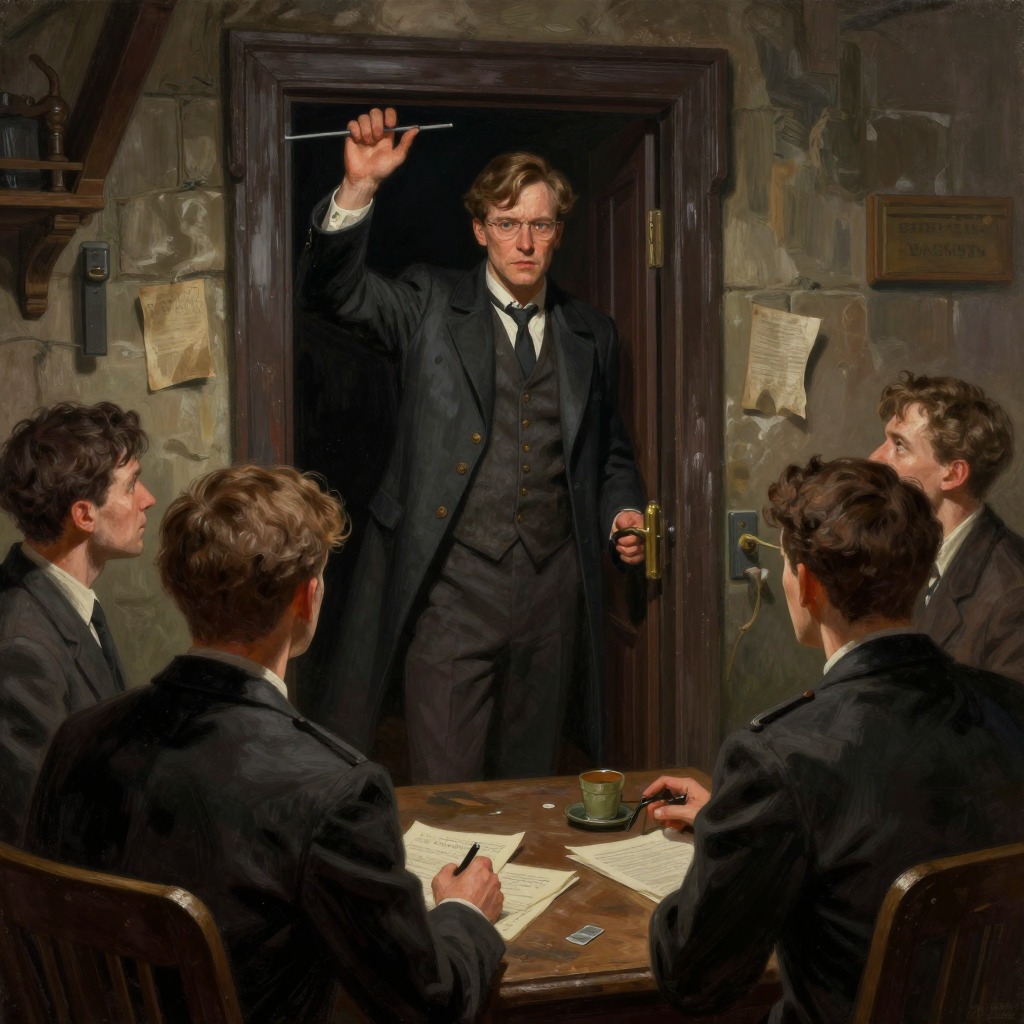
O'Brien is a large, burly man with a thick neck and a coarse, humorous, brutal face, yet he possesses a certain charm of manner, particularly a habit of re-settling his spectacles that recalls an eighteenth-century nobleman. His black overalls mark him as a member of the Inner Party, a rank so remote that most Outer Party members, including Winston, have only a dim idea of his actual post. During the Two Minutes Hate, O'Brien sits near Winston, and for a fraction of a second their eyes meet; Winston is convinced that O'Brien shares his secret hatred of the Party. This silent exchange fuels Winston's hope that the legendary Brotherhood exists and that O'Brien might be a contact.
The False Promise of Alliance
Weeks later, O'Brien deliberately approaches Winston in a Ministry corridor, praising his Newspeak writing and offering to lend him the tenth edition of the Newspeak Dictionary. By mentioning a friend whose name has slipped his memory – a clear reference to the vaporized Syme – O'Brien signals that he is aware of Winston's subversive tendencies. He scribbles his address on a scrap of paper under the telescreen, a calculated act that appears to be a recruitment. Winston, believing he has reached the outer edges of a conspiracy, accepts the invitation.
The Philosophy of Power
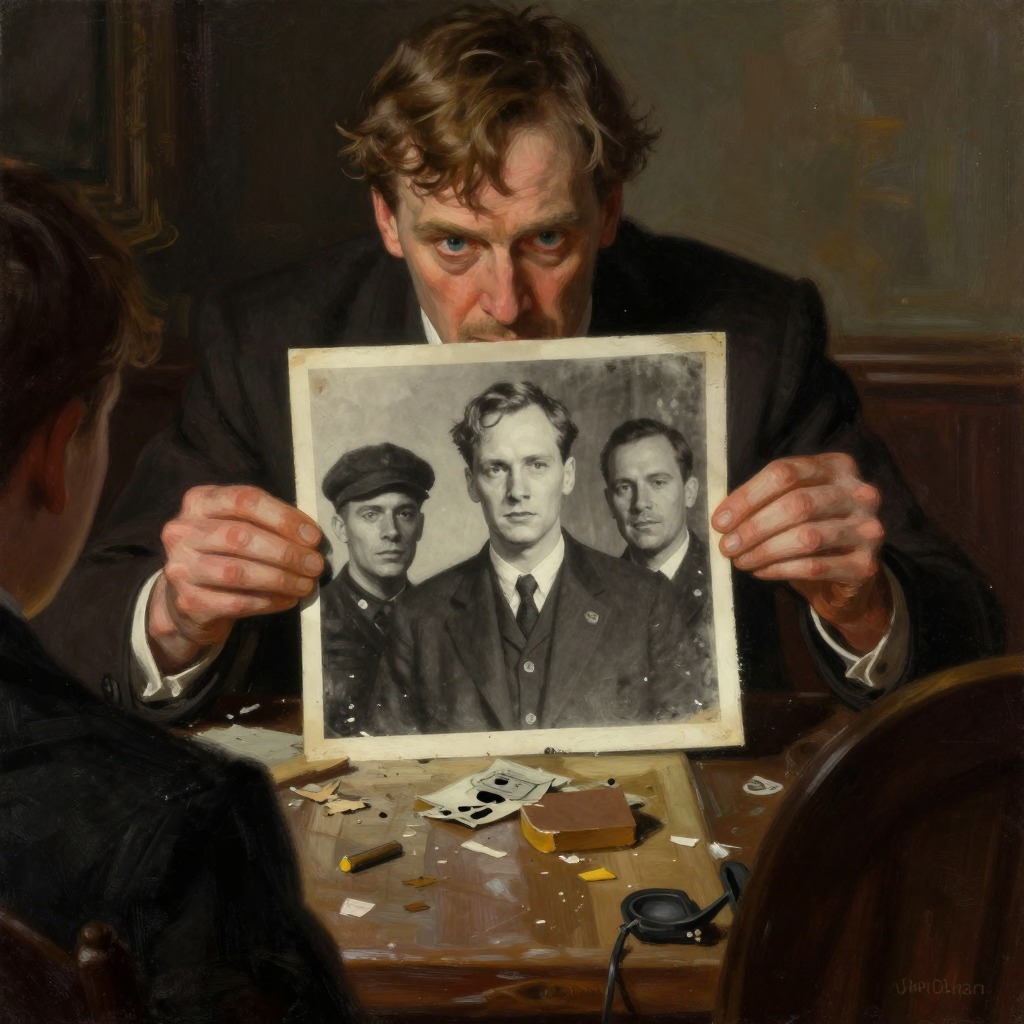
In the Ministry of Love, O'Brien presides over Winston's interrogation, using a pain dial to break his resistance. He systematically demolishes Winston's belief in objective reality, demonstrating that the Party controls the past and that truth is whatever the Party declares. The climax of his philosophy is delivered in a cold, reasoned speech: the Party seeks power entirely for its own sake. "Power is not a means, it is an end," O'Brien declares. "The object of persecution is persecution. The object of torture is torture. The object of power is power." He admits that he himself wrote or collaborated on Goldstein's book, The Theory and Practice of Oligarchical Collectivism, which he now dismisses as a useful fiction. O'Brien's vision is one of endless domination, where the only emotion is the intoxication of power, and the only image is a boot stamping on a human face – for ever.