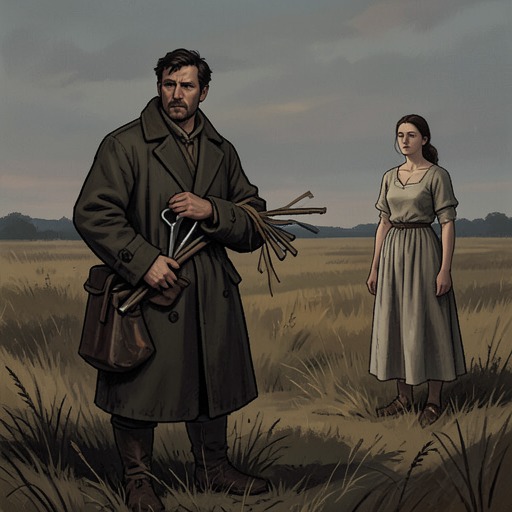
Adeon
MabinogionAdeon is one of the sons of Eudav and the brother of Kynan in the Dream of Maxen Wledig. He appears first at Aber Sain, where Maxen recognizes the place and the woman he had seen in a dream; Adeon and Kynan are playing chess in the hall. Later, the brothers bring a small British force to Maxen’s stalled campaign for Rome. Adeon’s most clearly individualized act comes after victory, when he chooses to return to his own land rather than remain abroad with Kynan. That division gives his brief part in the narrative a distinct shape: he helps recover an empire, then takes the road home.
Identity and Introduction
Adeon is introduced by his kinship and setting: he is a son of Eudav, one of the two brothers whom Maxen encounters at the castle of Aber Sain in Arvon. Kynan is beside him, and the two are playing chess when Maxen enters the hall. Eudav is also present, carving chessmen while seated on an ivory chair; the maiden Maxen sought sits on a chair of gold. The scene places Adeon within a family and a courtly household, but does not give him a speech or a separate part in the encounter. Maxen greets the woman and embraces her, and she becomes his bride that night.
Adeon’s introduction is therefore quiet beside the scale of what follows. The narrative identifies him as one of the brothers whose arrival will change the emperor’s fortunes, but initially presents him through a domestic scene of chess and family. His connection to the expedition is established before his individual preference becomes clear: he and Kynan are the figures who carry their kinship from the hall at Aber Sain into a war far from home.
The British Force and the Fall of Rome
When Maxen has spent a year before Rome without bringing it closer to capture, Helen Luyddawc’s brothers arrive from the Island of Britain with a small host. The force is remarkable for its quality rather than its size: the account describes its warriors as better than twice as many Romans and praises its handsome standards and equipment. Adeon is part of this company, which gives Maxen the military support he has lacked. Helen recognizes her brothers’ standards, and Kynan and Adeon go to meet the emperor. Maxen welcomes and embraces them.
The brothers’ force turns the siege through timing and preparation. Kynan proposes a more skillful attack after watching the Romans’ failed assaults. The British measure the wall at night and have their carpenters make one ladder for every four men. The narrative does not assign the measuring or the ladder-making to Adeon personally; it presents these preparations and the assault as the work of the British force. At the daily pause for the emperors’ meal, the Britons approach the city and set their ladders against its walls. They enter while the defenders are unprepared.
The new emperor has no time to arm himself before the attackers kill him, along with many others. The British spend three days and three nights subduing the city and taking its castle. Other members of the force hold the city against any intervention by Maxen’s army until they have brought it under their control. Adeon’s contribution is recorded as part of this collective action, not as a separate exploit; his importance lies in his place among the brothers and the warriors whose intervention breaks the stalemate.
Restoring Maxen and Continuing the Campaign
After the city has been captured, Maxen and Helen go to the brothers to ask for it. The Britons answer that no one has taken the city in a way that allows another to give it to the emperor: it is in the possession of the men of the Island of Britain, and only they can grant it. The gates are then opened, Maxen takes the throne, and the people of Rome submit to him. He declares that he has recovered his empire and gives the host to Kynan and Adeon, authorizing them to conquer whichever regions they desire.
The brothers and their force continue into other lands, taking castles and cities. The account says that the men are killed and the women kept alive, and that the campaign lasts so long that the young men who set out with them grow grey-haired. This prolonged conquest expands Adeon’s role beyond the relief of a siege: he remains with the expedition through a far-reaching campaign. Yet the narrative gives no separate battle or personal deed to him during this period. Its emphasis is on the brothers’ leadership and on the collective force that carries out the conquest.
Adeon’s Return and the Brothers’ Parting
After the long campaign, Kynan asks Adeon whether he would rather stay in the conquered land or return to the land from which they came. Adeon chooses to go back to his own land, and many of the company choose to go with him. Kynan remains overseas with the rest. The account gives no explanation for Adeon’s preference; it presents the decision itself as the decisive personal detail of his arc. The brothers who arrived together now take different courses, dividing the force between return and settlement.
That division also separates Adeon from the later fate attributed to Kynan’s group. The men who remain cut out the tongues of the women so that they will not alter the men’s speech. The story connects the women’s enforced silence to the name Britons for the men of Armorica and to the continued arrival of the language from the Island of Britain. This account of the remaining party’s settlement is not attributed to Adeon, who has chosen to return. His departure matters precisely because the narrative distinguishes those who go home with him from those who stay with Kynan.
Narrative Role
Adeon’s story is brief, but its sequence moves from presence at a family court, to participation in a decisive military expedition, to a choice that separates him from his brother. He is not given the tactical initiative assigned to Kynan, nor an individually described feat in the siege. Instead, the narrative establishes his place among the returning force and makes his preference at the campaign’s end the clearest sign of individual agency.
The contrast between the brothers supplies the episode’s closing structure: they enter the story together at Aber Sain, act together in the recovery of Rome, and part when the conquest is complete. Adeon’s return is not described further, and the account does not say what becomes of him afterward. Within the story that is preserved, his arc ends at the choice to leave, while Kynan’s continued presence overseas leads into the explanation of Armorica’s Britons and their language.