Enid
MabinogionEnid is Ynywl’s daughter and Geraint’s bride, first encountered in circumstances that make her beauty and grace striking against the poverty around her. Her story turns on a sharp contrast: Geraint misreads her sorrow as disloyalty, while her conduct on their perilous journey repeatedly shows that she remains devoted to him. She is not merely the object of a knight’s courtship or the reward at the end of a tournament; her warnings, refusals, and fidelity shape the trials that follow.
Identity and First Appearance
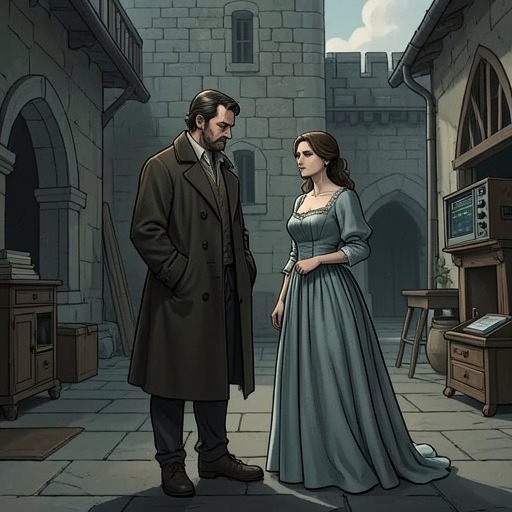
Enid lives with her parents in a decaying palace, where Geraint finds them after arriving in a town whose people have welcomed the victorious knight. The family’s surroundings are impoverished: the palace is in ruins, its hall is falling apart, and the old man who receives Geraint wears tattered garments. Enid is likewise dressed in old, worn clothing, yet the narrator presents her as exceptionally comely and graceful. The contrast between her appearance and her circumstances establishes her dignity before she has any courtly status.
Her first service to Geraint is practical and generous. At her father’s direction, she tends the visitor and his horse; she disarrays him, provides straw and corn for his mount, and goes into town to obtain food and drink. She returns with a youth carrying mead and a quarter of a young bullock, while she brings white bread and manchet bread. The provisions are the best she could secure, and Geraint accepts them as sufficient. Enid’s introduction therefore joins beauty to resourcefulness: she offers what she can in a household where little is readily available.
Marriage and Place at Court
After Geraint returns with Enid, Gwenhwyvar welcomes them and recognizes that the maiden is the one through whom she has received satisfaction. Arthur and the court also receive Enid gladly. Arthur gives her to Geraint, and the customary bond of marriage is made between them. Gwenhwyvar provides her with the choicest of her apparel; in these clothes Enid’s comeliness and grace become visible to the whole court. The wedding is celebrated with minstrelsy, drink, and games, and Enid’s bridal chamber is prepared beside that of Arthur and Gwenhwyvar.
Her change in fortune is public as well as personal. Enid takes up residence in the palace, gains companions among both women and men, and becomes one of the most esteemed maidens in the Island of Britain. Gwenhwyvar also awards her the head of the stag, which had been held back until Geraint’s return. The court approves the choice, and Enid’s fame and circle of friends grow. Her rise from the worn household to a place of honor at court is thus marked not only by marriage but by communal recognition.
Geraint’s Withdrawal and Enid’s Warning
Geraint’s later withdrawal from public life begins after his fame has spread and no opponent seems worthy of him. He increasingly stays in the palace with Enid, gives up tournaments, hunting, amusements, and the companionship of his nobles, and eventually confines himself to her chamber. The court murmurs and scoffs at his abandonment of its company. When Erbin asks whether Enid caused this change, she denies it and says that nothing is more hateful to her. She is distressed because speaking to Geraint may be difficult, yet remaining silent while others blame her is no easier.
One summer morning, as Geraint sleeps beside her, Enid looks at his arms and breast and laments that they seem to have lost the glory and warlike fame they once possessed. Her tears fall on him and wake him. Instead of understanding her words as grief at his withdrawal, Geraint suspects that she loves another man and wants different company. His suspicion turns her concern into the supposed cause of a forced test: he orders her to dress in her worst riding clothes, travel ahead of him, and neither speak nor turn back unless he addresses her. Enid says she does not understand what he means, but she is made to accompany him.
The Journey and Enid’s Loyalty
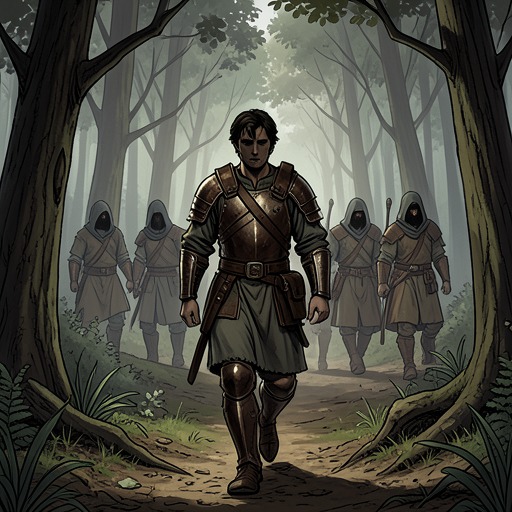
Geraint chooses not a pleasant or well-traveled road but a wild route exposed to thieves, robbers, and venomous animals. When four armed horsemen emerge from a forest and discuss taking the couple’s horses, armor, and the lady, Enid hears their plan. She hesitates because Geraint has forbidden her to speak, but decides she would rather receive death from him than witness his death without warning him. She rides back far enough to tell him of the danger, accepting his anger rather than keep silent while he is threatened.
Geraint rebukes her for disobeying and says he wanted silence, not warning. He nevertheless meets the attackers: he kills the first with a lance thrust through his shield and body, then kills the remaining three in turn. Enid is sorrowful as she watches. Geraint takes the dead men’s arms, ties their horses together, and orders her to drive the four horses onward while again forbidding her to speak unless he speaks first. The episode makes the imbalance between them plain: his strength defeats the immediate danger, but her willingness to risk his displeasure is what alerts him to it.
Fidelity Under Pressure
Later, after an encounter with giants leaves Geraint gravely wounded and apparently dead, Enid’s fidelity is tested by the Earl of Limours. She laments that the only man she has loved, or ever will love, is dead. The earl offers her his earldom and himself, but she refuses consolation, will not change her traveling clothes, and will not eat or drink while Geraint lies on the bier. She insists that she will not eat until he eats too, although the earl declares that he is dead. When the earl strikes her, her piercing cry brings Geraint out of his swoon. He rises, kills the earl with a blow that cleaves his head, and then sees that Enid has lost her color and familiar appearance. He also recognizes that she was right. Her grief and refusal have made her loyalty unmistakable, even to the husband who had doubted her.
Enid’s trials continue when Geraint reaches Earl Owain’s enchanted games. At the hedge of mist, no one is permitted to accompany him inside; he enters alone, while Enid remains outside anxious for his safety. The scene echoes the earlier journey, where she had to decide whether to obey an order for silence or act on what danger required. Across these episodes, Enid’s defining action is not combat but truthful attention: she sees Geraint’s vulnerability, warns him when silence would endanger him, and remains faithful when others offer her a different future. Her conduct exposes the cost of Geraint’s suspicion and gives the romance’s tests their human stakes.