Kai
MabinogionKai is a celebrated warrior of Arthur’s court, distinguished by exceptional physical powers, practical ingenuity, and a readiness to take the lead in perilous adventures. In the quest for Olwen, he helps secure the sword of Gwrnach the Giant and joins the search for Mabon son of Modron; elsewhere, he provokes and suffers reversals in contests with Owain son of Urien and Peredur son of Evrawc. His episodes repeatedly place confidence in his own prowess beside the consequences of acting rashly or speaking discourteously.
Identity and Abilities
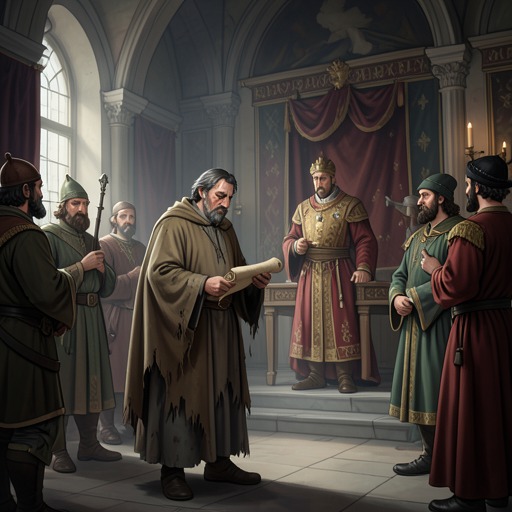
Kai is among the warriors whom Culhwch asks Arthur to enlist in obtaining Olwen, the daughter of Yspaddaden Penkawr. Arthur’s response to the request turns the young man’s appeal into a collective undertaking, and Kai soon takes a prominent part in it. When Arthur’s messengers return without learning anything about Olwen, Kai rebukes Culhwch for reproaching Arthur and pledges that the company will continue until they establish either that the maiden does not exist or that they can find her. His intervention makes him one of the quest’s active guarantors: he does not merely join the expedition but accepts responsibility for seeing it through.
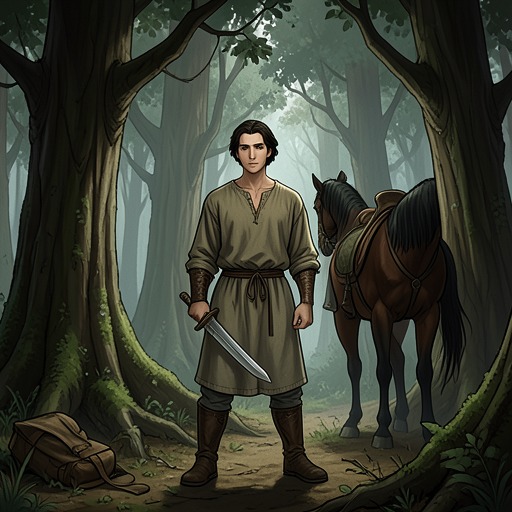
The narrative gives Kai a catalogue of extraordinary capacities. He can remain underwater for nine nights and days and go without sleep for the same span. His sword wounds cannot be healed by any physician. At will, he can grow as tall as the highest tree in a forest. His body also provides warmth: in heavy rain, what he carries remains dry immediately above and below his hand, and, when his companions are cold, his heat serves them like fuel for a fire. These powers make him more than an accomplished fighter; they give the expedition a companion suited to conditions that ordinary strength or endurance could not meet.
His gifts do not make him invulnerable. The stories treat his formidable reputation as real, but not as a guarantee of victory. He is twice overcome by the Knight of the Fountain, and later is badly hurt in an encounter with Peredur. Such reversals distinguish his extraordinary abilities from absolute mastery: Kai can make himself a vital asset to Arthur’s company, yet remains exposed to the consequences of misjudgment and to opponents whose strength he has underestimated.
The Quest for Olwen
At Custennin’s dwelling, Kai accompanies Gwrhyr Gwalstawd Ieithoedd to speak with the herdsman and his dangerous dog. Menw son of Teirgwaedd offers a spell to prevent the animal from harming them, but the episode also emphasizes Kai’s directness: he helps turn the mission from a guarded approach into a face-to-face inquiry. When Custennin’s wife runs out to welcome the visitors, Kai interposes a billet of wood between her hands rather than let her embrace him. Her grip twists the log; Kai answers with a dry remark about what her strength might have done to him. The moment gives his formidable body a comic edge, while showing that he meets even affectionate hospitality with brisk, teasing self-possession.
Kai’s most consequential stratagem comes at the castle of Gwrnach the Giant. The gatekeeper will admit no guest unless he brings a craft, so Kai claims to be the world’s finest sword-burnisher. Once inside, he works on the giant’s blade with a blue whetstone, polishing half of it to demonstrate his skill. He then uses the giant’s satisfaction to extend the ruse: offering to repair the scabbard, Kai takes possession of sword and scabbard and kills Gwrnach with a sudden blow. Bedwyr enters the castle through the signal Kai gives, and Custennin’s son, Goreu, also manages to pass the guards. The company plunders the castle and returns to Arthur’s court with the giant’s sword. Kai’s achievement depends on more than force: he reads the gate’s rule, presents a credible skill, earns the enemy’s trust, and turns an ordinary act of service into an opening for the attack.
Kai is also chosen for the subsequent search for Mabon son of Modron. Arthur assigns him to go with Bedwyr and Gwrhyr Gwalstawd Ieithoedd, alongside Eidoel, whose imprisoned kinsman they seek. The expedition follows the Ousel of Cilgwri, the Stag of Redynvre, and the Eagle of Gwern Abwy, each of whom directs the search onward without knowing Mabon’s whereabouts. At the Eagle’s direction, Kai and Gwrhyr ride on the shoulders of the Salmon of Llyn Llyw to Gloucester, where they hear Mabon lamenting from his prison. The discovery establishes that Mabon can only be won by fighting. Arthur later brings his host against the castle; Kai and Bedwyr travel on the salmon again, and Kai breaks through the prison wall and carries Mabon out while the battle continues. As in the Gwrnach episode, his physical prowess serves a practical purpose within a larger operation: it turns the information gathered by the embassy into a rescue.
Another joint exploit with Bedwyr shows Kai combining patience with force. They find Dillus Varvawc cooking a wild boar, and Kai explains that the hunter’s beard is needed to make a leash capable of holding Drudwyn, the cub of Greid son of Eri. The beard must be taken while Dillus is alive and with wooden tweezers, or it will be brittle. Kai and Bedwyr make the tools and wait for Dillus to fall asleep. Kai digs a pit beneath him, traps him, and takes the beard with the wooden tweezers; the two then kill him and bring the finished leash to Arthur at Gelli Wic in Cornwall. The sequence makes Kai’s resourcefulness particularly clear: success depends on knowing the precise condition of the task, preparing the right implement, and choosing the moment rather than rushing into a direct contest.
Conduct at Arthur’s Court
Kai’s confidence can become discourtesy. When Owain proposes that the court investigate a place described by Kai, Kai answers that Owain often says with his tongue what he would not support with his deeds. Gwenhwyvar rebukes him for addressing Owain so rudely. Kai replies that her praise of Owain is no greater than his own, a response that suggests his provocation does not simply reflect contempt for the other knight; nevertheless, he has already made a public slight that the queen finds unacceptable. The exchange introduces a recurring tension in his characterization: the court values his courage and competence, but his speech can fall short of the courtesy expected of a leading warrior.
When Arthur’s company later reaches the Fountain, Kai asks permission to throw water on the slab and take the first adventure. Arthur grants his request. Kai’s choice is consistent with his role as an eager champion, but the challenge defeats him. The storm that follows the water kills several members of Arthur’s retinue, the tree becomes bare, and the birds return to sing; then Kai meets the black-clad knight and is overthrown. He asks to face the knight again the next day, but loses a second time. The rest of Arthur’s household also goes out against the challenger, and Kai’s failure becomes part of a larger demonstration that the Fountain’s guardian cannot be overcome by ordinary confidence or repeated attack. The episode sharply contrasts his earlier insistence on taking the first adventure with the limits the encounter imposes.
Conflict with Peredur
Kai’s conduct toward Peredur is among his clearest failures of judgment. When Peredur first arrives at Arthur’s hall, Kai mocks his poor equipment and tells him to pursue a knight who has insulted Gwenhwyvar, taking the man’s horse, arms, and goblet as the price of receiving knighthood. Kai’s challenge redirects Peredur’s arrival into an immediate test of arms, while Kai himself remains at court. He then strikes the dwarf and female dwarf who greet Peredur with extravagant praise, further turning the encounter into a display of contempt rather than a measured welcome.
Later, while Peredur is absorbed in thought, Kai and a succession of Arthur’s young men approach him. Peredur does not answer their questions, and Kai’s attack leads to a violent response that leaves Kai seriously injured. Arthur grieves over the mishap and has physicians attend him. Gwalchmai argues that the knight should not have been disturbed without care, since he might be reflecting on a loss or thinking of the woman he loves. Kai answers with spiteful criticism of Gwalchmai, continuing the verbal quarrel even after his own defeat. The episode joins two elements of Kai’s character: he is quick to test others, but his impatience can expose him to a power he has failed to understand.
The conflict recurs after Peredur has taken a vow of silence. Kai encounters him and, after receiving no answer, thrusts at him with a lance. Peredur rides on rather than break his vow, and Gwalchmai condemns Kai’s action as an outrage against a youth who cannot speak. The repeated encounter makes Kai’s earlier treatment of Peredur more than a single lapse: even when confronted with silence and an evident constraint, he presses the challenge. His conduct stands against Gwalchmai’s insistence on courtesy and restraint, while Peredur’s silence makes the cost of Kai’s aggression especially plain.
Reversals and Narrative Role
Kai’s experiences with the Fountain knight and Peredur establish a pattern of reversals, but the narrative does not reduce him to a defeated champion. His earlier adventures show him working effectively with Bedwyr, Gwrhyr Gwalstawd Ieithoedd, and Arthur’s company; his later encounters expose flaws in judgment without cancelling those achievements. In the Fountain episode he volunteers for the first contest and loses twice. In Peredur’s story, his own aggression helps provoke the violence that harms him, and he answers Gwalchmai’s criticism with further hostility. The contrast makes his prowess consequential but fallible, and it places courtesy alongside strength as a standard by which Arthur’s warriors are assessed.
Kai also accompanies Geraint when the latter leaves Arthur’s court to take up the defense of his own dominions. Later, during Geraint and Enid’s journey, Kai encounters Geraint, who is wounded and resting beneath a tree. Kai does not recognize him and insists that he go to Arthur, then attacks when Geraint refuses. Geraint knocks him from his horse but does not punish him further. Kai returns to the company and tells Gwalchmai about the wounded stranger; Gwalchmai goes to investigate, recognizes Geraint, and arranges for Arthur’s tent to be moved beside the road so the injured knight can be received without being forced to approach the camp. Kai’s role in this scene is brief but revealing: his impulse to compel produces another needless contest, while Gwalchmai’s recognition and accommodation repair the encounter.
Across these episodes, Kai functions as a measure of both martial capacity and courtly conduct. His feats are often practical, from entering a guarded castle by means of his craft to carrying Mabon out of prison, and his bodily powers make him an unusually valuable companion. Yet the stories repeatedly place his confidence under pressure: a rival defeats him, a younger knight answers his provocations, and a familiar companion suffers his failure to recognize him. Kai remains formidable, but his significance lies partly in the gap between what he can accomplish through courage and cunning and what he risks through impatience and discourtesy.