Rhiannon
MabinogionRhiannon is the daughter of Heveydd Hen whose deliberate pursuit of Pwyll begins their marriage and whose life is later shaped by the disappearance of their son, Pryderi. She first appears as a rider whom no horse can catch; she then stops by choice, declares that she has sought Pwyll, and asks him to meet her before she is given to another. Her story turns on this early self-determination and the sharp contrast between it and the unjust public punishment she accepts after Pryderi vanishes.
Identity and Introduction
Rhiannon enters the narrative on the road near Pwyll, repeatedly passing him at a pace his horse cannot match. Pwyll’s attendant reports that pursuing her has proved futile, and Pwyll recognizes that force and speed will not bring him nearer. The next day, Pwyll rides after her himself. Only when he calls on her to stop for the sake of the person she loves does she agree; she points out that he could have asked earlier. The episode makes her arrival an encounter governed by her consent, not by Pwyll’s ability to overtake her.
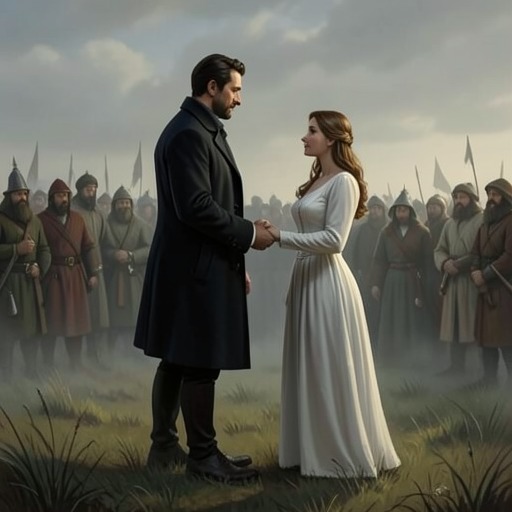
Once stopped, Rhiannon lifts the part of her headdress covering her face and speaks with Pwyll. She identifies herself as Heveydd Hen’s daughter and explains that she has come on her own errand: her chief purpose is to seek Pwyll. She says that others have sought to give her a husband against her will, but she has refused because she loves Pwyll. Her beauty astonishes him, yet the scene gives her more than the role of an admired bride: she states what she wants and asks him to answer her directly.
Choosing Pwyll and Sharing His Rule
Pwyll accepts Rhiannon’s proposal and says he would choose her among all women. She asks him to pledge that he will meet her within a year, before she is given to another. He agrees to meet wherever she chooses, and she sets the tryst at her father’s palace, where she will have a feast prepared. Rhiannon departs after securing his promise. Pwyll returns to his company, but turns aside their questions about the maiden rather than telling them what has passed between them.
At the appointed time, Pwyll arrives at Heveydd Hen’s palace with a hundred knights. The court is placed under his command amid preparations and rejoicing. The later account shows Rhiannon and Pwyll established together in Dyved: they travel to Narberth, receive the leading men and noble ladies, and Rhiannon gives each guest a valuable gift, such as a bracelet, ring, or precious stone. Their rule is described as prosperous through the first two years. Her public generosity complements the agency of her first appearance: she is not only the person who chose her partner, but also a ruler who welcomes and honors the people of the land.
Pryderi’s Disappearance and the Penance
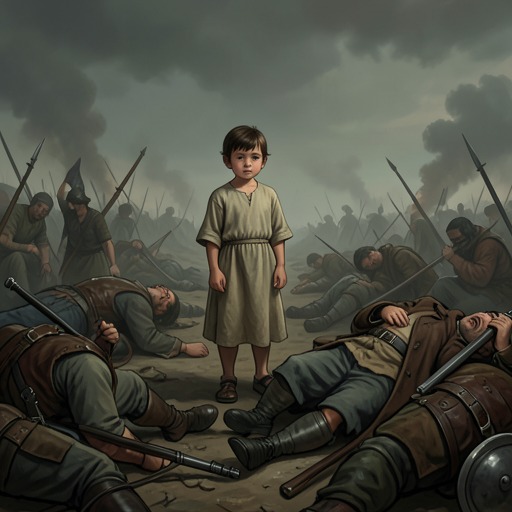
In the third year, Dyved’s nobles worry that Pwyll has no heir and urge him to take another wife. Pwyll asks them to wait a further year, and before that year ends Rhiannon gives birth to a son at Narberth. Six women are assigned to watch the mother and child. They fall asleep, and when they wake near daybreak, the boy is gone. Fearing punishment, the women devise a false account: they kill some puppies, smear their blood on Rhiannon, place the bones beside her, and accuse her of devouring her son.
Rhiannon denies the charge and asks the women to tell the truth, offering to defend them if fear is the reason for their story. They persist in accusing her. When the story spreads, the nobles ask Pwyll to put her away. He refuses: she has now borne children, and if she has done wrong, she should perform penance rather than be cast off. Rhiannon chooses to undertake that penance rather than continue disputing with the women. The judgment requires her to remain at the palace in Narberth for seven years, sit daily beside the horse-block outside the gate, tell visitors the story if they do not already know it, and offer to carry them into the palace on her back. Few accept her offer.
The punishment turns a private loss into a public ritual. Rhiannon must repeat the account of the missing child to strangers while bearing the blame for a disappearance she did not cause. Her submission to the sentence does not establish guilt: the narrative has shown the accusation being deliberately fabricated, and Pwyll himself distinguishes the alleged wrong from the truth of her motherhood. The horse-block also echoes the earlier road scene in reverse: the woman who once controlled whether she would stop for a pursuer is now made to wait at the gate and offer service to passing guests.
Later Marriage and Enchantment
In a later part of the narrative, Pryderi has inherited seven cantrefs in Dyved and offers them, together with his mother, to Manawyddan. Manawyddan and Rhiannon meet at Narberth, where she and Kicva have arranged a feast. Their conversation warms Manawyddan toward Rhiannon, and Pryderi recalls that he offered her as a wife. Rhiannon gladly accepts, and she becomes Manawyddan’s bride before the feast is over. The episode presents the marriage as a choice she welcomes, made within a close circle of friendship that includes Pryderi and Kicva.
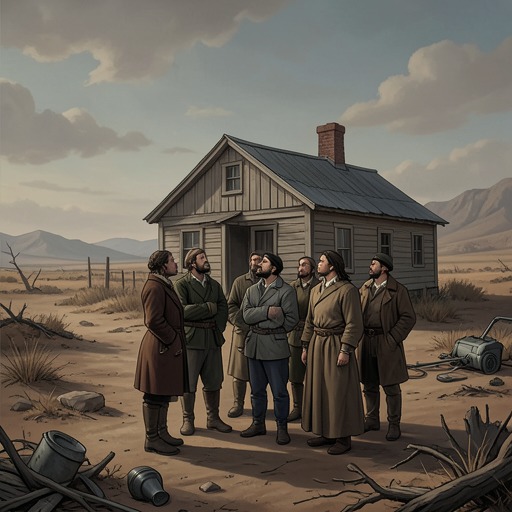
That household is soon broken apart by an enchantment. After Pryderi enters an empty castle and becomes fixed to a golden bowl on a marble slab, Manawyddan returns to Narberth without him. Rhiannon hears what has happened and goes to the castle in search of her son. Finding Pryderi still trapped, she approaches and takes hold of the bowl with him; her hands stick to it, her feet to the slab, and she loses the power of speech. As night falls, thunder and mist arrive, and the castle vanishes with Rhiannon and Pryderi inside. The supplied account leaves them in that disappearance, without showing their release.
Narrative Role
Rhiannon’s episodes join resolve, public standing, and vulnerability without reducing her to any one of them. She initiates the match with Pwyll, secures his promise, and later acts as a generous figure in the court at Narberth. When Pryderi disappears, she faces an accusation built to overpower her denial, and the resulting penance makes her suffering visible to the community. In the later castle episode, her loyalty to Pryderi leads her to share his peril: she approaches when she learns where he is and becomes trapped alongside him. The recurring pattern is not that she lacks agency, but that her choices repeatedly meet circumstances she cannot undo—first the fabricated charge and then the unexplained enchantment.