Llevelys
MabinogionLlevelys is the wise younger brother of Lludd who becomes king of France and later advises him on the three plagues afflicting the Island of Britain. His role joins dynastic ambition to practical counsel: first he gains a crown through a negotiated marriage, then turns knowledge of hidden causes into a set of remedies for his brother’s threatened kingdom. The story presents him less as a ruler acting in Britain than as the trusted adviser whose explanations make its seemingly inexplicable afflictions answerable.
Identity and Background
Llevelys is one of the sons of Beli the Great, alongside Lludd, Caswallawn, and Nynyaw. After Beli’s death, Lludd inherits the kingdom of the Island of Britain as the eldest son. The brothers’ later positions are distinct: Lludd rules at home, while Llevelys establishes himself in France. The narrative identifies Llevelys as wise and discreet, qualities that explain why his counsel carries particular weight with Lludd.
That trust is also personal. Among his brothers, Lludd loves Llevelys best because of his wisdom and discretion. Their closeness is not merely a matter of rank or political usefulness: when their ships meet at sea, the two embrace and welcome each other with brotherly affection. The tale thus makes kinship the basis for a political alliance that will prove essential when Lludd’s own authority is tested.
Marriage and the French Crown
Llevelys seeks Lludd’s counsel after hearing that the king of France has died, leaving no heir except a daughter and placing his possessions in her hands. He asks for advice and assistance so that he may travel to France and woo her as his wife. The narrator emphasizes that his purpose is not only personal advancement: he hopes the marriage might add to the glory, honour, and dignity of his kindred.
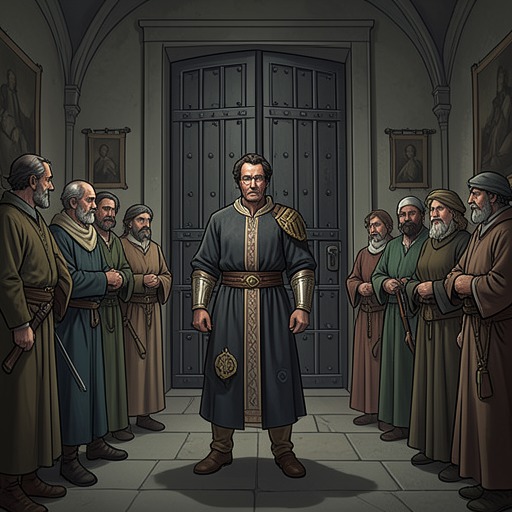
Lludd welcomes the proposal. With his brother’s support, Llevelys prepares ships, fills them with armed knights, and sails to France. The armed escort gives the mission political force, but the outcome is determined by the consent of the French nobles and princes, who jointly agree to give the maiden to Llevelys together with the kingdom’s crown. Marriage therefore makes him king; it also enlarges the reach and standing of Lludd’s family beyond the Island of Britain.
Llevelys rules France discreetly and wisely, and the account describes his reign as happy for as long as his life lasts. This brief statement gives his kingship a settled outcome, in contrast with the emergencies that later demand his attention from abroad. His authority in France does not sever his bond with Lludd: when his brother needs help, Llevelys responds as both a fellow ruler and a trusted relative.
The Brothers’ Reunion and the Plagues
After three unprecedented plagues fall upon the Island of Britain, Lludd grieves because he cannot discover how to free his kingdom from them. The afflictions are of different kinds: the Coranians can hear any speech carried by the wind and so resist injury; a terrifying shriek on May Eve drains people and the land of strength and fertility; and provisions in the king’s courts disappear after the first night, however large the stores may be. Lludd’s nobles advise him to seek Llevelys, whose wisdom is known to them as well as to his brother.
Lludd’s voyage is arranged secretly so that the Coranians will not learn its purpose. Llevelys, hearing of the approaching fleet without knowing why it has come, sails out to meet it with a fleet of his own. When Lludd sees him, he leaves the other ships at sea and approaches in a single vessel; Llevelys likewise comes in one ship. Their embrace and welcome restore the family bond before they turn to the crisis. The encounter is at once intimate and diplomatic: two kings meet, but the danger requiring their cooperation lies in Lludd’s realm.
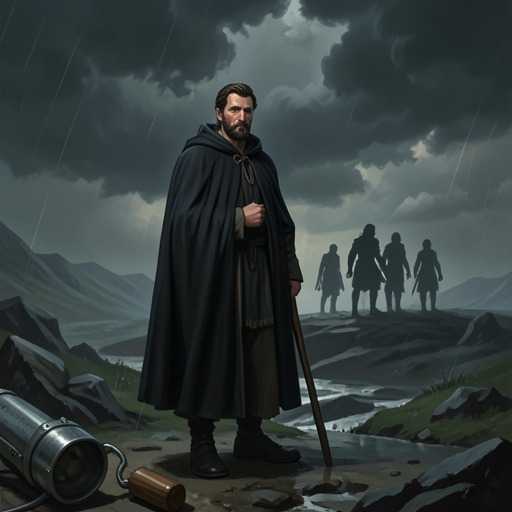
The Coranians’ ability to overhear speech makes ordinary discussion unsafe. Llevelys proposes that the brothers communicate through a long brass horn, but a demon interferes, turning their words into harsh and hostile sounds to one another. Recognizing that their first method is being obstructed, Llevelys has wine poured into the horn, which drives the demon out. The episode shows his counsel at work even before he explains the plagues: he identifies a hidden interference, changes the conditions of communication, and restores understanding between the brothers.
Llevelys’s Remedies and Their Significance
For the Coranians, Llevelys provides insects to be kept for breeding in case the affliction returns. He instructs Lludd to crush another portion in water and cast the mixture over a gathering of both the native people and the Coranians, convened as if for peace talks. The charmed water, he says, will poison the Coranians without killing or harming Lludd’s own people. The remedy answers the enemy’s resistance through a concealed, selective means rather than through open combat; the proposed peace conference supplies the occasion for bringing both populations together.
Llevelys identifies the May Eve shriek as the cry of a dragon fighting another dragon of foreign origin. He gives Lludd a specific way to expose the conflict: measure the Island of Britain in length and breadth, dig at its exact central point, and place in the pit a cauldron filled with the best mead, covered in satin. Lludd must watch in person. The combatants will appear first as terrifying animals, then as dragons in the air; after fighting until exhausted, they will become two pigs, fall onto the covering, sink with it into the cauldron, drink all the mead, and sleep. Lludd is then to wrap them in the covering and bury them in a stone chest in the strongest place in his dominions. While they remain there, Llevelys assures him, no plague will come to the Island of Britain from elsewhere. The elaborate sequence turns a terrifying public cry into a conflict that can be located, witnessed, contained, and buried.
The disappearing provisions have a different cause: a powerful magician uses illusions and charms to make everyone sleep, then takes the food and drink. Llevelys tells Lludd that he must watch the provisions himself and keep a cauldron of cold water beside him, plunging into it when sleep overtakes him. Unlike the remedies for the other two plagues, this counsel centers on the king’s own vigilance. Across all three explanations, Llevelys distinguishes an enemy’s unusual power, a supernatural struggle, and a thief’s deceptive method, matching each to a different response. The surviving account records his diagnoses and instructions; it establishes his importance as Lludd’s adviser without narrating here whether Lludd carries every remedy out.