Countess of the Fountain
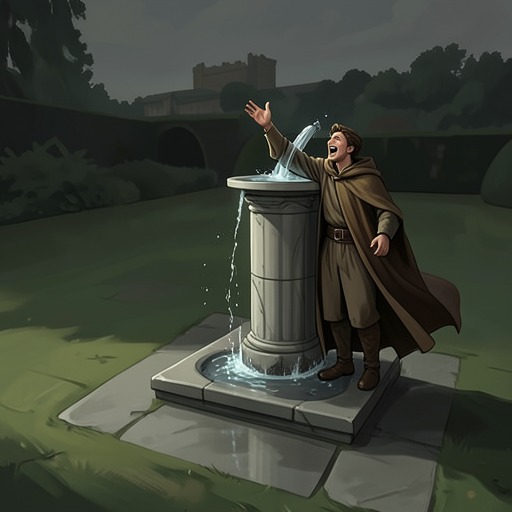
MabinogionThe Countess of the Fountain is both the bereaved widow of the knight who guards the Fountain and the ruler responsible for keeping his vulnerable dominions intact. Owain kills her husband in combat, yet she later marries the victorious knight and entrusts him with the defence of her earldom. Her story turns on the passage from mourning to political action: grief does not disappear, but Luned makes the question of how the Countess will govern impossible to postpone.
Identity and Bereavement
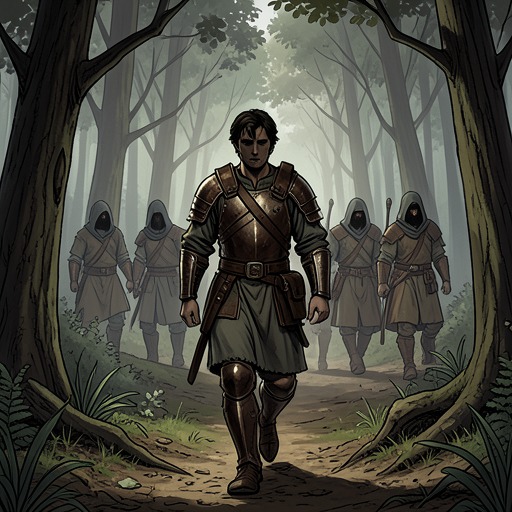
The Countess is introduced through the aftermath of Owain’s victory. After striking her husband a mortal blow, Owain pursues him to the Castle, where the portcullis traps him between the gates. The Countess does not meet him then. Instead, the trapped knight is rescued by Luned, who hides him with a ring that conceals its wearer. The Countess’s first appearance comes the next day, when Owain watches a funeral procession from the Castle. She follows the bier in a torn yellow-satin dress, her hair stained with blood, beating her hands together as she cries out. Owain sees her in this extremity of mourning and falls in love with her.
Luned identifies her mistress as the Countess of the Fountain, the wife of the knight Owain killed. She describes her as exceptionally fair, chaste, generous, wise, and noble. That praise establishes the Countess’s reputation, while the public funeral shows the cost of the Fountain’s challenge: a private loss has become a civic crisis, since her husband’s death leaves the earldom without its former defender.
Grief and Luned’s Intervention
The Countess’s grief initially shuts out even the person closest to her. When Luned comes to visit, the Countess does not answer her, then reproaches her for failing to appear sooner despite the Countess having made her rich. Luned counters that mourning a good man—or anything else she cannot recover—will not serve the Countess’s interests. The Countess insists that no man in the world could equal her dead husband and threatens Luned with execution, though she settles instead on banishment.
Their quarrel gives Luned a way to make counsel heard. As she leaves, the Countess follows her to the chamber door and signals her back. Luned then names the practical danger beneath the mourning: the Countess cannot preserve her possessions without warfare and arms. Because her dominions depend on someone defending the Fountain, Luned proposes finding a knight from Arthur’s household who can guard it as well as, or better than, the dead champion. The Countess acknowledges that the task will be difficult but authorizes Luned to make the attempt. Her decision marks a change from grief that suspends action to a ruler’s recognition that the earldom must be protected.
Marriage and the Defence of the Earldom
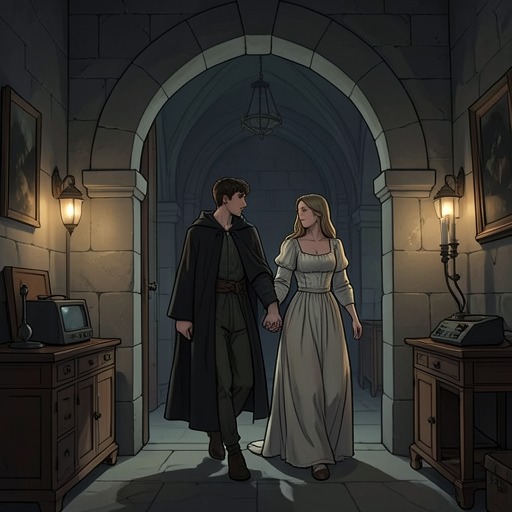
Luned claims to set out for Arthur’s court, but instead returns to the chamber where Owain is concealed. After enough time has passed to make the supposed journey plausible, she tells the Countess that she has secured a champion and arranges for him to be presented. Owain appears dressed in yellow satin, a mantle, and high shoes fastened with golden lion clasps. The Countess studies him and suspects that he is the very knight who killed her husband. Luned answers that this strength makes him suitable to defend the dominions: the past cannot be undone, and a weaker champion could not have defeated the former guardian.
The Countess does not make the marriage a private decision alone. She summons her subjects and explains that the earldom is defenceless without arms, horses, and military skill. She offers them a choice: one of them may marry her, or they may consent to her taking a husband from elsewhere who can protect the territory. They agree that she should be permitted to marry an outsider. She then summons bishops and archbishops to celebrate her marriage to Owain, and the men of the earldom do him homage. The sequence joins personal remarriage to public consent and political continuity: Owain becomes her husband, but also the acknowledged defender of her people.
As guardian of the Fountain, Owain defeats each knight who comes there. He sells the defeated knights for their full worth and distributes what he gains among his barons and knights. The narrative credits this practice with making him beloved by his subjects, and says that he rules in this way for three years. The Countess’s choice thus secures more than a fighter at the Fountain: Owain’s victories and redistribution establish a durable bond between the new ruler and the earldom.
Separation and Reunion
After three years, Arthur grieves that Owain has been absent and resolves to seek him. Owain welcomes Arthur and his company, explaining that he has been preparing a banquet for them throughout his absence. The feast at the Countess’s Castle lasts three months, after which Arthur asks her permission for Owain to return to the island of Britain for a further three months. Though the request pains her, she consents. Owain remains with his friends and kindred for three years rather than the agreed three months.
The breach becomes visible at Caerlleon upon Usk, where a damsel rides in and takes the ring from Owain’s hand. She denounces him as faithless and disgraced. The ring recalls the crisis in which Luned first concealed him and helped bring about his marriage; its removal publicly announces that his absence has cost him his place with the Countess. Owain remembers his adventure, becomes sorrowful, and leaves Arthur’s court. The episode makes the marriage’s vulnerability plain: the Countess had accepted his temporary departure, but his extended stay turns permission into abandonment.
The Countess is not shown negotiating the separation or orchestrating Owain’s return. The account instead follows Owain through his wandering and later trials, until he rescues Luned from being burned. He then returns with Luned to the Countess’s dominions and takes the Countess with him to Arthur’s court. The narrative closes their relationship with a clear, lasting outcome: she remains his wife for the rest of her life.
Narrative Role
The Countess’s plot is shaped by reversals in what the Fountain’s victories mean. The knight who kills her husband first appears to her as a suspected threat, then becomes the champion her earldom needs and the husband her subjects accept. Her grief is neither dismissed nor made the sole measure of her character: the funeral gives it vivid public form, while her exchange with Luned redirects the story toward the responsibilities of rule. By making her people part of the marriage decision, the narrative presents her authority as political as well as personal. Her consent to Owain’s visit to Arthur’s court, followed by his much longer absence, provides the separation that tests the bond; the eventual return restores it, but only after the story has made the cost of neglect unmistakable.