Geraint
MabinogionGeraint, son of Erbin, is a knight of Arthur’s court whose story links martial reputation to judgment and duty. He answers violence with force when necessary, but his defining choices are not simply victories: he refuses an unwise attack on an armed opponent, grants mercy to a defeated adversary, and ultimately turns from tournaments to protect his father’s lands. His return from the enchanted games closes his adventures with a prosperous reign and lasting renown shared with Enid.
Identity and Background
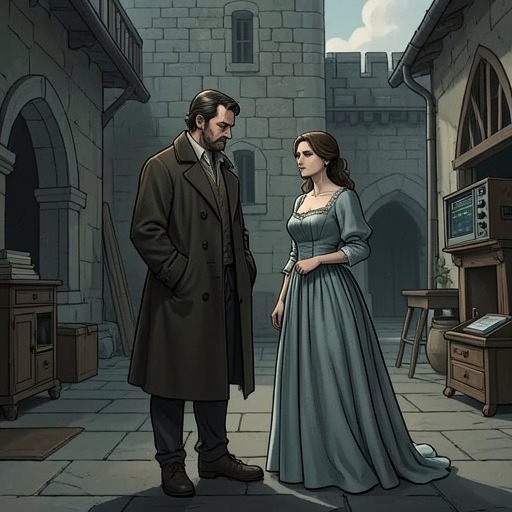
Geraint appears in the courtly world of Arthur, whose court is held at Caerlleon upon Usk during Whitsuntide. He is related to Arthur as a cousin, and Gwenhwyvar is the queen whose household includes the maiden whose treatment brings Geraint into his first major conflict. The court’s high festivals draw together rulers, nobles, and attendants; within that public setting, Geraint’s actions are judged not only as private acts of arms but as conduct reflecting on Arthur’s household.
Geraint is also Erbin’s son and heir. His father, Erbin son of Custennin, rules in Cornwall, while Geraint spends time at Arthur’s court and wins distinction through tournaments and encounters. The story eventually makes this division between courtly fame and inherited responsibility decisive: Erbin grows old and weak, and the security of his lands requires Geraint’s presence at home.
The Insult at Arthur’s Court and Edeyrn
Geraint’s conflict with Edeyrn begins when a tall, heavily armed knight arrives accompanied by a dwarf and a lady. At Gwenhwyvar’s request, one of her maidens asks the dwarf who the knight is. The dwarf refuses to answer and declares the maiden unworthy to address his lord; when she turns toward the knight, he strikes her. Geraint then approaches the dwarf himself, receives the same refusal, and is struck in turn when he tries to address the knight directly.
Though angered, Geraint does not retaliate against the dwarf. He considers that killing an unarmed man would not redress the insult and would leave him exposed to the armed knight. Instead, he asks Gwenhwyvar’s permission to follow the party until he can obtain arms and challenge the knight on fairer terms. She approves his caution and warns him not to attack until properly equipped. The decision establishes a pattern: courage is not a refusal to think, and restraint does not mean surrendering the claim to justice.
Geraint later confronts the knight, Edeyrn son of Nudd, and defeats him. When Edeyrn asks for mercy, Geraint grants it on a condition: Edeyrn must go to Gwenhwyvar and make amends for the insult committed by his dwarf against her maiden. Geraint considers his own grievance answered by the defeat and does not demand further personal satisfaction. Edeyrn identifies himself, accepts the condition, and rides to Arthur’s court. Geraint’s victory therefore ends not with a killing but with a specified act of accountability before the queen.
After the encounter, Geraint declines an invitation to stay at the young earl’s castle and returns instead to the lodging where he had stayed the previous night. Ynywl and his household provide care for his exhaustion, including ointment. The episode connects Geraint’s public standing as a fighter with the hospitality and support he receives from those whose cause he has served.
Enid, Fame, and His Father’s Appeal
Geraint’s life at court is joined to Enid, Ynywl’s daughter. On Geraint’s return, Gwenhwyvar recognizes an occasion to award Enid the stag’s head, which had been held back until he came home. She presents Enid as an illustrious maiden, and the court approves the choice. Enid’s reputation and circle of friends grow; Geraint, for his part, continues to love the stag, the tournament, and hard encounters, winning them and becoming famous throughout the kingdom over the following years.
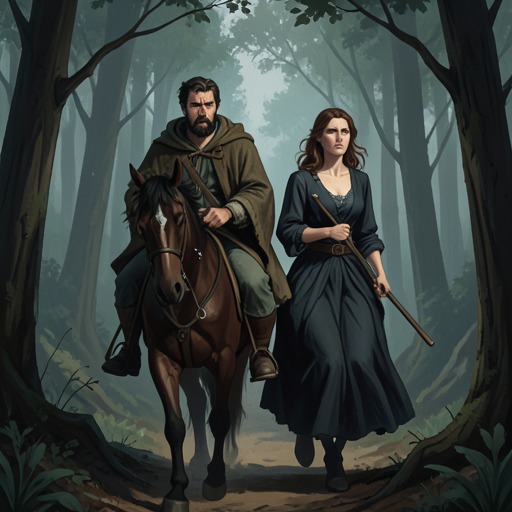
That fame does not settle where Geraint’s service belongs. At Whitsuntide, ambassadors from Cornwall bring a message from Erbin: he is aging and feeble, neighboring chiefs are growing bold, and they covet his lands and possessions. Erbin asks Arthur to permit Geraint to return, learn the boundaries, and defend the inheritance. He contrasts this practical duty with tournaments, which bring Geraint glory but do not protect the family’s territory. Arthur is reluctant to lose his cousin and Gwenhwyvar and her women regret the prospect of Enid’s departure, yet Arthur recognizes that Geraint should not be kept from defending his father’s lands. The appeal redirects Geraint from celebrated contests toward the less showy obligation of stewardship.
The Enchanted Games and Return
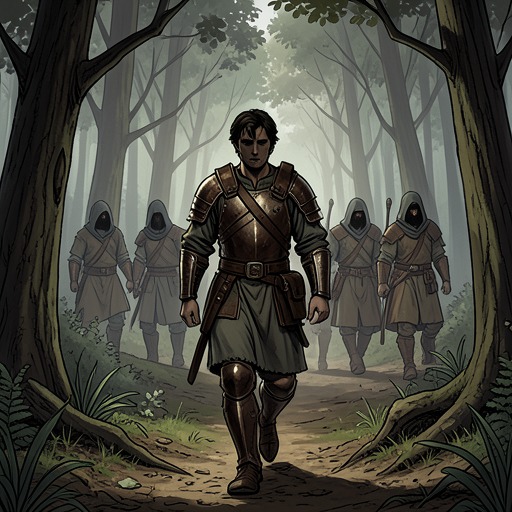
Geraint’s final test takes place within the mist-bound grounds of Earl Owain’s games. A hedge stands so high that it reaches beyond sight, and nearly every stake bears a human head. Geraint is told that he may enter, but no one may accompany him. He goes forward alone into the mist and emerges in an orchard, where a red-satin tent stands beneath an apple tree. Inside, he sits in an empty golden chair despite a maiden’s warning that its owner has never allowed another person to take it.
The chair’s owner arrives and demands satisfaction for the affront. Geraint accepts the challenge, and after several exchanges he defeats the knight. Rather than asking for riches or personal advancement, he demands that the game, the hedge of mist, and the enchantment end. He learns that the mist will disappear only if the defeated knight sounds the hunting horn. Geraint blows it; the mist lifts, and the assembled company is reconciled. Enid has waited anxiously while he was inside, and Earl Owain invites Geraint and the Little King to stay for the night before they part the next morning.
Geraint then returns to his own dominions and reigns prosperously. His warlike fame and splendor endure, and the ending gives Enid a share in that lasting honor. Across the episodes, his prowess is tested in distinct ways: he must judge when not to strike, decide what mercy should require, and choose the protection of his inheritance over the unending pursuit of tournament glory. The final horn makes that pattern visible in action: Geraint wins not by preserving the enchanted contest, but by ending it and restoring accord.