Pwyll
MabinogionPwyll is the prince of Dyved whose story turns on a test of conduct: an act of discourtesy in the forest leads to a pact with Arawn, and Pwyll’s service in Annwvyn earns him a lasting bond between kingdoms. At home, the same narrative brings him to Rhiannon, whose deliberate choice of him begins their courtship, and later reunites him with his lost son, Pryderi. His episodes make rulership more than a matter of inheritance or force: it is measured through judgment, generosity, fidelity, and the restoration of family ties.
Identity and the Forest Encounter
Pwyll rules the seven Cantrevs of Dyved and keeps his chief palace at Narberth. On a hunt in Glyn Cuch, he loses his companions while following his hounds. He hears another pack approaching from the opposite direction and sees its dogs pull down a stag in a woodland glade. Their brilliant white coats and red ears catch his attention; instead of respecting the hunt already in progress, he drives them away and sets his own dogs on the stag.
The rider who confronts him is Arawn, king of Annwvyn. Arawn identifies Pwyll’s interference as a serious breach of courtesy and threatens to dishonor him in return. Pwyll does not deny the offense. He asks how he can repair it, and Arawn makes the answer a matter of service: Havgan, a rival king of Annwvyn, is warring against him. The encounter therefore establishes Pwyll through a mistake followed by his willingness to accept responsibility, rather than through an already flawless display of princely manners.
The Year in Annwvyn and the Change of Title
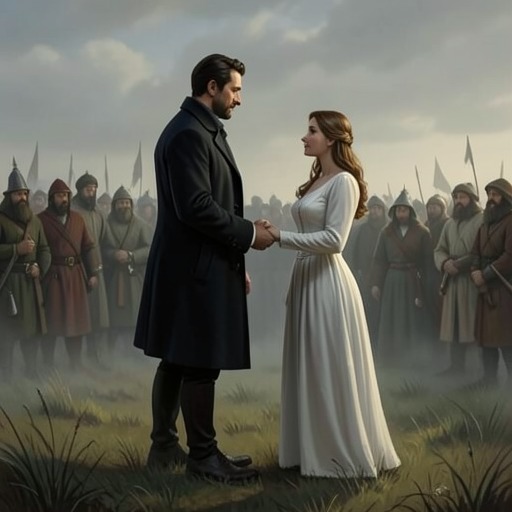
Arawn proposes an exchange of forms and kingdoms for one year. Pwyll is to appear as Arawn, govern in his place, and meet Havgan at the appointed ford. The terms of the duel are exact: Pwyll must strike once, and must not grant Havgan a second blow, since Arawn’s earlier choice to do so had allowed Havgan to recover and fight again. Arawn, meanwhile, will take Pwyll’s appearance and rule Dyved so that neither ruler’s people discover the substitution.
At the end of the year, Arawn restores Pwyll’s own form. Pwyll then asks the nobles of Dyved how the substitute ruler’s conduct compared with his own. They report that his wisdom, kindness, generosity, and justice have never been greater. Pwyll discloses what happened and credits the improvement to Arawn; the nobles ask him not to withdraw the good rule they have experienced, and Pwyll promises to maintain it. The account presents good government as a practice that can be recognized by those who live under it, not simply a claim made by the ruler himself.
The exchange becomes a durable friendship rather than a temporary bargain. Pwyll and Arawn send each other horses, greyhounds, hawks, and other valued gifts. Pwyll’s year in Annwvyn and his part in uniting the two kingdoms through courage and prowess bring him a new title: from then on he is called Pwyll Chief of Annwvyn. The change of name records a change in standing, while his continued rule in Dyved keeps the two realms joined through mutual trust.
Rhiannon’s Choice
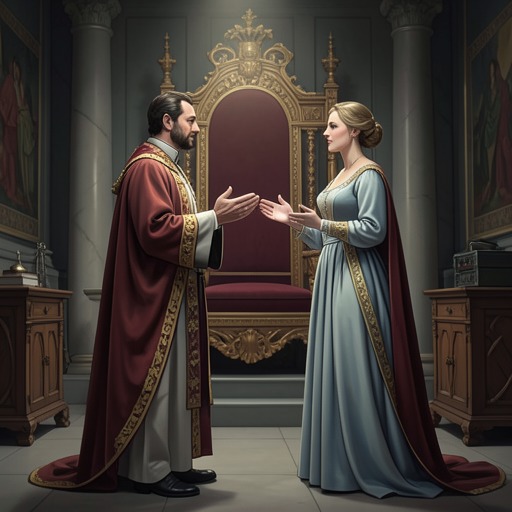
At Narberth, Pwyll sits on Gorsedd Arberth, a mound associated with either danger or a wonder. From there he sees a lady riding a large white horse, dressed in shining gold. His men cannot catch her on foot, and even the fleetest horse fails to close the distance. Pwyll finally calls to her and asks her to stop; she does so, making clear that pursuit alone could not bring him to her.
The lady names herself Rhiannon, daughter of Heveydd Hen. She explains that her family has sought to give her to a husband against her will, but that she loves Pwyll and has come to seek him. Pwyll answers that he would choose her above all other women. Rhiannon asks him to meet her at her father’s palace a year later, before she is given to someone else, and he pledges to keep the appointment. When the year has passed, he travels there with a hundred knights. The court is placed under his orders, marking the scale of the welcome and the public setting of the promise they made at Gorsedd Arberth.
Rhiannon’s appearance and the failed attempts to overtake her echo the story’s earlier concern with what a ruler owes another person: Pwyll must first recognize that force and speed are not the answer. His successful approach begins not when he rides harder, but when he addresses her and gives her the choice to stop. Her agency is explicit in the account: she rejects an unwanted match and seeks Pwyll herself.
Pryderi’s Return and Pwyll’s Responsibilities
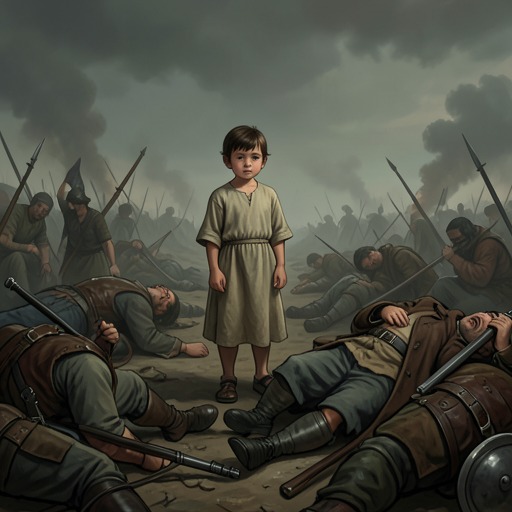
Pwyll’s family story reaches a turning point when Teirnyon Twryv Vliant brings a boy to Narberth. Teirnyon and his wife have raised the child as their own, and Teirnyon recounts how he found and cared for him. The boy’s return also confronts Rhiannon with the accusation that has burdened her: at the horse-block she has been performing penance for supposedly killing and devouring her son. She offers to carry Teirnyon and his companions into the palace as part of that penance, but both Teirnyon and the boy refuse to accept the humiliating service.
At the feast, Teirnyon presents the child as Pwyll and Rhiannon’s son and explains that he and his wife have fostered him. Rhiannon recognizes the significance of the news and understands that it may end her suffering. The naming is discussed in the family’s presence. The boy has been called Gwri Wallt Euryn by those who raised him, but Pwyll proposes Pryderi, a name tied to the word Rhiannon spoke when she received the joyful news of him. The name links the child’s identity to his mother’s response at his return.
Pwyll acknowledges Teirnyon’s care with a pledge to support him and protect his possessions for as long as he can. He also arranges for the boy to be brought up by Pendaran Dyved, making Pendaran and Teirnyon both foster-fathers. Teirnyon’s wife has nursed the child and is deeply grieved to part with him; Teirnyon asks that the boy remember what they have done. Pwyll offers them fine jewels, horses, and dogs, but Teirnyon accepts none of these. The episode balances the recovery of Pwyll’s heir with recognition of the care given by the household that raised him.
Narrative Role and Significance
Pwyll’s linked episodes move between courtly conduct, supernatural encounter, political service, courtship, and family restoration. The forest pact converts an impulsive act into a test of judgment and creates a friendship that crosses the boundary between Dyved and Annwvyn. Rhiannon’s quest reverses the expectation that a prince alone chooses his match, while Pryderi’s return makes Pwyll’s obligations extend beyond biological fatherhood to the foster-parents who protected his son.
Across these changes, Pwyll’s authority is affirmed through commitments kept and relationships sustained. Arawn’s people experience improved rule during Pwyll’s absence; the nobles of Dyved are invited to judge that rule; Rhiannon sets the terms of their meeting; and Teirnyon’s contribution is answered with lasting support rather than a payment he refuses. Pwyll’s story thus binds political legitimacy to reciprocal conduct, and gives his title, marriage promise, and recovered son a shared significance: each marks a bond made durable through action.