Joe Hynes
DublinersJoe Hynes is a politically engaged man in “Ivy Day in the Committee Room,” defined by his advocacy for working-class representation and his public loyalty to Parnell. The other campaigners’ shifting judgments of him—suspected spy, hard-up associate, then steadfast Parnellite—expose how political principle in the story is tested by poverty, patronage, and personal reputation.
Political Position
Hynes argues that a working man has at least as strong a claim to representation in the Corporation as anyone else. He contrasts an honest bricklayer who seeks to represent labour with a candidate who, in his view, wants a lucrative appointment. His case is class-conscious: labour produces everything, he says, while working men do not seek comfortable positions for their relatives or compromise Dublin’s honour to please a German monarch.
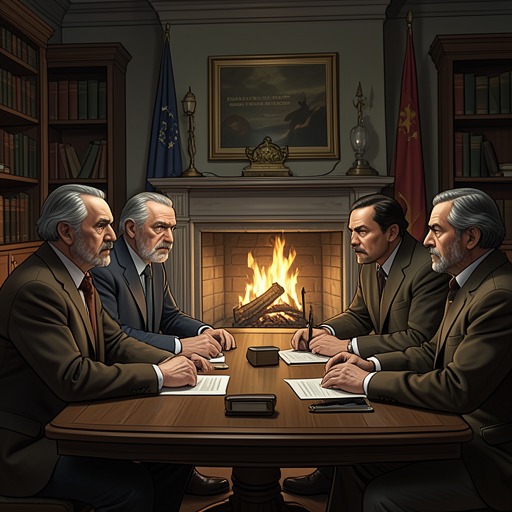
That political speech gives Hynes a clear position in the room’s argument, but it does not make him immune to suspicion. The men are discussing Richard Tierney’s campaign and Colgan’s candidacy in a setting where loyalties are weighed against practical advantage. Hynes’s support for working-class representation stands against the suspicion that political activity may be a route to jobs and influence.
Suspicion and Poverty
Mr Henchy privately claims that Hynes is a spy for Colgan, sent to discover how Tierney’s supporters are faring. He imagines that Hynes can move among them without raising suspicion. The accusation is not confirmed as fact: it is Henchy’s interpretation, offered amid the group’s doubts about Hynes’s reliability.
Mr O’Connor counters that Hynes is hard up, like the others. Henchy acknowledges that Hynes’s father, Larry Hynes, was a respectable man who had done many good turns, but still worries that the son is not wholly trustworthy and condemns what he sees as sponging. The exchange makes Hynes’s financial need a source of political mistrust: his poverty may explain his presence among the campaigners, yet it also gives Henchy grounds to suspect that he might serve the opposing side.
Loyalty and the Parnell Poem
The room’s assessment changes when the men recall that Hynes did not renounce Parnell. Henchy praises him for having stuck by the leader, and O’Connor asks him for the piece he wrote. Their request turns Hynes from a suspected informant into the gathering’s chosen voice for Parnell’s memory.
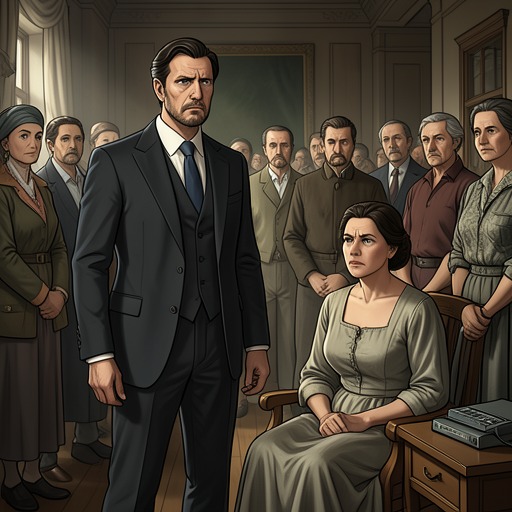
Hynes hesitates before complying. In the ensuing silence, he takes off his hat, lays it on the table, and stands as though rehearsing the words in his mind. He then announces the title, “THE DEATH OF PARNELL,” followed by the date “6th October 1891.” The formal recitation contrasts with the room’s earlier suspicion and gives his loyalty a public, commemorative form. His role rests on that juxtaposition: political allegiance is questioned in everyday conversation, then affirmed through the poem the group asks him to deliver.