Tom Kernan
DublinersTom Kernan is an aging commercial traveller whose insistence on dignity persists amid professional decline, habitual drinking, and estrangement from the Catholic Church. His friends’ plan to bring him to a religious retreat turns his injured body and neglected faith into the focus of a carefully managed intervention.
Identity and Background
Kernan belongs to an older model of commercial life, one that treated the dignity of the calling as something a man could display. He believed a decent silk hat and a pair of gaiters could make him “pass muster,” and he had rarely been seen in the city without them. His attachment to the clothing is more than vanity: it is a remnant of professional standing that he continues to claim even as his circumstances worsen.
His office in Crowe Street reflects how far modern business methods have accommodated, but not restored, his career. The window blind bears his firm’s name and a London address; inside, a little leaden battalion of canisters stands on the mantelpiece. Kernan tests tea from china bowls by drawing it across his palate and spitting it into the grate before judging it. This ritual of inspection gives the dwindling office a peculiar order, a small performance of expertise amid decline.
Injury and Decline
After an accident, Kernan is helped to his feet while bystanders offer advice and the manager mentions a hospital. His battered silk hat is put back on his head. Asked where he lives by a constable, he does not answer; instead, he twirls the ends of his moustache and makes light of the injury, calling it only a little accident. His thick speech and insistence that nothing is wrong contrast with the visible battering he has taken.
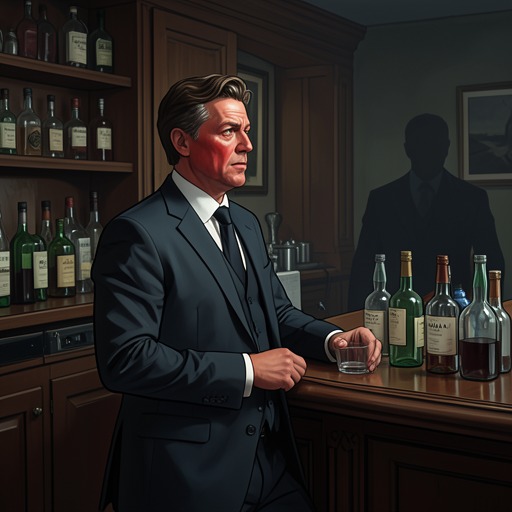
The accident is part of a longer deterioration. Kernan’s decline intersects with the rise of his younger friend Mr Power, though the esteem of friends who knew him at his more successful height softens his loss of status. His debts are a familiar subject in their circle. At home, his wife accepts his frequent intemperance as if it were part of the climate: she nurses him when he is ill, makes beef-tea, scolds him, and tries to ensure that he eats breakfast. She remembers that he would still walk to the end of Thomas Street and back to secure even a small order, and that he had not been violent since their boys had grown up.
Faith and Relationships
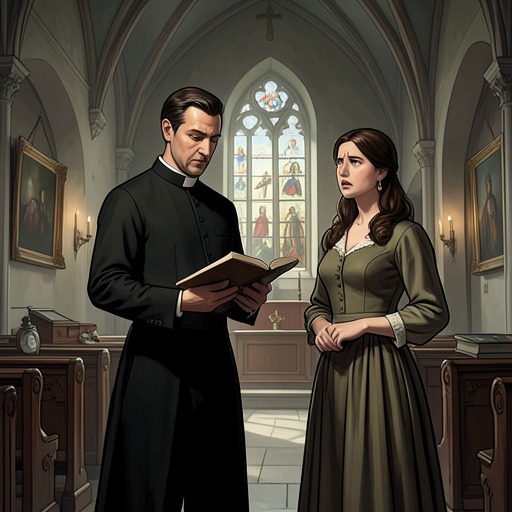
Kernan was born into a Protestant family and converted to Catholicism when he married, but he has been outside the Church for twenty years. He is also given to side-thrusts at Catholicism, so his estrangement is not simply an absence of religious practice; it includes a habit of mockery. His friends know this history as they consider how to intervene.
Mr Power, a younger friend employed at the Royal Irish Constabulary Office in Dublin Castle, remains among those who esteem Kernan despite his decline. Mr Power originates the idea of the intervention, while Mr Cunningham is entrusted with developing it. Cunningham’s own difficult domestic life—his wife’s drinking and the repeated pawning of furniture—sits alongside his reputation for intelligence, practical judgment, and knowledge of human affairs. The friends’ plan is thus formed by men who regard themselves as able to understand and manage a difficult case.
The Retreat and Its Significance
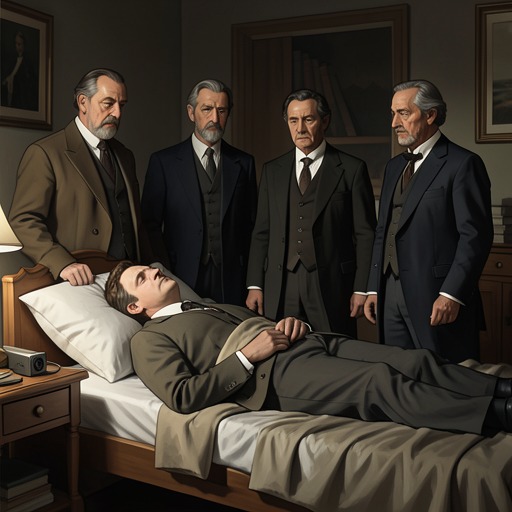
Kernan is unaware that his friends have already disclosed their plan to his wife. When they visit him in bed, he receives them with a veteran’s pride, apologizing for the disorder of the room while looking at them proudly. His polished manners during the visit contrast with the bodily discomfort and decline that have brought him there.
Mr Power eventually tells him plainly that they are going to make a retreat. Mr Cunningham explains the proposal in homely language, saying that he, Kernan, and the others are going to “wash the pot.” For Kernan, the retreat is a proposed return to religious life after two decades beyond the Church’s pale, but it begins as an arrangement made around him rather than a decision he has initiated. The episode binds his damaged public appearance, his dependence on friends, and his religious estrangement together: the old traveller who tried to pass muster through dress is now the subject of a plan intended to repair a different kind of standing.