Joe Dillon
DublinersJoe Dillon is the energetic schoolboy who brings the Wild West into his friends’ Dublin lives through adventure stories and backyard battles. His fierce play makes him the group’s triumphant commander, while the later report that he has a vocation for the priesthood unsettles their expectations and complicates the contrast between boyish disorder and religious life.
Identity and Introduction
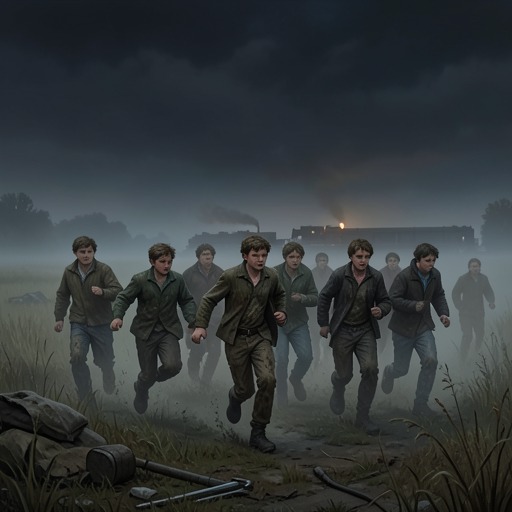
Joe introduces the Wild West to the narrator and the other boys through a small library of old issues of The Union Jack, Pluck, and The Halfpenny Marvel. The stories supply both reading matter and a script for play: each evening after school the boys gather in his back garden and stage Indian battles.
Joe’s younger brother Leo, described as fat and idle, joins him in defending the stable loft while the others try to storm it. The boys also fight pitched battles on the grass, but they never win a siege or battle. Every contest ends with Joe’s victory dance, making him the dominant figure in their invented world.
Play and School Discipline
Joe plays more fiercely than his younger, more timid companions. In the garden he resembles an Indian warrior, capering with an old tea-cosy on his head, beating a tin with his fist, and shouting, “Ya! yaka, yaka, yaka!” The makeshift costume and instrument turn his performance into a vivid ritual of command: the other boys’ imagined warfare repeatedly culminates in his victory.
The stories circulate beyond the garden, though the school regards them as distractions from study. During a Roman History lesson, Father Butler discovers Leo with The Halfpenny Marvel and rebukes him for reading what he calls “rubbish.” He contrasts such popular adventure writing with the education expected of the boys, and warns against finding more of it at school. The rebuke dims the narrator’s sense of the Wild West’s glory, but its appeal returns when school discipline is out of reach; the stories continue to promise escape from routine.
Vocation and Narrative Significance
The report that Joe has a vocation for the priesthood astonishes everyone, although the narrator confirms that it is true. The disclosure does not explain how Joe’s religious calling develops, but it places his rowdy backyard leadership beside a future associated with religious discipline. That sharp contrast gives his brief appearance its force: the boy who commands mock battles and embodies an escape into adventure is also the one whose unexpected vocation redirects him toward the priesthood.