James Duffy
DublinersJames Duffy is a private bank cashier who builds his life around order, distance, and self-sufficiency. His relationship with Emily Sinico briefly unsettles that discipline, but when she makes their intimacy unmistakable he withdraws and ends their meetings. Four years later, news of her death forces him to confront what his independence has cost: he had rejected a person who loved him, and is left to imagine a future in which he, too, will become only a memory.
Identity and Ordered Solitude
Duffy lives in Chapelizod, as far from the city as his circumstances allow, in an old, sombre house. The room he furnishes for himself is almost rigorously bare: iron bedstead and washstand, four cane chairs, a square table, and shelves of white wood. The books are arranged by size, from a complete Wordsworth on the bottom shelf to a Maynooth Catechism sewn into a notebook cover at the top. On his desk are writing materials, a manuscript translation of Hauptmann’s Michael Kramer, and a small bundle of papers on which he occasionally writes sentences about himself. Even the advertisement for Bile Beans pasted to one page belongs to this private, faintly ironic system of keeping his thoughts.
His habits extend the same preference for control into daily life. For years he works as cashier at a private bank in Baggot Street, commuting each morning by tram. At midday he eats arrowroot biscuits and drinks lager at Dan Burke’s; after work, he dines in George’s Street, choosing its plain menu over the company of Dublin’s wealthy young people. He spends evenings either near his landlady’s piano or walking the city’s outskirts. Mozart and occasional concerts are almost his only indulgences.
Duffy abhors physical and mental disorder, gives no alms to beggars, and keeps others at a distance. He has neither friends nor a church or creed, and treats his Christmas visits to relatives and attendance at their funerals as duties owed to old dignity rather than invitations to closer social life. He can imagine robbing his bank under certain circumstances, but none arise; his life proceeds, by his own account, without adventure. His habit of mentally composing brief, third-person sentences about himself reinforces the impression of a man who watches his own life from outside it.
Meeting Emily Sinico
Duffy meets Emily Sinico at a poorly attended concert in the Rotunda, where she is sitting with her daughter. A remark about the singers performing to empty benches opens a conversation. He is surprised by her ease in talking with him and tries to fix her in his memory. They meet again a few weeks later at a concert in Earlsfort Terrace. While her daughter’s attention is elsewhere, he and Emily become more intimate in conversation. He learns that she is married to Captain Sinico, a mercantile-boat captain who travels between Dublin and Holland, and that they have one child.
After a third accidental meeting, Duffy arranges to see her. Their walks take place in the evenings in quiet parts of the city. Because he dislikes the secrecy of their meetings, he presses for an invitation to her home instead. Captain Sinico welcomes Duffy’s visits, believing that the young man may be interested in his daughter; he does not suspect a different attachment. With the captain often away and the daughter out giving music lessons, Emily and Duffy have time together without other company.
Their relationship grows through conversation and shared ideas. Duffy lends Emily books and tells her about his intellectual life; she listens, and in return sometimes shares facts about her own life. She urges him, with a care described as almost maternal, to let his nature open fully, and becomes his confessor. He recounts his former attendance at meetings of the Irish Socialist Party: he had felt out of place among the workmen, whom he judged too cautious and too focused on wages, and stopped going after the party split into three groups. He also dismisses the prospect of social revolution in Dublin and rejects Emily’s suggestion that he write down his thoughts, scorning the literary and middle-class audiences he imagines would judge them.
At Emily’s cottage, their conversations move from distant subjects toward more personal ones. They sometimes sit without lighting the lamp, while the music they have heard continues to shape the atmosphere of their meetings. Her companionship warms and changes him: it softens the roughness of his character and makes his mental life more emotional. Yet even in this closeness he hears an impersonal voice, which he recognizes as his own, insisting that the soul is incurably lonely and that people belong to themselves. His desire to feel elevated in Emily’s eyes exists alongside a doctrine that denies the possibility of surrender to another person.
The Break in the Relationship
The contradiction becomes decisive one night when Emily, visibly excited, takes Duffy’s hand and presses it to her cheek. He is surprised; her gesture makes plain that their connection means something different to her than the intellectual intimacy he has permitted himself to acknowledge. He stays away for a week, then writes asking to meet. To avoid letting the ruined confidence between them shape their final conversation, he chooses a small cakeshop near the Parkgate. In the cold autumn weather they walk in the Park for nearly three hours and agree to end their relationship. Duffy expresses his reasoning as a general rule: every bond leads to sorrow.
Their departure is strained. They walk silently toward the tram, and when Emily begins trembling violently, Duffy fears that she may collapse and says goodbye quickly. A few days later, she returns his books and music in a parcel. He resumes his accustomed routine, avoiding concerts in case he encounters her. The decision restores the evenness of his days, but the later news of her death will make the calm look less like resolution than a way of keeping the consequences at a distance.
Emily’s Death and Duffy’s Reassessment
Four years pass. Duffy’s room remains orderly, although new music has accumulated on its stand and two books by Nietzsche, Thus Spake Zarathustra and The Gay Science, have joined his shelves. He writes infrequently in his bundle of papers. One sentence, written two months after his last meeting with Emily, sets out the rigid division on which he has relied: love between men is impossible without sexual relations, while friendship between a man and a woman is impossible because sexual relations must intervene. The sentence makes a theory out of the separation he has chosen.
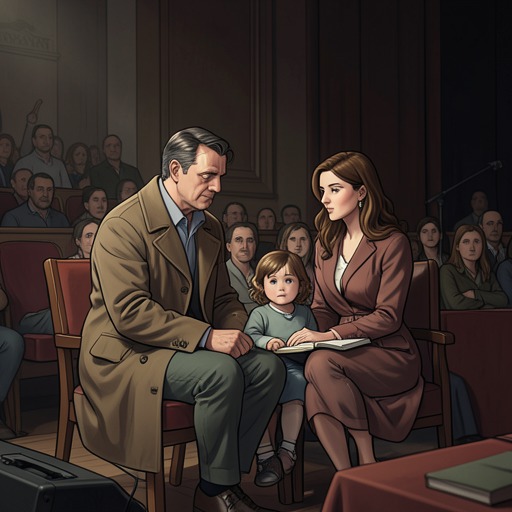
One evening, while eating corned beef and cabbage, Duffy stops at a newspaper report and reads it repeatedly. He learns that Emily has died after being struck by a train at Sydney Parade Station. At the inquest, her daughter, Mary Sinico, says that her mother had lately been going out at night to buy spirits; she had tried to reason with her and had persuaded her to join a league. Mary was away until an hour after the accident. The jury’s verdict follows the medical evidence and clears the railway employee of blame, while the deputy coroner calls the case painful and urges precautions against similar accidents.
Duffy’s immediate response is revulsion. From his window he looks toward the river and the disused distillery, and objects to the newspaper’s cautious language and the public expressions of sympathy. He imagines Emily’s drinking as degradation and interprets her death as evidence that she had been weak and unfit to live. In that first reaction, he turns his earlier decision into a justification: he remembers the night she pressed his hand to her cheek in a harsher light and has no difficulty approving of the break. The certainty is defensive, however, and does not last.
As evening falls, Duffy remembers the two images of Emily that now compete in his mind: the intimate companion of their meetings and the woman whose later life he had not seen. He recognizes that she is dead and has become a memory. He asks himself whether he could have continued a deceptive relationship or openly lived with her, and answers that he did what seemed best. But he also understands that she must have spent night after night alone in her room. The realization turns the loneliness he had treated as a philosophical truth into a condition they had both endured, though he had refused to acknowledge hers.
The Park and the Ending
Duffy goes to a public house near Chapelizod Bridge, drinks hot punch, and sits apart from a group of workingmen. While he revisits his life with Emily, he asks what else he could have done, but his reasoning no longer restores his composure. After nine o’clock he enters the Park and walks through the same bleak alleys where they had walked together four years earlier. In the darkness he seems to feel her presence, as if her voice and hand were near. The memory turns his question from whether he was to blame toward what his withdrawal did to her: he wonders why he withheld life from her and whether he had sentenced her to death.
From Magazine Hill he looks toward Dublin, whose lights appear across the river, and sees figures lying at the base of the Park wall. Their presence deepens his sense of exclusion. He thinks that one person had seemed to love him and that he had denied her happiness; he feels himself shut out from life’s feast. A goods train winding away from Kingsbridge Station recalls the railway death, and the engine’s rhythm seems to repeat Emily’s name. The association makes the landscape and sound carry the force of a memory he can neither undo nor comfortably settle.
On his return, Duffy stops beneath a tree and waits for the train’s rhythm to fade. He can no longer feel Emily near him or hear her voice; the night is perfectly silent. He listens again and finds nothing. The story ends with his recognition that he is alone. His ordered independence has survived the relationship, but it no longer reads as a complete or innocent way of living: after Emily’s death, it is inseparable from the loneliness he once declared inevitable and from the intimacy he chose to refuse.