Julia Morkan
DublinersJulia Morkan is a Morkan sister and a long-serving soprano whose performance at the family’s annual dance briefly commands the room. Her song brings her past artistic distinction into the present, while Gabriel’s later thoughts about her age and approaching death make her performance an emblem of beauty and vitality passing into memory.
Identity and Household
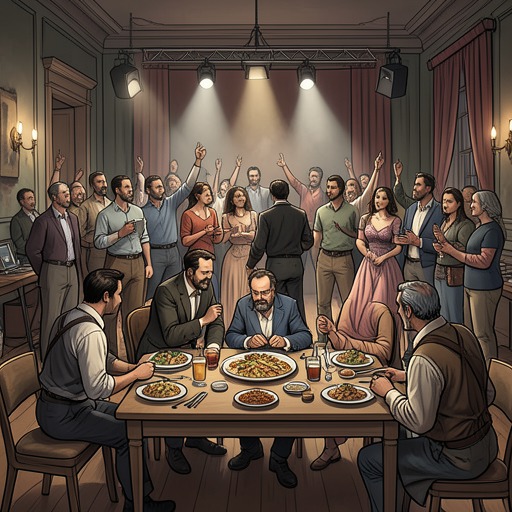
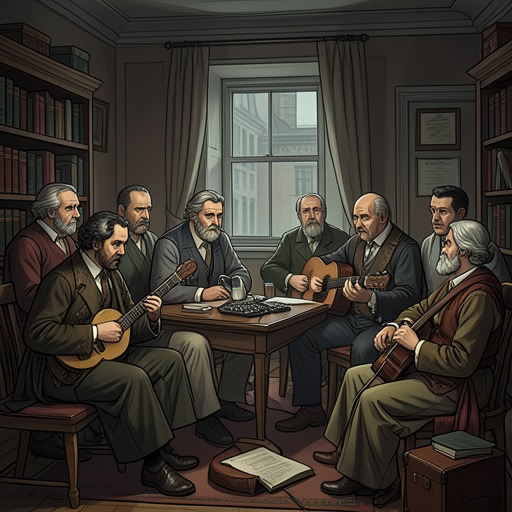
Julia lives with her sister Kate and their niece Mary Jane in the upper part of a house on Usher’s Island. The sisters had moved there with Mary Jane after the death of their brother Pat, leaving their former home in Stoney Batter. By the time of the story, the annual dance has been a fixture for roughly thirty years. Julia and Kate contribute to the household in different ways: Julia remains a singer, while Kate, too feeble to go about much, gives music lessons. Their life is modest but carefully maintained, and the dance gathers relatives, old friends, choir members, and pupils around the household.
Julia is described as quite grey, yet she still holds the leading soprano place in the choir at Adam and Eve’s. This standing gives her a public identity beyond her role in the family: she has a voice trained and experienced enough to remain central to a musical institution despite her age.
Performance at the Dance
At the party, Mr Browne escorts Julia to the piano. Mary Jane takes her place at the stool, and Julia turns toward the room as the singing begins. The song is “Arrayed for the Bridal,” a piece familiar enough for Gabriel to recognize its prelude. Julia sings with a strong, clear tone and attacks the ornamental runs with spirit; although she moves rapidly through the air, she does not miss the grace notes.
The account makes the force of her performance audible through its effect on the listeners. Gabriel applauds with the others, and the applause from the supper-table sounds genuine. Color rises in Julia’s face as she puts away an old leather-bound songbook marked with her initials. Freddy Malins, who has listened with his head tilted to catch the sound, continues applauding after the others stop, then crosses the room, takes both her hands, and struggles to express how well she sang. Mr Browne also says her voice has greatly improved. Julia answers with meek pride that thirty years earlier she had not had a bad voice, while Kate insists that she had always considered Julia wasted in the choir.
Age, Memory, and Mortality
Julia’s song acquires a darker resonance in Gabriel’s thoughts after the party. He recalls the haggard look he glimpsed on her face while she sang and imagines a near future in which he will sit in the same drawing-room dressed in black, with his silk hat on his knees, while Kate tells him Julia has died. He anticipates having no more than inadequate words with which to console his aunt. The imagined scene turns the performance from a moment of present triumph into a memory already shadowed by loss.
Gabriel’s reflection places Julia among the shades of the dead, alongside her brother Patrick Morkan and his horse. His response is not only grief for a future death: her age makes him confront the prospect of decline, as the force of her singing stands against the haggardness he believes he saw. The song’s title, her old songbook, and the span of thirty years all gather past and present into one scene, where accomplishment remains audible even as time’s limit comes into view.
Narrative Role
Julia is seen chiefly through the family gathering and Gabriel’s attention, rather than through an account of her private thoughts. Her performance gives the party one of its clearest moments of shared appreciation, but the story does not let applause settle into uncomplicated celebration. Gabriel’s later imagined funeral reveals how quickly admiration becomes a consciousness of mortality. Julia’s voice therefore carries both continuity and fragility: it has endured across decades, yet the listener already hears it against the silence he expects after her death.