Charles Ségouin
DublinersCharles Ségouin is a wealthy French motorist preparing to establish a motor business in Paris, and the confident host around whom much of “After the Race” turns. His orders, social fluency, and apparent command of money help make a proposed investment attractive to Jimmy Doyle; later, his skill at steering dinner conversation and his participation in the yacht’s high-stakes cards place him at the center of a night whose glamour ends in Jimmy’s losses.
Identity and Business Prospects
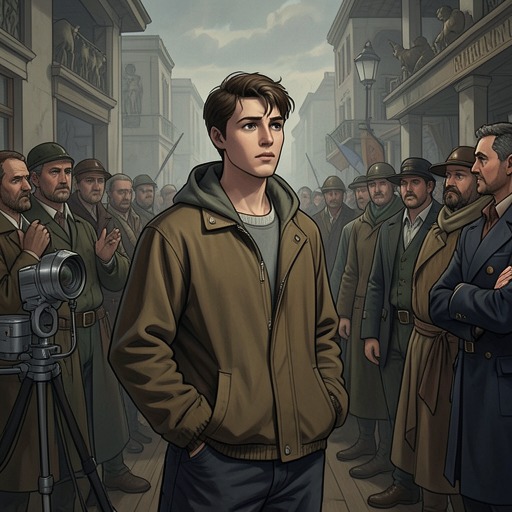
Ségouin owns one of the blue cars returning to Dublin after the race. The French team has placed second and third, while the winning German car’s driver is reported to be Belgian. The spectators’ cheers therefore welcome the French cars as near-victors, and Ségouin’s car arrives amid the public excitement with a party of four young men: Ségouin, his cousin André Rivière, the Hungarian pianist Villona, and Jimmy.
Ségouin’s good humour has a concrete business cause: he has unexpectedly received some orders in advance for the motor establishment he is about to start in Paris. Rivière, also in good spirits, expects to become manager of the establishment. Their shared professional prospect is joined to their pleasure in the French cars’ success, so business, national identification, and the exhilaration of the race travel together in the same car.
Ségouin is already associated with substantial wealth in Jimmy’s imagination. Jimmy met him at Cambridge and takes pleasure in the company of someone reputed to own some of the biggest hotels in France and to have seen a great deal of the world. Jimmy’s father agrees that Ségouin is worth knowing even apart from his charm. The account presents this reputation as part of Ségouin’s social attraction, while describing him as the owner of the racing car and the organizer of the Paris motor concern.
The Investment and Jimmy’s Expectations
The proposed motor-business investment gives Ségouin an important role in Jimmy’s financial and social hopes. The prospect is presented as a good one, and Ségouin makes Jimmy feel that the inclusion of Irish money in the concern is a favour granted through friendship. Jimmy’s father first suggested the investment, expecting money to be made in the motor business; Ségouin’s unmistakable air of wealth further reassures Jimmy.
For Jimmy, the investment is not an abstract business arrangement. He has a large sum under his control and knows how difficult it was to accumulate, a knowledge that had previously kept his bills within bounds. Now he is about to stake a greater part of his resources. The distinction between his cautious awareness of money’s cost and the glamour of this new opportunity makes his commitment consequential: the racing car’s speed and the company’s apparent prosperity encourage him to imagine the investment as participation in a more exciting life.
That imagined life is sharpened by contrasts in wealth and status. Ségouin can seem to Jimmy like a man for whom a sum of Irish money might be only a small addition to capital, whereas Jimmy knows the labour represented by his own money. Still, he is carried along by the impression of friendship, the promise of profit, and the spectacle of the car. Ségouin’s offer thus joins an actual business prospect to the social prestige that Jimmy hopes to share.
Host and Cultural Broker
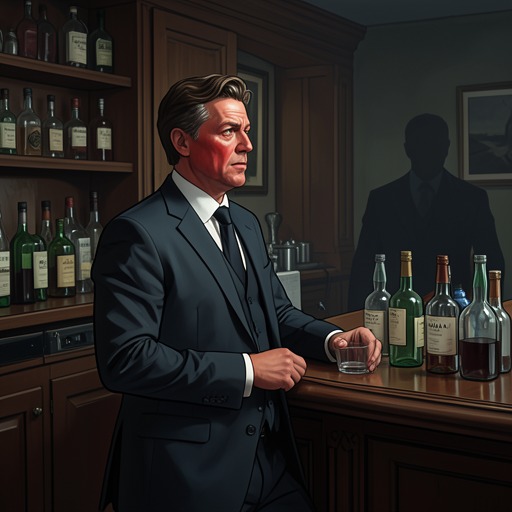
At dinner, Ségouin’s hospitality turns the business party into a social gathering. The meal is excellent, served in a snug room lit by electric candle-lamps, and the company now includes Routh, an Englishman Jimmy had previously seen with Ségouin at Cambridge. Jimmy admires Ségouin’s dexterity in directing the conversation. The host’s role is not simply to provide the setting: he manages the passage between subjects and keeps a gathering of young men with different interests in motion.
The conversation first moves through music and cultural taste. Villona, a brilliant pianist, explains the beauties of the English madrigal to Routh and laments the loss of old instruments. Rivière takes up the triumphs of French mechanicians, a subject that joins his professional future to the evening’s wider enthusiasm for machines. Ségouin then shepherds the group into politics, where Jimmy feels his father’s buried zeal awaken and eventually manages to rouse the otherwise torpid Routh. As the room grows hot and political discussion threatens personal spite, Ségouin raises a glass to Humanity. After the toast, he significantly opens a window, breaking the pressure of the debate through a practical gesture.
This sequence shows how Ségouin’s authority works: he has enough social command to redirect a conversation before it hardens into hostility, but the room’s growing heat and the danger of spite show that his management is necessary, not effortless. Jimmy notices the skill and is impressed by the host’s control. To him, Ségouin’s ease becomes part of the attraction of the evening, alongside the sumptuous dinner and the company of English and French acquaintances.
The Yacht, Cards, and Outcome
The gathering’s conviviality continues on Farley’s yacht. Villona plays a waltz while Farley dances as cavalier and Rivière as lady; the men then improvise a square dance. Jimmy joins in wholeheartedly, taking this as the experience of seeing life. At supper the company drinks to Ireland, England, France, Hungary, and the United States. Jimmy makes a long speech, encouraged by Villona’s calls of approval, and the others applaud. In this atmosphere of international fellowship, pleasure and drinking help carry the party from dinner into the late-night game.
When cards begin, Villona plays the piano while the others play successive games and toast the Queen of Hearts and the Queen of Diamonds. Jimmy loses, frequently misreads his cards, and has to rely on the others to calculate his IOUs. Although he wishes the play would stop as the hour grows late, the company proposes one final game. Ségouin is one of its two principal contenders, alongside Routh; Jimmy understands that the decisive contest is between them, while he himself expects to lose.
The final game ends with Routh winning. The young men cheer, gather the cards, and collect their winnings; Farley and Jimmy are the heaviest losers. Ségouin is therefore both a participant in the decisive game and the business associate whose promised venture had already drawn Jimmy into substantial financial risk. The story does not state that Jimmy’s card losses are part of the motor investment, and the two should not be conflated. Their juxtaposition nevertheless makes the evening’s underlying imbalance visible: Jimmy enters the company dazzled by its wealth, confidence, and apparent ease, but leaves the game knowing that his own money has been put at risk and that he will regret his folly in the morning.
Narrative Role
Ségouin’s characterization is conveyed largely through the impressions he creates in Jimmy and through his actions as host and player. His wealth is signaled by his air of prosperity and his business plans; his social skill appears in his handling of dinner conversation; and his competitive place in the final card game is established by the contest with Routh. The account gives no direct view of his private response to the night’s events, so his motives beyond the described business offer and conduct remain unstated.
As a figure of apparent Continental success, Ségouin helps embody the glamour that draws Jimmy away from sober calculation. The blue racing car, the prospect of a Paris motor business, electric-lit dinner, and yacht entertainments form a continuous display of speed, capital, and sociability. Yet that display does not erase the difference between Ségouin’s apparent resources and Jimmy’s more limited understanding of what his money represents. Ségouin’s significance lies in that tension: he is a capable entrepreneur and host, while his world’s allure helps make Jimmy’s exposure to loss seem, for a time, like an invitation to share in success.