Mr Alleyne
DublinersMr Alleyne is a supervisor at Crosbie & Alleyne whose authority is expressed through reprimands, deadlines, and threats to Farrington’s employment. Their encounters make the office a place where Farrington’s resentment and thirst for alcohol intensify: a dispute over copied documents culminates in a public insult, an apology, and the prospect of renewed hostility at work.
Identity and Position
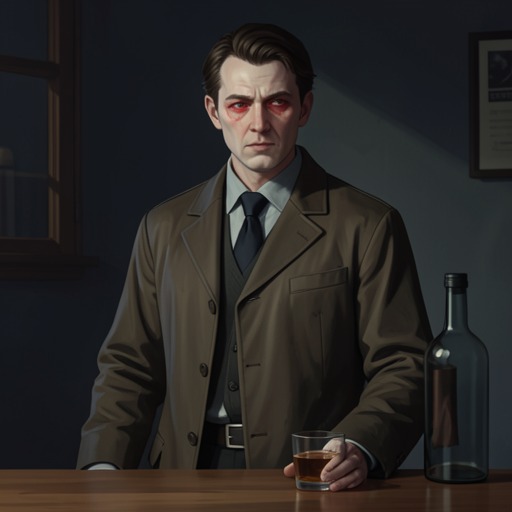
Mr Alleyne is described as a little man with a clean-shaven face and gold-rimmed glasses. When Farrington enters his room, Mr Alleyne raises his head from a pile of documents; the narration compares his pink, hairless head to a large egg resting on the papers. The contrast between his slight appearance and his control of the office is sharpened by the narrator’s description of that head as directing the affairs of Crosbie & Alleyne.
His room is on the second landing, behind a door marked with a brass plate bearing his name. Farrington reaches it after being summoned upstairs, while Mr Alleyne is already at work among documents. The setting gives the reprimand a formal shape: an employee is called away from the counter and brought before the manager in his own room.
Reprimands and Office Authority
Mr Alleyne first confronts Farrington about a contract between Bodley and Kirwan. He asks why it has not been copied, reminding him that he had ordered it ready by four o’clock. When Farrington begins to explain that Mr Shelley had said something different, Mr Alleyne cuts him off, instructing him to attend to his own directions rather than Mr Shelley’s. He accuses Farrington of repeatedly finding excuses to shirk work and warns that he will refer the matter to Mr Crosbie if the copy is not completed that evening.
The rebuke extends beyond the contract. Mr Alleyne tells Farrington that his lunch break is half an hour, not an hour and a half, and sarcastically asks how many courses he needs. Farrington answers only that he understands. Mr Alleyne returns his attention to the papers, but when Farrington remains standing, he abruptly asks whether he intends to stand there all day and tells him to go back downstairs and do his work. The episode establishes both the manager’s control over Farrington’s time and the repeated, impatient character of their exchanges.
The Missing Letters and Public Insult
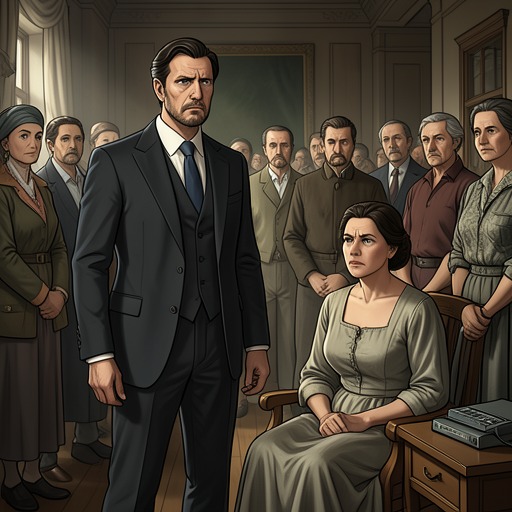
Later, Mr Alleyne calls Farrington twice before getting his attention. He is standing outside the counter with Miss Delacour, while the clerks have turned to watch. He accuses Farrington of losing two letters. Farrington says that he knows nothing about them and has made a faithful copy; the accusation continues in front of the assembled office, and Farrington struggles to restrain himself from striking the small figure before him.
Mr Alleyne asks whether Farrington takes him for a fool. Farrington replies that he does not think it is a fair question to put to him. The remark is presented as a sudden, unintended piece of wit: Farrington himself is astonished by it, and the clerks fall silent. Miss Delacour begins to smile, while Mr Alleyne flushes and shakes his fist. His anger turns the exchange into an explicit threat: he demands an apology and says Farrington will have to leave the office if he does not apologize.
Conflict and Consequences
Farrington does apologize, but the episode does not settle the conflict. He understands that his position has worsened and expects the office to become a hornet’s nest for him. He recalls that Mr Alleyne had previously forced little Peake out of the office to make room for his own nephew, a recollection that makes the manager’s power seem personal as well as institutional. Farrington believes Mr Alleyne will give him no rest and fears that his working life will become a hell.
The hostility has a history. Farrington recalls that he and Mr Alleyne had never got on, tracing their antagonism to an earlier occasion when Mr Alleyne overheard him mimicking his North of Ireland accent to amuse Higgins and Miss Parker. The missing-letters dispute therefore renews an old grievance rather than creating a new one. Yet Mr Alleyne’s part in the evidence remains confined to his managerial actions: he rebukes, interrupts, accuses, and threatens, while Farrington’s resentment and expectations of retaliation are conveyed through the narration focused on Farrington.
Narrative Role
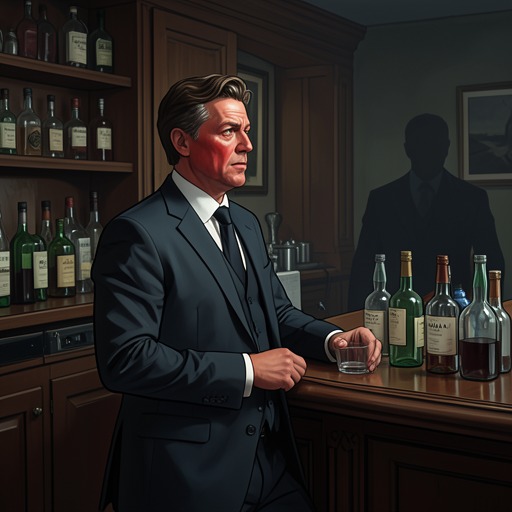
Mr Alleyne’s authority helps expose the pressures that shape Farrington’s conduct. The first reprimand leaves him with a sharp sensation of thirst and the thought that he needs a night of drinking; later, he imagines clearing out the office single-handed and feels drawn toward violence. These responses belong to Farrington, not to Mr Alleyne, but the manager’s scolding and control of work provide the immediate circumstances against which they emerge.
The confrontation also turns a workplace hierarchy into a public spectacle. The clerks watch, Miss Delacour’s reaction gives Farrington’s retort an audience, and Mr Alleyne answers the laugh with a threat backed by the possibility of dismissal. His authority is thus most visible not through a lengthy account of his private life, which the text does not provide, but through the consequences of his words for an employee already under pressure.