Mary Jane Morkan
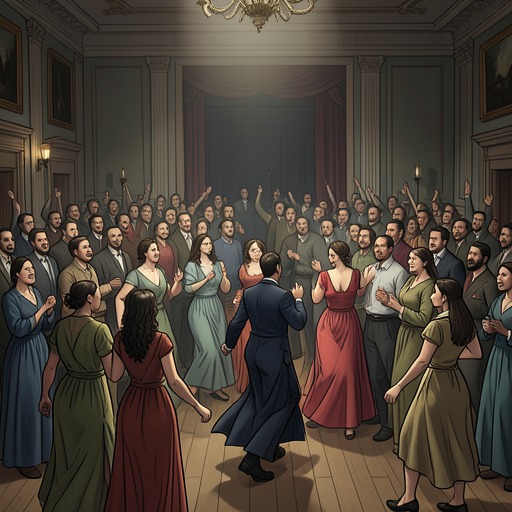
DublinersMary Jane Morkan is the Morkan sisters’ niece and the household’s principal support, an organist, piano teacher, and annual concert-giver whose work helps sustain the family’s celebrated dance. In the gathering that opens “The Dead,” she is both performer and host: her Academy training is evident in a difficult piano piece, but the guests’ waning attention reveals the limits of technical accomplishment as a shared musical experience.
Identity and Household Role
Mary Jane has lived with her aunts Kate Morkan and Julia Morkan for roughly thirty years. They took her into their home as a little girl after the death of their brother Pat, leaving their earlier house in Stoney Batter for the upper part of a house on Usher’s Island. As an adult, she has become the household’s main support. The family’s life is modest, but the annual dance is an established occasion, attended by relatives, old friends, members of Julia’s choir, and pupils of both Mary Jane and Kate.
Her livelihood is closely tied to music and teaching. She has an organ in Haddington Road, studied at the Academy, and gives a pupils’ concert each year in the upper room of the Antient Concert Rooms. Many of her pupils come from well-to-do families along the Kingstown and Dalkey line. The aunts also contribute: Julia remains the leading soprano at Adam and Eve’s, while Kate teaches beginners on an old square piano. Mary Jane’s position therefore joins professional work to family responsibility; her musical activity helps provide both income and standing for the household.
Music and Public Performance
At the annual dance, Mary Jane plays an Academy piece packed with runs and difficult passages. Gabriel Conroy cannot find a melody in it, and the four young men who pause in the doorway leave quietly in pairs after a few minutes. The passage distinguishes execution from communication: Mary Jane’s hands race across the keyboard and lift at the pauses, while Aunt Kate follows the score and turns pages, but the attention in the room does not match the performer’s concentration. Mary Jane herself appears to be the one person fully absorbed in the piece.
The moment does not erase her accomplishment. The work is demanding, and her training and public teaching are established parts of her life. Instead, the episode places her expertise inside a social gathering where music competes with conversation and movement. Her performance makes visible both the discipline behind her professional identity and the difficulty of translating that discipline into a shared response.
Hosting and Care at the Dance
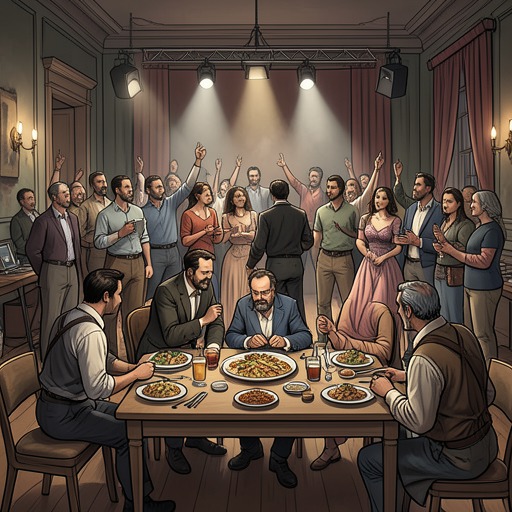
Mary Jane’s contribution extends beyond the piano. At supper she waits on her pupils and ensures they receive the best slices. She has suggested apple sauce with the goose and hot floury potatoes wrapped in a white napkin; when the meal begins, she settles down to eat while Kate and Julia continue moving around the table, carrying drinks and issuing orders. The room fills with the practical bustle of serving food and drink, and Gabriel carves second helpings before taking any for himself. Mary Jane’s hospitality is thus part of the work that makes the annual gathering function, alongside her aunts’ efforts and Lily’s service.
Her exchanges also help keep the evening’s social life moving. When a discussion becomes quarrelsome, she observes that hunger makes everyone quarrelsome; after Mr Browne adds that thirst has the same effect, she proposes that they go to supper and resume the discussion afterward. The remark redirects the company from argument to the meal, showing her practical sense of timing as well as her role in organizing the occasion.
Narrative Significance
Mary Jane embodies the labour and continuity behind the Morkan dance. The event has gone on for years without falling flat, but its familiar warmth depends on her work as a wage-earning musician, teacher, performer, and attentive host. Her responsibilities place her between the older generation’s traditions and the younger guests and pupils who fill the house.
The contrast between her energetic, technically elaborate performance and the guests who drift away gives the musical episode its quiet tension. The story does not question her skill; it shows that skill alone cannot command attention. Later, her practical intervention at supper restores a measure of fellowship through food, while her care for her pupils gives that fellowship a concrete form. The dance’s communal ease is therefore not effortless: Mary Jane’s music and hospitality help produce it.