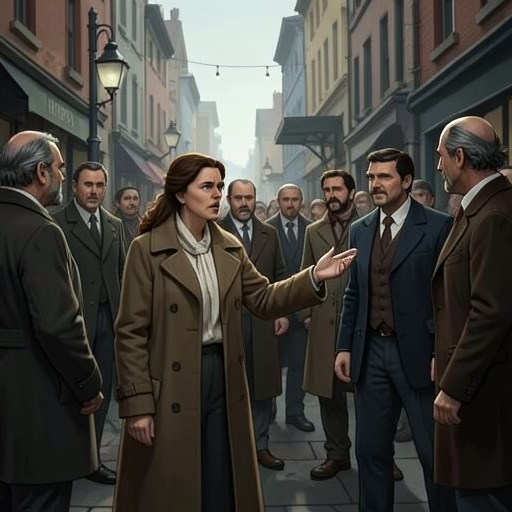
Kathleen Kearney
DublinersKathleen Kearney is a trained pianist and a public face of the Irish language movement whose successful concert performance is overshadowed by a dispute over payment. Her story links musical accomplishment and cultural affiliation to the practical vulnerability of an artist whose work has been promised a fee but not fully paid.
Identity and Musical Education
Kathleen is the elder daughter of Mrs Kearney and Mr Kearney. Her father sends her to a convent for a good education in French and music, then pays her fees at the Academy, giving her a sustained musical education rather than merely the accomplishments expected of a young woman in society.
Her musical training is also part of a broader family investment in her prospects. The Kearneys’ connections include musical and Nationalist friends, and Kathleen’s name begins to circulate as that of a clever musician and a supporter of the language movement. Her abilities therefore carry both artistic and social significance: she is valued as a performer and as someone associated with Irish cultural activity.
The Concert Engagement
When Mr Holohan proposes a series of four grand concerts at the Antient Concert Rooms, Kathleen is engaged as accompanist for eight guineas. Mrs Kearney helps establish the arrangement and takes an active role in the enterprise, while Kathleen’s name and musical standing help make her a plausible choice for the concerts.
On the concert evening, Kathleen stands chatting with Miss Healy, the contralto, while the seats fill and the auditorium grows noisy. When Mr Fitzpatrick brings Mrs Kearney only part of the payment, Kathleen gathers in her skirt and addresses Mr Bell, the first performer, who is shaking with nerves. She goes out to perform with him, and the piano begins after the hall falls quiet.
Performance and Payment Dispute
The first part of the concert is generally successful. Kathleen plays a selection of Irish airs to generous applause, a response that confirms her ability before an audience. Her performance contrasts with Madam Glynn’s poorly received song, while the first tenor and Miss Healy also win strong approval.
The fee conflict is made explicit when Mr Fitzpatrick counts four banknotes into Mrs Kearney’s hand and says the other half will be paid at the interval. Mrs Kearney objects that the sum is four shillings short. Kathleen nevertheless proceeds with her accompaniment, so the performance and the payment disagreement unfold side by side: the concert recognizes her musical contribution even as the organizers fail to provide the agreed amount in full at the outset.
Narrative Role
Kathleen is presented chiefly through her education, public reputation, and work as a musician; the immediate conflict is conducted by her mother and the concert organizers. Her applauded Irish airs make her a successful participant in the concert, but the fee dispute leaves that success entangled with a larger argument over how her labor is treated. The account also records the grim prediction that her musical career in Dublin was finished after the controversy, placing a threatening consequence beside the applause she has just earned.