Villona
DublinersVillona, a Hungarian pianist and companion to Jimmy Doyle, joins Charles Ségouin, André Rivière, and Jimmy in a day of motoring, dining, dancing, drinking, and cards. He is both a source of music and a buoyant presence in the party, but his quiet return to the piano while the others gamble, followed by his announcement of daybreak, also marks the moment when their revelry gives way to the consequences of the night.
Identity and Introduction
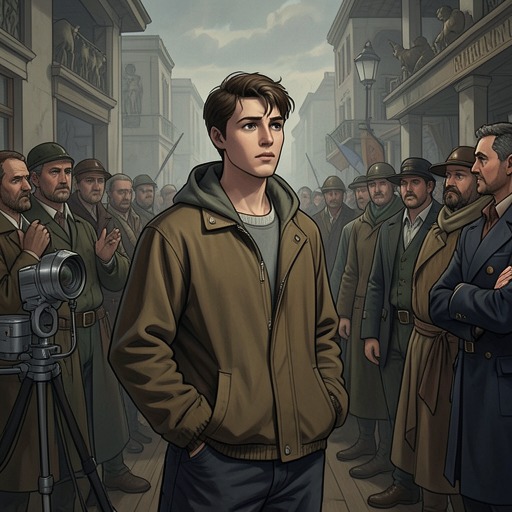
Villona is identified as a huge Hungarian and a brilliant pianist. In the car returning toward Dublin, his spirits are especially high: he is pleased by a satisfactory luncheon and is described as an optimist by nature. His good humor differs from the excitement of Jimmy Doyle, whose exhilaration is bound up with money, public attention, and the company he is keeping. Villona’s appetite and easy optimism establish a more uncomplicated pleasure in the outing, without making him its financial or social center.
He is poor, a fact that sharply distinguishes him from the young men whose wealth and prospects animate the day. Ségouin is about to establish a motor business in Paris, and Rivière is to become its manager; Jimmy, meanwhile, has substantial money at his disposal. Villona’s poverty does not prevent his admission to their company, but it gives his place in the party a different basis: he contributes musical accomplishment and conviviality rather than money or commercial standing.
In the Car and at Dinner
As the party travels, the cousins Ségouin and Rivière sit in front, while Jimmy and Villona ride behind. Villona keeps a deep bass hum of melody going for miles. The Frenchmen toss jokes and quick remarks over their shoulders, and Jimmy has to lean forward to catch them, often guessing at their meaning and calling back an answer against the wind and the noise of the car. Villona’s humming adds another sound to this crowded, fast-moving scene, further complicating Jimmy’s effort to keep pace with the conversation.
At dinner, the group expands to include Routh, an Englishman Jimmy had met with Ségouin at Cambridge. In a snug room lit by electric candle-lamps, conversation moves through music, engineering, and politics. Villona speaks with great respect about the English madrigal and laments the loss of old instruments, displaying a cultural interest distinct from the Frenchmen’s discussion of mechanical achievement. When his resonant voice is about to dominate a joke about the false lutes depicted by romantic painters, Ségouin redirects the party toward politics. Music thus gives Villona a vivid place in the evening’s conversation, even as the host steers the group away from a possible quarrel.
Music and Conviviality on the Yacht
The party later reaches Farley’s yacht, where supper, music, and cards are planned. There is a piano in the cabin, and Villona plays a waltz while Farley acts as the cavalier and Rivière as the lady. The men then improvise a square dance, inventing figures for themselves. Jimmy joins in wholeheartedly, taking the revelry as an experience of the wider world he wants to see. Villona’s playing makes the dance possible and gives the gathering a shared rhythm before the scene turns to drinking and gambling.
Over supper, the men drink to Ireland, England, France, Hungary, and the United States of America. Jimmy makes a long speech, and Villona punctuates its pauses with his calls of approval. The group applauds when Jimmy sits down; Farley claps him on the back. In this convivial sequence, Villona is not merely an entertainer but an active participant in the ritual of national toasts and social encouragement. His repeated responses help sustain the atmosphere in which Jimmy feels celebrated and at ease.
The Card Game and Daybreak
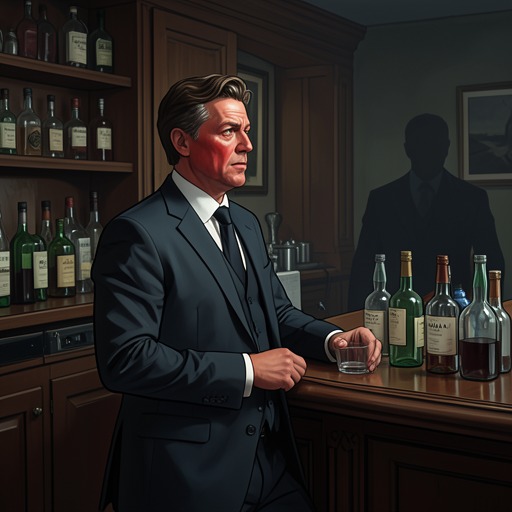
When the table is cleared for cards, Villona returns quietly to the piano and plays voluntaries while the others begin game after game. The contrast is telling: as the players drink and paper passes across the table, Villona remains apart from the gambling, absorbed in music. Jimmy is losing, mistakes his cards, and needs the others to calculate his I.O.U.s. Although he wishes the game would stop, the party proposes one more decisive round.
Villona has gone up on deck by the time the final game reaches its climax. Routh wins, and the cabin erupts in cheers as the cards are gathered and the winnings collected. Farley and Jimmy are the heaviest losers. Jimmy knows that he will regret the loss in the morning, but in the moment he welcomes the dark stupor that might cover his folly and rests his head between his hands, counting the beats in his temples.
The cabin door opens, and Villona appears in a shaft of grey light with the brief announcement, “Daybreak, gentlemen!” His words close the night’s sequence without changing the result of the game: Jimmy’s money has been lost, and the reckoning is still to come. The musician who had helped furnish the evening with melody now supplies its plainest measure of time. Daylight makes the revelry finite, and Villona’s final entrance sets his sustained good humor against Jimmy’s knowledge that the night’s excitement has become a serious financial mistake.
Narrative Role
Villona’s actions give the episode a recurring musical thread: humming in the car, discussing madrigals at dinner, playing a waltz for the dance, and returning to the piano as the card game proceeds. Music accompanies the party’s movement from public display to private celebration, while Villona’s participation remains distinct from Jimmy’s growing exposure to risk. He is consistently cheerful, but the narrative does not give him a comparable reversal or private crisis; his role is defined by optimism, musicianship, and companionship.
His poverty also sits beside the wealth that makes the excursion possible. The narrative specifies his lack of money while placing him among men whose business prospects, fortunes, and wagers shape the day. At the yacht, his musical contribution is central to the company’s pleasures, yet he does not share in the gambling that leaves Jimmy and Farley with the heaviest losses. The distinction sharpens the episode’s social texture: talent and conviviality secure Villona a place in the party, but money governs the stakes and consequences of its final entertainment.