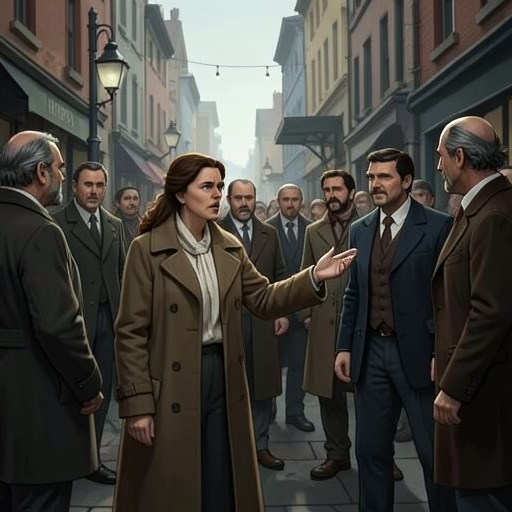
Mr O'Madden Burke
DublinersMr O'Madden Burke is an elderly, widely respected figure who moves easily among the organizers, performers, and press surrounding the Éire Abu Society concert. His poised, imposing presence and access to the newspaper world give him a quiet authority; when the dispute over Mrs Kearney’s contract erupts, he uses that authority to condemn her conduct and endorse the committee’s refusal to pay her.
Identity and Presence
Mr O'Madden Burke is introduced in the dressing-room among a group that includes the Freeman reporter, Miss Healy, and the baritone. He is old enough to recognize that Miss Healy’s politeness may have a motive, yet young enough in spirit to make the most of the attention. Her laughter, fragrance, and glances please him, and he leaves her regretfully when he can no longer stay. The episode presents him as alert to social signals and comfortable enjoying the attention they bring.
His appearance reinforces his standing. In a secluded room where a steward uncorks bottles for a few gentlemen, he is described as suave and elderly, balancing his imposing body on a large silk umbrella. The narrator turns his name and manner into a pointed image: his grand western name serves as a moral umbrella for the fine problem of his finances. The contrast between the umbrella’s dignified appearance and the reference to his finances complicates the respect he commands; public esteem does not make him a figure beyond irony.
Access and Influence
Mr O'Madden Burke is present at the intersection of the concert’s artistic and administrative worlds. The Freeman reporter tells Mr Holohan that Burke will write the notice, and that he will see it published. The reporter’s assurance gives Burke practical influence beyond the dressing-room: he can shape how the concert is represented in the press, while the reporter can secure its appearance in the paper. Their exchange is conducted as routine business, with Mr Holohan thanking the reporter and offering him a drink before he leaves.
That access becomes especially conspicuous when the contract dispute divides the performers and organizers. The concert’s first item is waiting with his music, but the accompanist has not signaled him to begin. In the hall, the audience claps and stamps its feet; in the dressing-room, conversation becomes strained. Mr Holohan speaks earnestly with Mrs Kearney, who insists that she has a contract and intends to see it carried out. The audience’s impatience and the unsettled start make the disagreement a public, operational crisis rather than a private difference over terms.
Judgment in the Contract Dispute
After the first part of the concert, the dressing-room becomes a center of argument. Mr O'Madden Burke calls Mrs Kearney’s conduct the most scandalous exhibition he has ever witnessed and predicts that Kathleen’s musical career in Dublin is finished. His verdict reaches beyond the question of whether the committee has honored the contract: it makes the daughter’s prospects part of the punishment imposed on the mother. The baritone, by contrast, hesitates to condemn Mrs Kearney because he has been paid and wants to remain at peace with everyone, although he says she might have considered the artistes.
Mr O'Madden Burke then aligns himself with Miss Beirne’s proposed response, saying that Mrs Kearney should receive nothing. His position is unequivocal. While Mrs Kearney says she has spared neither trouble nor expense and that the committee has treated her scandalously, he treats withholding payment as the proper outcome. The contrast is not simply between two accounts of the dispute: it is between a mother invoking the terms of a contract and a respected man whose authority helps frame her insistence as misconduct.
The disagreement has already disrupted the concert. The first item has been delayed while the hall grows louder, and the performers wait as officials argue. Once the dispute is brought into the dressing-room, Mr O'Madden Burke’s public condemnation adds reputational stakes to the immediate question of payment. His prediction about Kathleen’s future turns the affair into a threat of exclusion from Dublin’s musical life, although the story presents it as his judgment rather than an independently confirmed outcome.
Resolution and Narrative Role
When the confrontation ends, Kathleen follows her mother meekly. Mr Holohan paces to cool himself, declaring his frustration with Mrs Kearney, and Mr O'Madden Burke tells him that he did the proper thing. The approval confirms Burke’s alignment with the committee’s handling of the dispute and gives Holohan social reassurance after a tense, embarrassing episode. Burke’s earlier demand that Mrs Kearney be paid nothing is thus echoed by his final endorsement of the organizer who confronted her.
Mr O'Madden Burke’s part is brief but consequential: he does not conduct the negotiation, yet his press connection, social standing, and emphatic verdict help define how the conflict is viewed by others. His courteous manner and cultivated authority coexist with the narrator’s irony about his imposing body, grand name, and finances. In the concert’s struggle over contract, payment, and reputation, he represents the weight of respectable opinion—a weight capable of turning an unresolved claim into a condemnation that falls not only on Mrs Kearney but also on Kathleen.